

This comprehensive guide covers everything you need to know about waterproof coaxial cables—from understanding water...
The Complete Guide to Antennas
The Complete Guide to Antennas
Published by Wassalat Technical Team
Whether you're installing a WiFi network, deploying LTE equipment, building a CCTV system, or setting up satellite communications, understanding antennas is essential for reliable wireless performance. This guide explains everything from basic antenna principles to advanced installation techniques used by professionals.
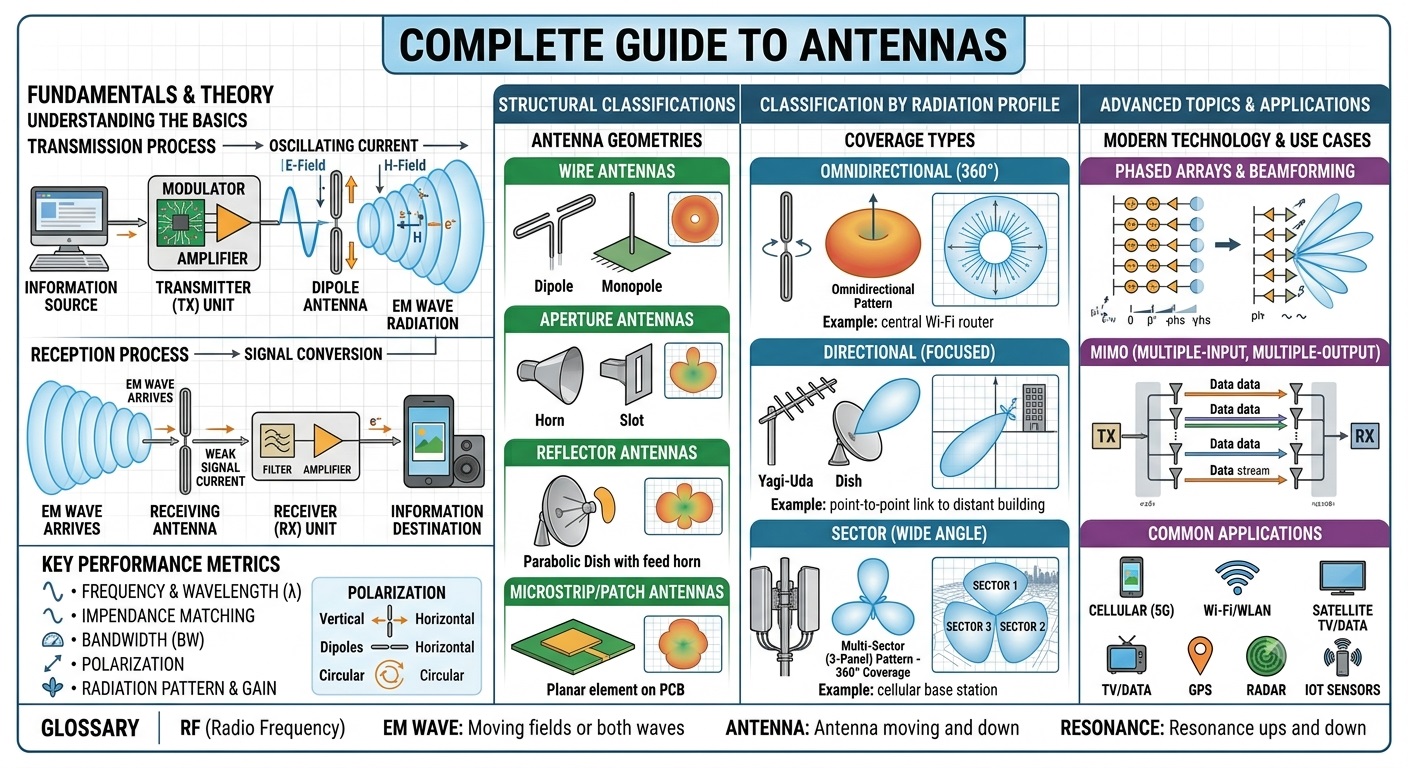
Table of Contents
What Is an Antenna?
An antenna is a specialized device designed to transmit or receive electromagnetic waves. It acts as the interface between electrical circuits and free-space radio waves, allowing wireless communication systems to function efficiently. Whenever you use WiFi, watch television, browse the internet over mobile data, communicate through radio, or receive satellite signals, an antenna is involved somewhere in the communication chain.
Modern antennas are used in countless industries including telecommunications, broadcasting, security systems, industrial automation, transportation, military communications, IoT, and smart cities. Without antennas, wireless communication would simply not exist.
? Did You Know? The first practical radio antenna was developed by Heinrich Hertz in the late 1880s while proving the existence of electromagnetic waves predicted by James Clerk Maxwell.
How Do Antennas Work?
An antenna converts electrical energy into electromagnetic waves during transmission and converts incoming radio waves back into electrical energy during reception. Every wireless communication system follows the same basic principle.
Transmission Process
- An electrical signal enters the antenna.
- The antenna creates an oscillating electromagnetic field.
- Radio waves propagate through free space.
- A receiving antenna captures the waves.
- The receiver converts them back into usable electrical signals.
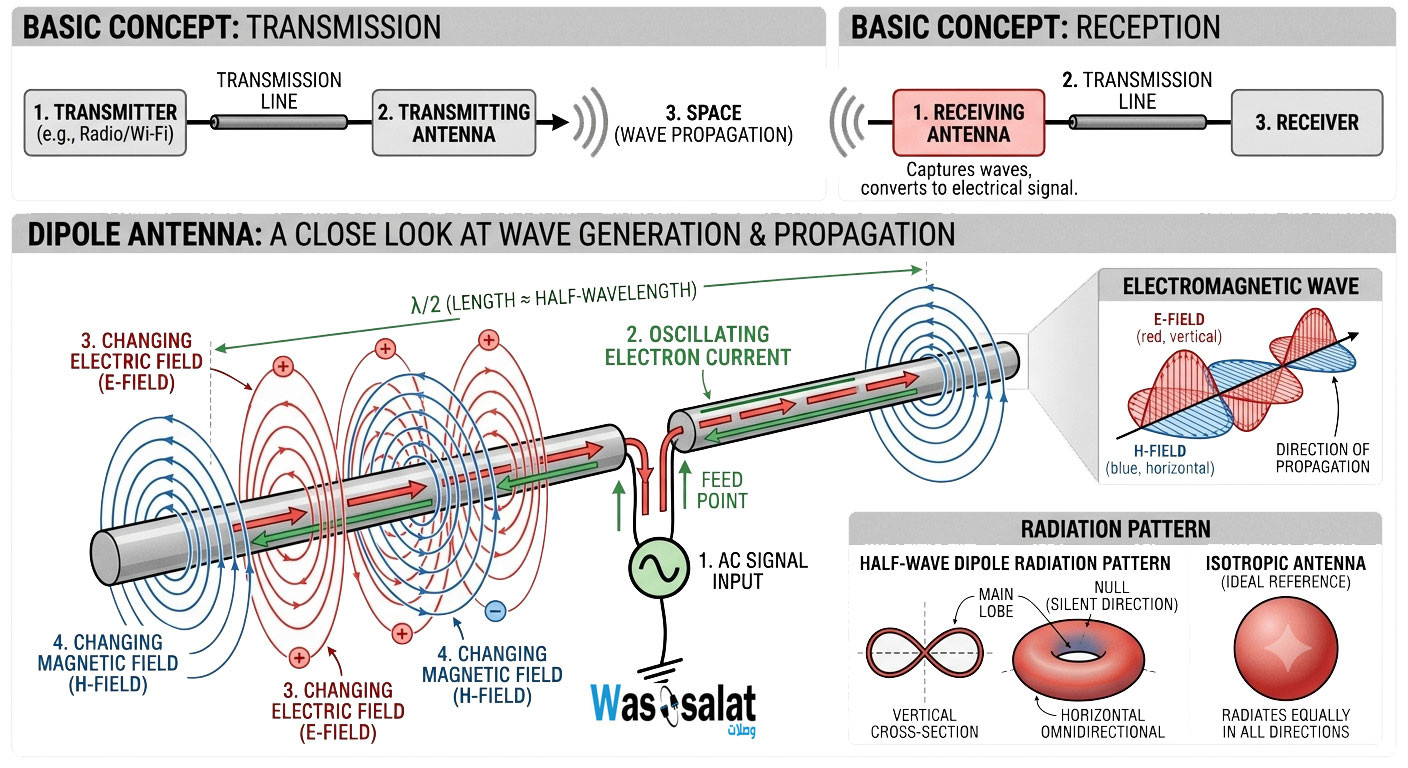
The effectiveness of this process depends on antenna design, frequency, gain, cable quality, connector quality, installation height, surrounding obstacles, and environmental conditions.
Main Components of an Antenna
Although antenna designs vary significantly, many antennas include several common components that work together to optimize signal transmission and reception.
| Component | Purpose |
|---|---|
| Radiating Element | Generates and receives electromagnetic waves. |
| Reflector | Improves forward gain and reduces signal loss. |
| Director Elements | Focus radio waves in one direction. |
| Feed Line | Transfers RF energy between equipment and antenna. |
| Connector | Provides secure RF cable connections. |
| Ground Plane | Improves radiation efficiency for many antenna types. |
| Mounting Hardware | Secures the antenna in its installation location. |
Understanding these components helps installers troubleshoot performance issues and choose the correct antenna for each application.
Types of Antennas
Antennas come in many designs, each engineered for specific frequency ranges, coverage patterns, communication distances, and applications. Selecting the correct antenna is one of the most important decisions in any wireless system.
1. Omnidirectional Antennas
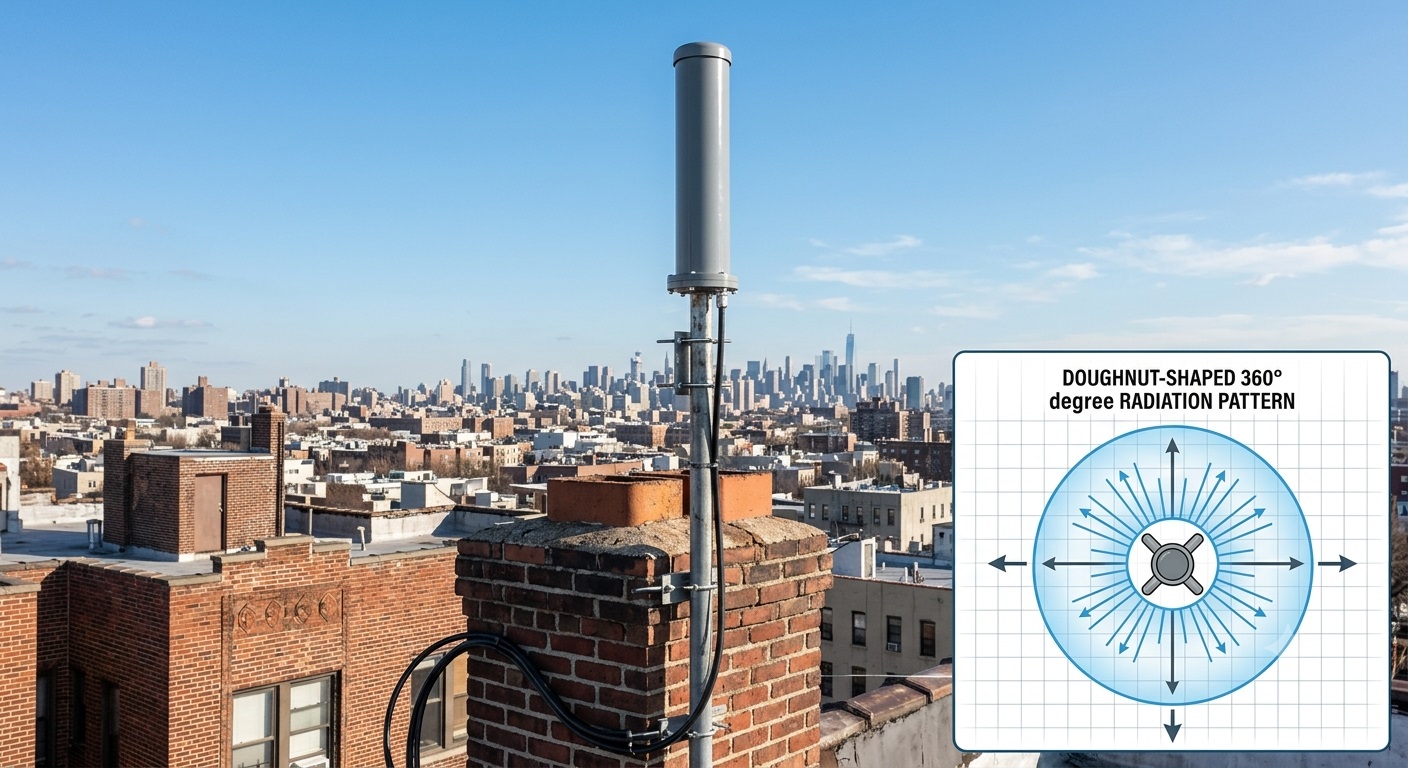
Omnidirectional antennas radiate signals equally in all horizontal directions (360°), making them ideal when devices are located around the antenna rather than in one specific direction.
Applications
- WiFi Access Points
- LTE Routers
- IoT Networks
- Office Wireless Networks
- Mobile Communications
Advantages
- 360° coverage
- Simple installation
- Ideal for multiple users
- Cost-effective
Disadvantages
- Lower gain
- Shorter communication distance
- Higher susceptibility to interference
2. Directional Antennas
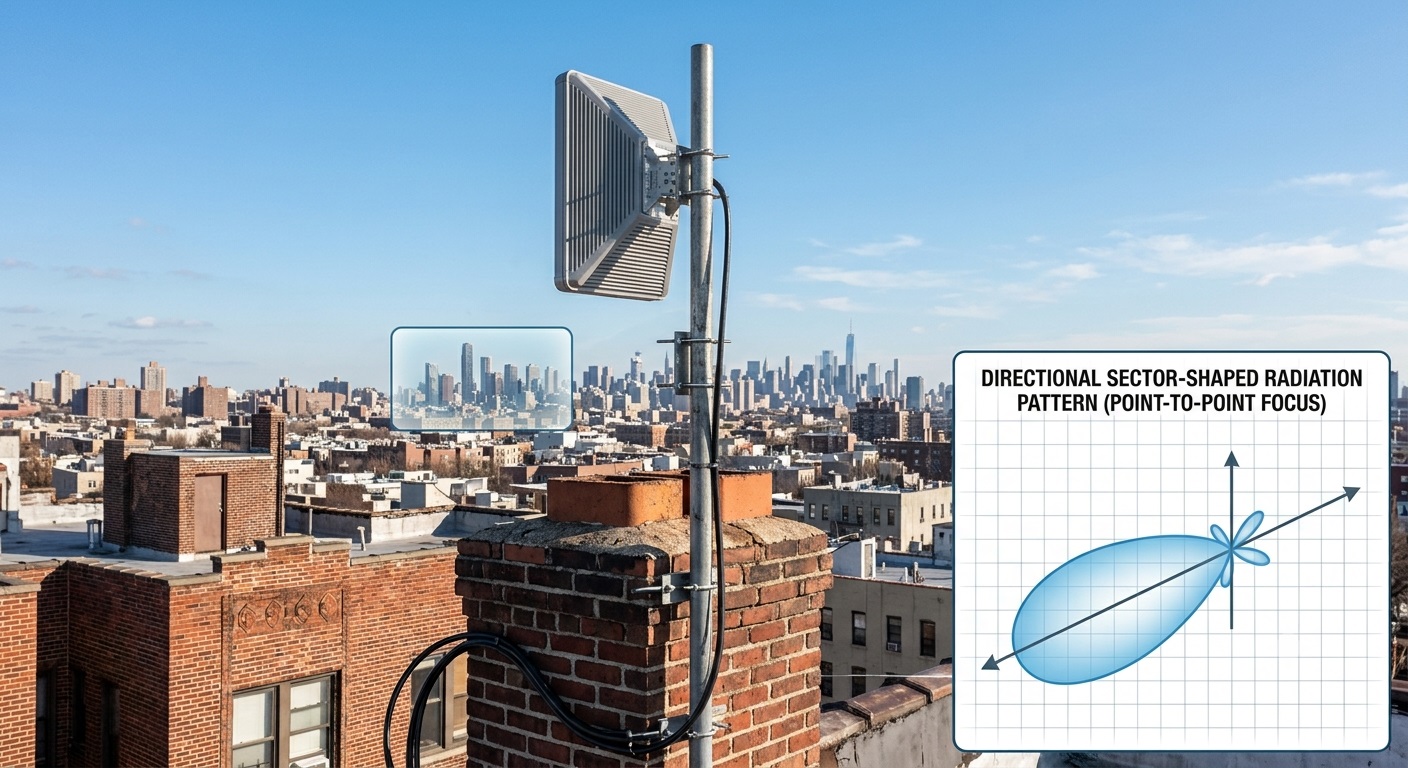
Directional antennas focus RF energy into a narrow beam instead of broadcasting in every direction. This increases signal strength and communication distance.
Applications
- Point-to-point wireless links
- Long-distance WiFi
- Rural broadband
- Industrial communication
- Wireless bridges
Advantages
- Higher gain
- Long transmission distance
- Reduced interference
- Better signal quality
Disadvantages
- Requires precise alignment
- Limited coverage angle
3. Yagi Antennas
Yagi antennas consist of one driven element, several directors, and a reflector. They are highly directional and are widely used for television reception, amateur radio, LTE systems, and long-distance communication.
| Typical Gain | Applications |
|---|---|
| 8–18 dBi | TV, LTE, RF, Amateur Radio |
4. Panel Antennas
Panel antennas provide moderate to high directional gain while maintaining a compact profile. They are commonly used in enterprise WiFi systems, LTE base stations, and outdoor wireless deployments.
- Flat design
- Easy wall mounting
- Medium beamwidth
- Excellent for wireless bridges
5. Parabolic Dish Antennas
Parabolic antennas use a reflective dish to concentrate radio waves onto a feed antenna. They provide extremely high gain and are used in satellite communications and microwave links.
| Typical Gain | Common Applications |
|---|---|
| 20–40 dBi | Satellite TV, VSAT, Long-distance Wireless |
6. Dipole Antennas
The dipole antenna is one of the simplest and most widely used antenna designs. It serves as the foundation for many modern antenna systems.
Common Uses
- Radio broadcasting
- Laboratory measurements
- Wireless equipment
- Reference antennas
7. Monopole Antennas
Monopole antennas are essentially half of a dipole mounted over a ground plane. They are widely used in mobile communications because of their compact size.
- Vehicle antennas
- Mobile devices
- IoT equipment
- Handheld radios
8. Sector Antennas
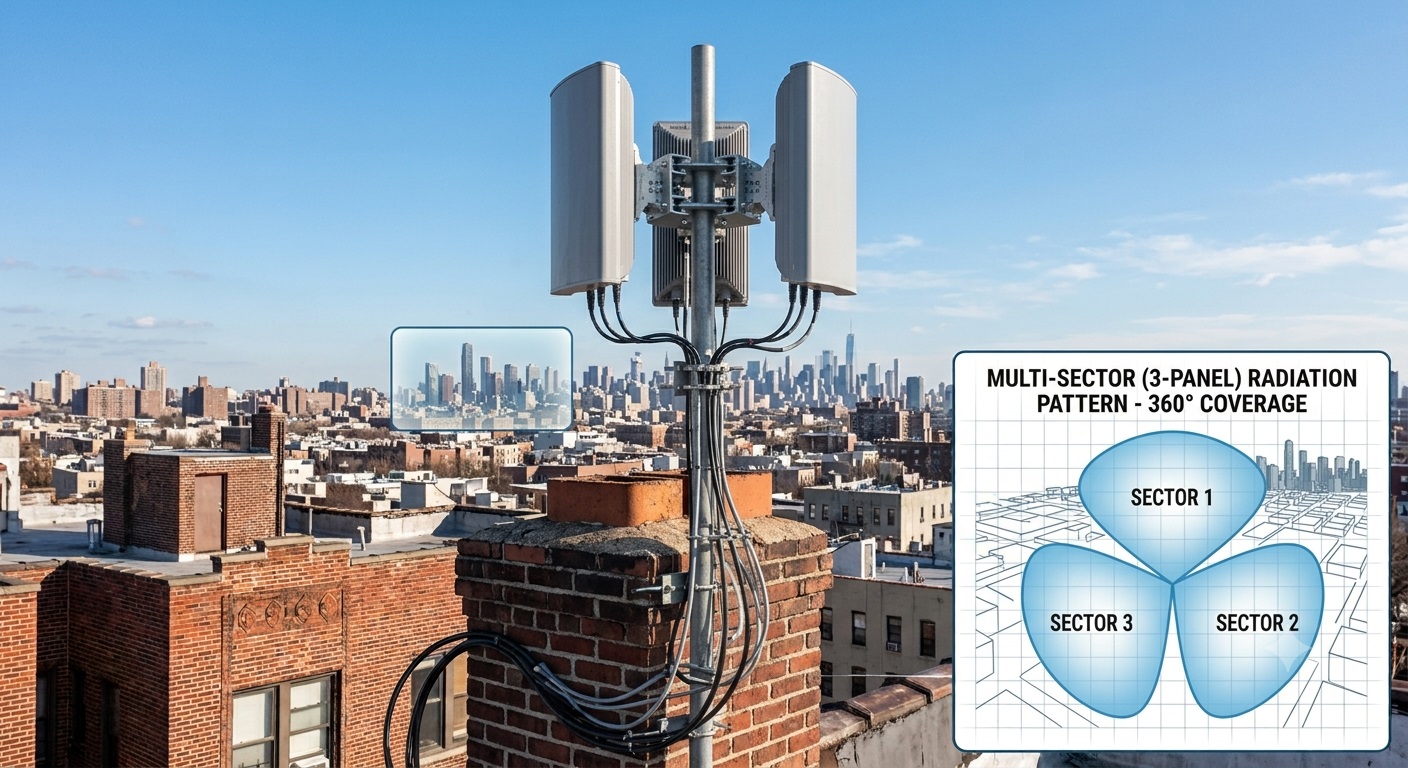
Sector antennas provide directional coverage over a specific angle such as 60°, 90°, or 120°. Cellular towers commonly use three sector antennas to provide full 360-degree coverage.
9. Patch Antennas
Patch antennas are lightweight, low-profile antennas commonly used inside GPS receivers, drones, RFID systems, and embedded wireless devices.
10. Helical Antennas
Helical antennas provide circular polarization and are widely used for satellite communication, space systems, and GPS applications.
Understanding Frequency Bands
Every antenna is designed to operate efficiently within specific frequency ranges. Using an antenna outside its intended frequency significantly reduces performance.
| Frequency Band | Typical Applications |
|---|---|
| 315 MHz | Remote Controls |
| 433 MHz | IoT Devices |
| 868 MHz | Industrial Automation |
| 915 MHz | RFID Systems |
| 2.4 GHz | WiFi, Bluetooth |
| 5 GHz | High-Speed WiFi |
| 700–2600 MHz | LTE Networks |
| 3.5 GHz | 5G Networks |
| Ku Band | Satellite Communications |
| Ka Band | High-Speed Satellite Internet |
⚠️ Important: Always match your antenna frequency to the operating frequency of your wireless equipment. Even the highest-quality antenna will perform poorly if it is designed for the wrong frequency band.
Understanding Antenna Gain
Antenna gain measures how effectively an antenna concentrates radio frequency energy in a particular direction. Gain is expressed in decibels relative to an isotropic radiator (dBi).
| Gain | Typical Coverage |
|---|---|
| 2 dBi | Wide indoor coverage |
| 5 dBi | Office WiFi |
| 8 dBi | Outdoor WiFi |
| 12 dBi | Point-to-point links |
| 24 dBi | Long-distance wireless bridges |
Higher Gain Isn't Always Better
Higher-gain antennas focus energy into narrower beams. While this increases communication range, it also reduces coverage width. Selecting the right gain depends on your application's coverage area and installation environment.
Antenna Polarization
Polarization describes the orientation of an antenna's electromagnetic field. Matching the polarization of transmitting and receiving antennas is essential for achieving maximum signal strength.
Vertical Polarization
- Most common for WiFi and LTE systems
- Suitable for mobile communications
Horizontal Polarization
- Often used in television broadcasting
- Reduces interference in some environments
Circular Polarization
- Ideal for satellite communications
- GPS systems
- Drone communications
| Polarization | Typical Applications |
|---|---|
| Vertical | WiFi, LTE, Mobile Networks |
| Horizontal | TV Broadcasting |
| Circular | GPS, Satellite, Aerospace |
Applications
Antennas are used in a wide variety of applications including:
- WiFi and wireless networking
- LTE and 5G mobile networks
- CCTV and security systems
- Satellite communications
- Radio and television broadcasting
- Industrial automation
- IoT and smart city infrastructure
- Military and aerospace communications
How to Choose an Antenna
When selecting an antenna for your application, consider these key factors:
- Frequency – Must match your equipment's operating frequency
- Gain – Higher gain = longer range but narrower beam
- Polarization – Match the transmitter and receiver
- Coverage Pattern – Omnidirectional vs directional
- Environment – Indoor vs outdoor, obstacles
- Connector Type – Must match your equipment
- Cable Type – Low-loss cable for long distances
- Mounting Options – Wall, pole, or mast mounting
Installation Guide
Step-by-Step Installation
- Plan Your Installation – Determine antenna type, gain, and mounting location
- Mount the Antenna – Securely attach using appropriate hardware
- Connect the Cable – Use high-quality, low-loss coaxial cable
- Weatherproof Connections – Use weatherproof tape or enclosures for outdoor installations
- Test Signal Strength – Verify proper signal levels after installation
- Fine-tune Alignment – Adjust direction for directional antennas
Common Problems and Solutions
| Problem | Solution |
|---|---|
| Weak Signal | Check placement, cable quality, and antenna gain |
| Interference | Change frequency, use directional antenna |
| No Signal | Check connections, cable integrity, and frequency matching |
| Water Ingress | Apply weatherproofing, inspect seals |
| Signal Dropouts | Check for loose connections or damaged cable |
Frequently Asked Questions (FAQ)
1. What is an antenna?
An antenna is a device that converts electrical signals into electromagnetic waves for transmission and converts received radio waves back into electrical signals.
2. How does an antenna work?
An antenna transmits and receives radio frequency (RF) energy by creating or capturing electromagnetic waves at specific frequencies.
3. What is antenna gain?
Antenna gain measures how effectively an antenna directs RF energy. Higher gain generally increases communication distance but reduces the coverage angle.
4. What is the difference between omnidirectional and directional antennas?
Omnidirectional antennas provide 360° coverage, while directional antennas focus energy in one direction for greater range and stronger signals.
5. Does a higher-gain antenna always provide better performance?
Not necessarily. The best antenna depends on your application, coverage area, installation environment, and operating frequency.
6. What frequency should my antenna support?
Your antenna should always match the operating frequency of your wireless equipment. Using the wrong frequency band can significantly reduce performance.
7. Can I use one antenna for multiple devices?
Some broadband antennas support multiple frequency ranges, but always verify compatibility with your equipment before installation.
8. Which coaxial cable is best for antennas?
High-quality, low-loss coaxial cables such as RG6, RG11, or LMR400 are commonly recommended, depending on the application and cable length.
9. Why is my antenna signal weak?
Weak signals may result from poor antenna placement, cable loss, incorrect frequency, nearby interference, damaged connectors, or environmental obstacles.
10. How often should outdoor antennas be inspected?
Outdoor antennas should be inspected at least once a year to check for corrosion, loose hardware, damaged cables, and water ingress.
Related Articles
- How Do Antennas Work?
- Types of Antennas Explained
- Omnidirectional vs Directional Antennas
- Understanding Antenna Gain
- Antenna Frequency Bands Explained
- Complete Guide to RF Connectors
- Complete Guide to Coaxial Cables
- Complete Guide to Network Cables
? Need Help Choosing the Right Antenna?
Whether you're building a WiFi network, installing CCTV systems, deploying LTE or 5G equipment, or setting up industrial wireless communication, selecting the right antenna is critical for reliable performance.
Explore our complete range of professional antennas, RF connectors, coaxial cables, and networking accessories to build high-performance communication systems.
Last Updated: July 2026
© 2026 Wassalat. All rights reserved.
Posted in:
Antenna
Related posts
-
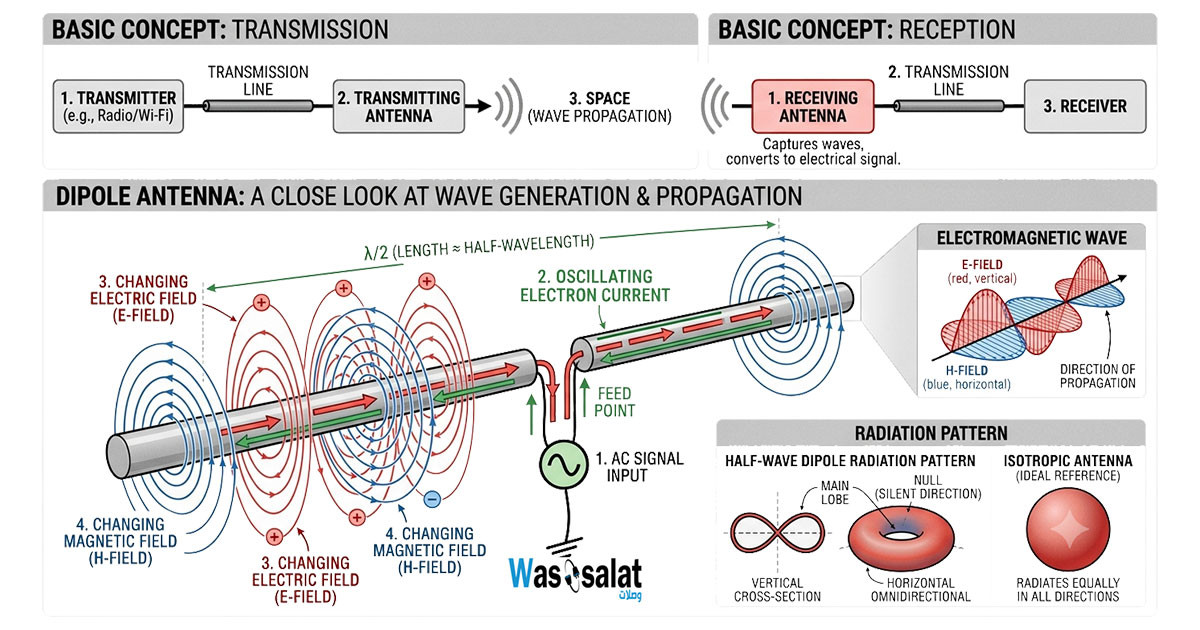 Introduction to Antenna Fundamentals: Types, Applications & How They Work
Learn antenna fundamentals: discover how antennas work, types (dipole, Yagi, parabolic), applications in telecom,...Read more
Introduction to Antenna Fundamentals: Types, Applications & How They Work
Learn antenna fundamentals: discover how antennas work, types (dipole, Yagi, parabolic), applications in telecom,...Read more -
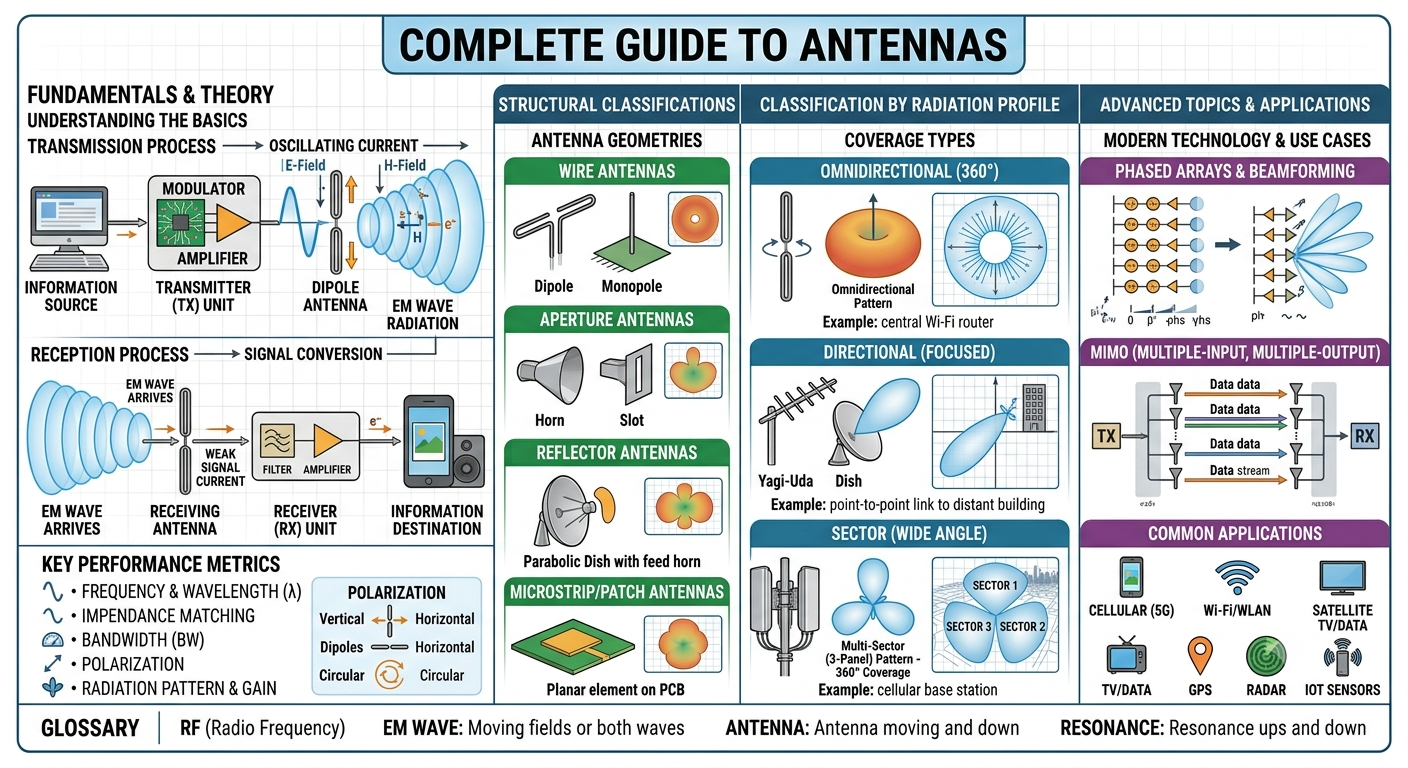 Types of Antennas: Dipole vs Monopole vs Loop | Complete Guide
Learn the differences between dipole, monopole, and loop antennas, including how they work, advantages,...Read more
Types of Antennas: Dipole vs Monopole vs Loop | Complete Guide
Learn the differences between dipole, monopole, and loop antennas, including how they work, advantages,...Read more
Latest posts
-
 Waterproof Coaxial Cable: The Complete GuideRead more
 -
 Testing Coaxial Cable: The Complete GuideRead more
This comprehensive guide covers everything you need to know about testing coaxial cable—from simple continuity checks...
-
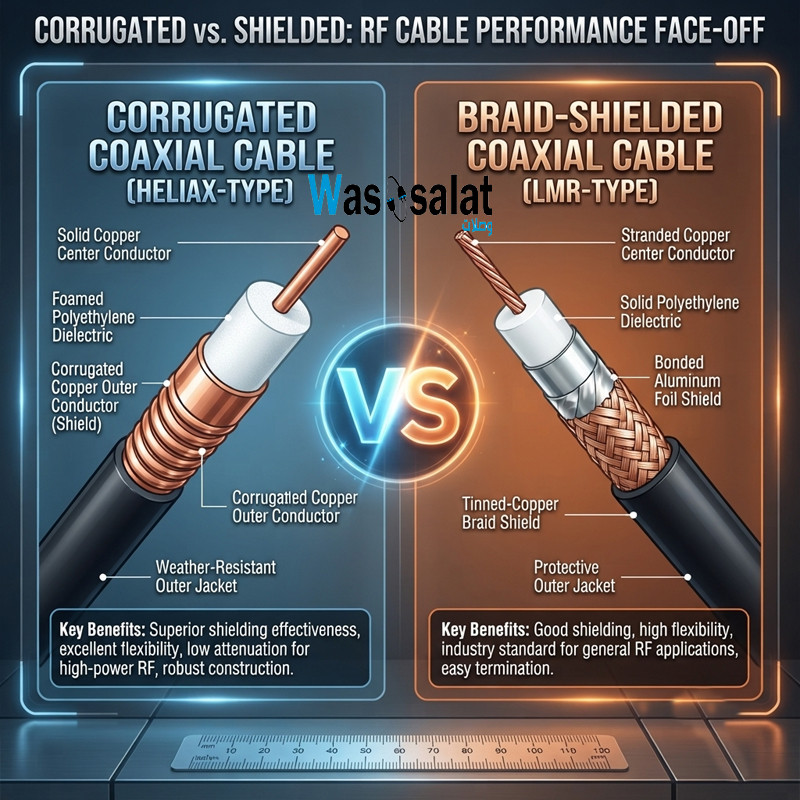 Corrugated Coaxial Cable vs Shielded Coaxial Cable: Complete ComparisonRead more
This comprehensive guide compares both technologies—explaining the differences in construction, performance,...
-
 Installing Coaxial Cable: The Complete GuideRead more
This comprehensive guide compares double shield and quad shield coaxial cables—explaining the differences in...
-
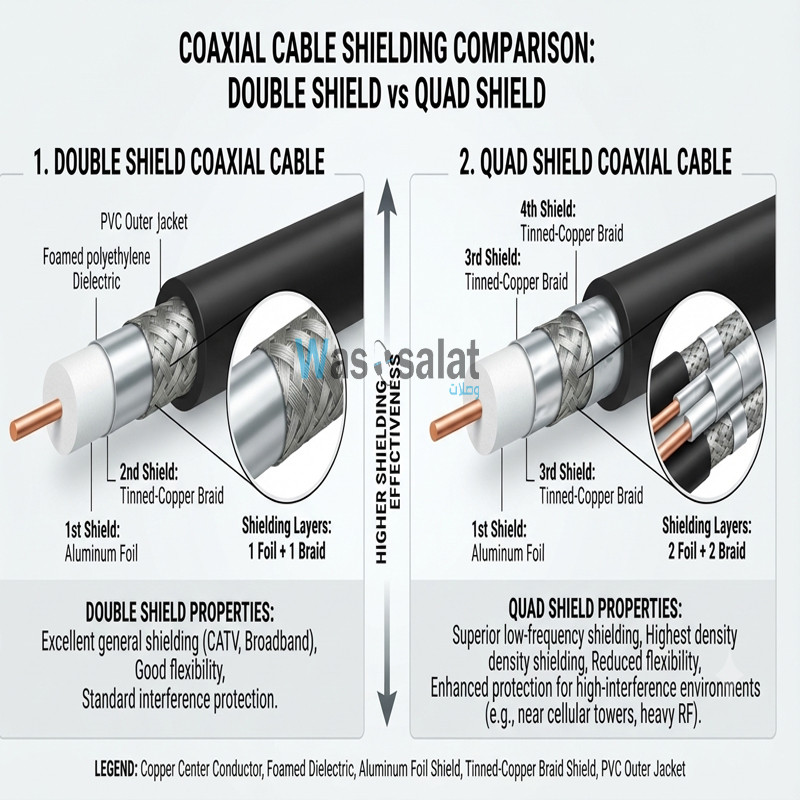 Double Shield vs Quad Shield: Which Coaxial Cable Should You Choose?Read more
This comprehensive guide compares double shield and quad shield coaxial cables—explaining the differences in...
-
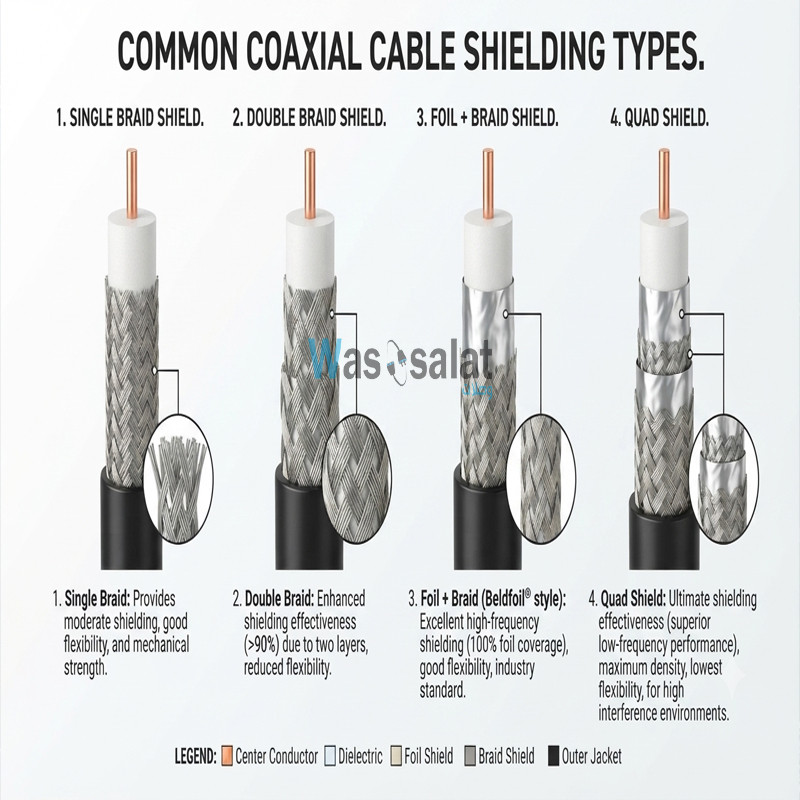 Shielding Types in Coaxial Cables: Complete GuideRead more
This comprehensive guide explains everything you need to know about shielding types—from single shield to quad...
-
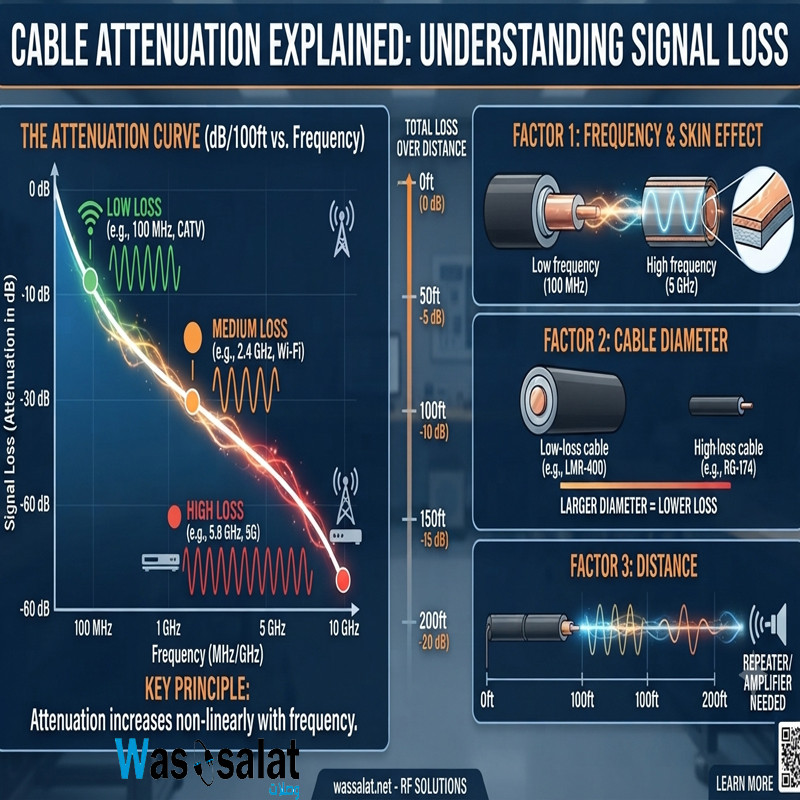 Cable Attenuation Explained: Understanding Signal LossRead more
This comprehensive guide explains everything you need to know about cable attenuation—what it is, what causes it, how...
-
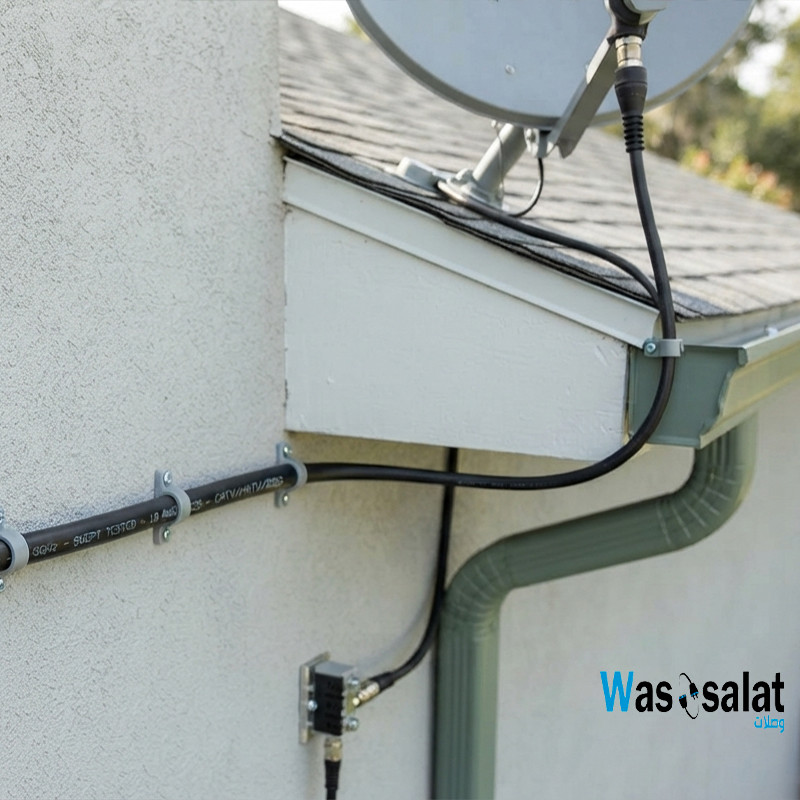 Outdoor Coaxial Cable: Complete Guide & Selection TipsRead more
Choose the right outdoor coaxial cable for your installation. Compare TZC-500/32 vs TZC-500/97, learn about PE...
-
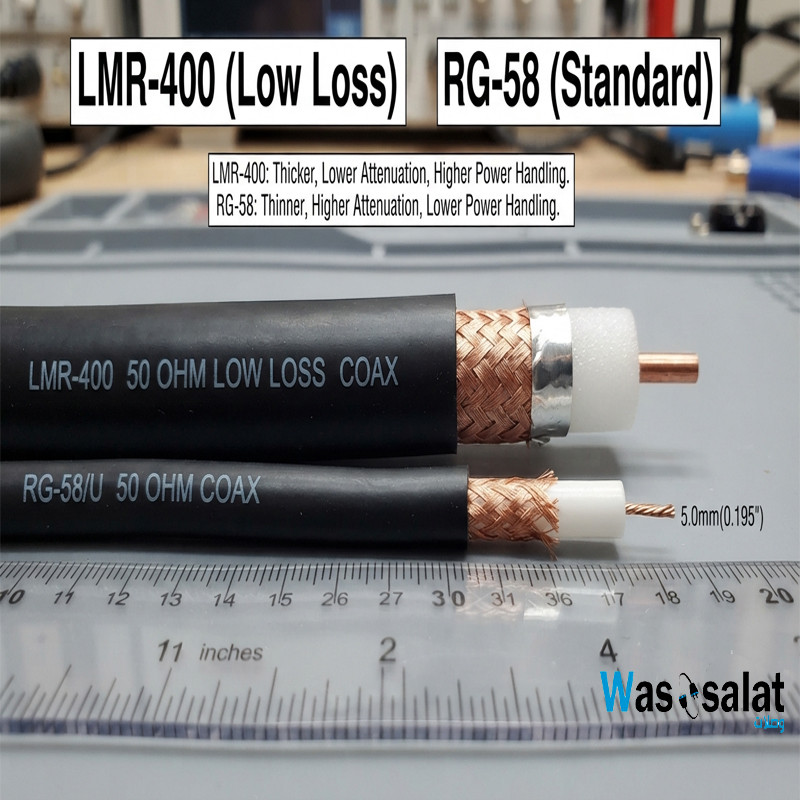 LMR-400 vs RG58: Which Coaxial Cable Should You Choose?Read more
Compare LMR-400 vs RG58 coaxial cables. Learn the differences in signal loss, construction, flexibility, and...
-
 Coax Cable Connectors: Complete Guide to F-Type, BNC, N-Type, SMARead more
Learn about coaxial cable connectors—F-Type, BNC, N-Type, SMA, TNC, and UHF. Compare impedances, frequencies, and...
Leave a comment