
This comprehensive guide covers everything you need to know about waterproof coaxial cables—from understanding water...
50 Ohm vs 75 Ohm Coaxial Cables: What's the Difference?
50 Ohm vs 75 Ohm Coaxial Cables: What's the Difference?
Published by Wassalat Technical Team
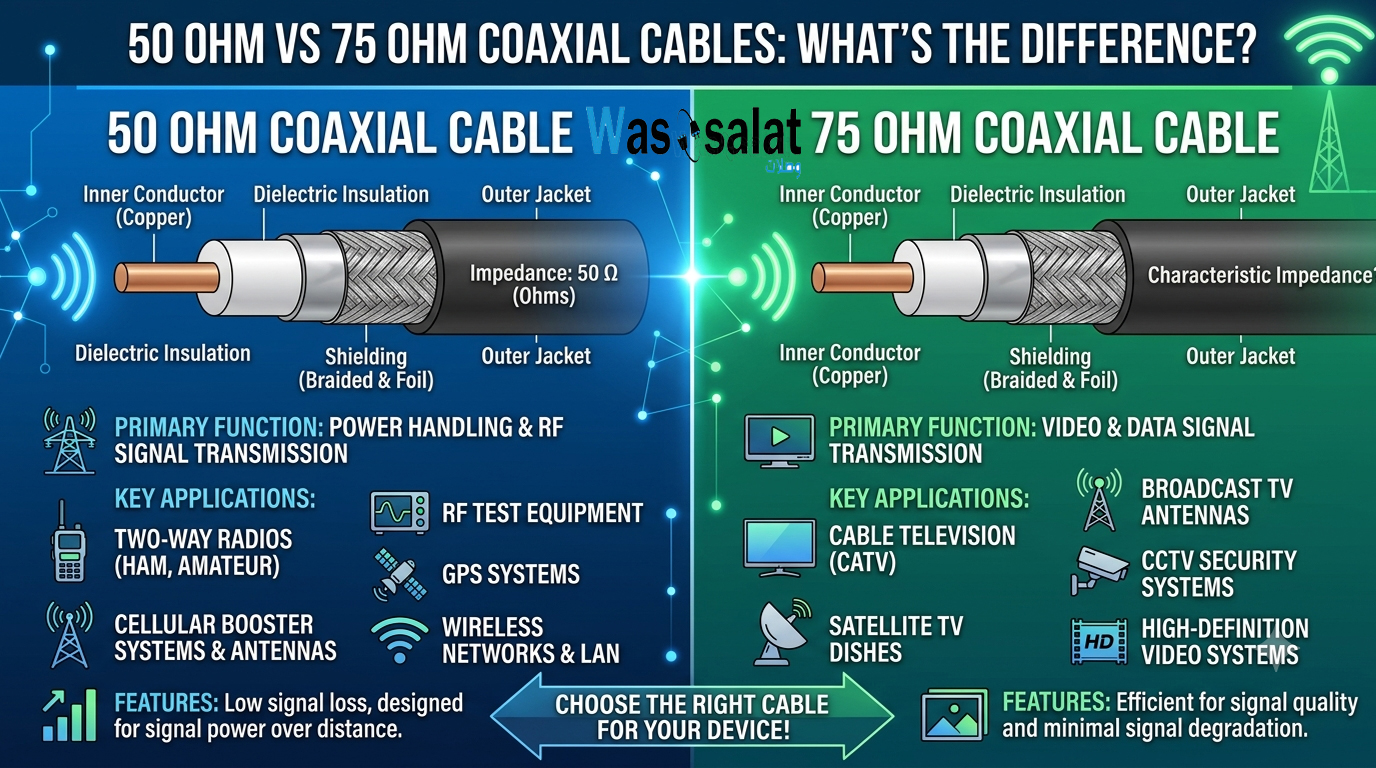
One of the most common questions in the world of cabling is: "Should I use 50 Ohm or 75 Ohm coaxial cable?" The answer isn't always obvious, and using the wrong impedance can lead to signal reflections, poor performance, and equipment damage.
This comprehensive guide explains everything you need to know about 50Ω and 75Ω coaxial cables—including how they work, when to use each, and how to avoid costly mistakes.
? Table of Contents
What Is Impedance?
Impedance is the measure of opposition that a cable presents to alternating current (AC). In simple terms, it's the "resistance" the cable offers to the electrical signal traveling through it.
Coaxial cable impedance is determined by three physical factors:
- Center conductor diameter – Thicker conductors have lower impedance
- Dielectric material – The insulating material affects impedance
- Outer shield diameter – Larger shields increase impedance
Impedance is measured in Ohms (Ω). The two most common standards are 50Ω and 75Ω.
? Important: Impedance is a property of the cable itself, not the signal. The cable's impedance is determined by its physical construction and cannot be changed.
Why 50Ω and 75Ω?
These two impedance values didn't happen by accident—they were chosen for specific engineering reasons.
50Ω – The Power Handling Standard
50Ω cables offer the best balance between power handling and signal loss. At 50Ω, a coaxial cable can carry the most power without arcing or overheating. This makes it ideal for transmitting RF power from transmitters to antennas.
- Optimal power handling – Maximum power transfer occurs at 50Ω
- Good attenuation – Signal loss is low at this impedance
- Versatile – Suitable for most RF applications
75Ω – The Low-Loss Standard
75Ω cables offer the lowest possible signal loss for a given cable size. At 75Ω, attenuation is minimized, making it ideal for long-distance video and data transmission.
- Minimum attenuation – Least signal loss per foot
- High bandwidth – Supports high-frequency signals
- Video optimized – Perfect for television and broadband
| Characteristic | 50Ω | 75Ω |
|---|---|---|
| Power Handling | ✅ Best (Maximum power transfer) | ❌ Lower power capacity |
| Signal Loss | ⚠️ Good | ✅ Best (Minimum attenuation) |
| Voltage Rating | ✅ Higher voltage | ⚠️ Lower voltage |
| Bandwidth | ⚠️ Good | ✅ High bandwidth |
| Common Use | RF, Radio, Wireless | Video, CATV, Broadband |
Key Differences Between 50Ω and 75Ω Coaxial Cables
Physical Differences
50Ω and 75Ω cables of the same series (RG-6 vs RG-58, for example) look similar but have different internal dimensions:
- Center conductor – 50Ω cables often have thicker center conductors
- Dielectric layer – 75Ω cables have a thicker dielectric for lower loss
- Impedance matching – The ratio of conductor diameters determines impedance
Performance Differences
| Parameter | 50Ω Coax | 75Ω Coax |
|---|---|---|
| Impedance | 50Ω (nominal) | 75Ω (nominal) |
| Attenuation @ 100MHz (per 100ft) | 2.5 dB (RG-58) / 1.5 dB (LMR-400) | 2.5 dB (RG-6) / 1.6 dB (RG-11) |
| Max Frequency | 1–8 GHz (cable dependent) | 1–3 GHz (cable dependent) |
| Power Handling | Higher (up to 500W+) | Lower (typically 100-200W) |
| Common Connectors | N-Type, SMA, BNC (50Ω), TNC | F-Type, BNC (75Ω), RCA |
50 Ohm Cables – Applications
50Ω cables are the standard for radio frequency (RF) and wireless communications. They're designed to efficiently transfer RF power from transmitters to antennas.
Common 50Ω Applications
- ? Two-Way Radios – Police, fire, emergency services, and amateur radio
- ? Wireless Networks – WISP, point-to-point, point-to-multipoint links
- ? Cellular Infrastructure – 4G LTE and 5G base stations
- ? WiFi Systems – Enterprise and outdoor WiFi installations
- ? Laboratory Equipment – RF testing, spectrum analyzers, signal generators
- ?️ Satellite Communications – Ground station equipment
- ? Amateur Radio – Ham radio transceivers and antennas
- ? Microwave Links – Point-to-point microwave backhaul
Popular 50Ω Cables
| Cable Type | Typical Use | Key Feature |
|---|---|---|
| RG-58 | Short antenna feeds, test equipment | Flexible, low cost |
| RG-8 | Amateur radio, base stations | Thicker, lower loss |
| LMR-195 | WiFi, IoT, short runs | Flexible, low loss |
| LMR-240 | Outdoor antenna feeds | UV resistant, durable |
| LMR-400 | WISP, long antenna runs | Very low loss |
| LMR-600 | Base stations, high power | Ultra low loss |
75 Ohm Cables – Applications
75Ω cables are the standard for video and data transmission. They're engineered for minimum signal loss over long distances.
Common 75Ω Applications
- ? Cable Television (CATV) – Residential and commercial TV distribution
- ? Satellite TV – Dish connections to set-top boxes
- ? CCTV Systems – Analog video surveillance
- ? Broadband Internet – Cable modem connections
- ? Professional Video – SDI, HD-SDI, 3G-SDI signals
- ? Broadcast Studios – Video routing and distribution
- ? Building Distribution – MATV and SMATV systems
- ? Digital Audio – AES/EBU digital audio connections
Popular 75Ω Cables
| Cable Type | Typical Use | Key Feature |
|---|---|---|
| RG-59 | Short CCTV, patch cables | Flexible, easy to install |
| RG-6 | CATV, satellite, CCTV | Most common, low loss |
| RG-11 | Long video runs, trunk lines | Very low loss, thick |
| Belden 1694A | Professional video, SDI | Broadcast quality |
| RG-7 | Multi-dwelling CATV | Lower loss than RG-6 |
Side-by-Side Comparison
Here's a direct comparison of common 50Ω and 75Ω cables:
| Feature | 50Ω | 75Ω | ||
|---|---|---|---|---|
| Cable | RG-58 | LMR-400 | RG-59 | RG-6 |
| Impedance | 50Ω | 50Ω | 75Ω | 75Ω |
| Attenuation @ 100MHz (dB/100ft) | 4.5 | 1.5 | 4.6 | 2.5 |
| Attenuation @ 400MHz (dB/100ft) | 9.0 | 3.0 | 9.2 | 5.2 |
| Attenuation @ 1GHz (dB/100ft) | 15.0 | 5.0 | 15.0 | 8.5 |
| Max Frequency | 1 GHz | 6 GHz | 1 GHz | 3 GHz |
| Recommended Connector | BNC / SMA | N-Type / SMA | BNC / F-Type | F-Type / BNC |
| Typical Use | Test / Radio | WiFi / WISP | CCTV / Video | CATV / Satellite |
Can You Mix 50Ω and 75Ω?
⚠️ WARNING: Mixing 50Ω and 75Ω cables without proper impedance matching will cause signal reflections, loss, and potential equipment damage.
The Problem with Mismatched Impedance
When a signal travels from a 50Ω cable into a 75Ω device (or vice versa), some of the signal is reflected back instead of being absorbed. This causes:
- Signal loss – Reflected signals reduce the power reaching the receiver
- Ghosting – Reflected signals can create duplicate images in video
- Standing waves – Reflected and forward signals interact, creating interference
- VSWR issues – Voltage Standing Wave Ratio increases, reducing efficiency
- Equipment damage – In high-power applications, reflected signals can damage transmitters
What Happens When You Mix?
| Scenario | Signal Loss | Impact |
|---|---|---|
| 50Ω cable → 75Ω device | ~4% loss (0.18 dB) | Minor degradation, may work but not ideal |
| 75Ω cable → 50Ω device | ~4% loss (0.18 dB) | Minor degradation, may work but not ideal |
| 50Ω cable + 75Ω adapter | Significant loss (0.5–1.5 dB) | Poor performance, unreliable |
| 50Ω cable + 75Ω connectors | Significant loss | Potential for disconnection and failure |
Impedance Matching Solutions
If you must connect 50Ω and 75Ω components, use a matching transformer (balun) or impedance converter. These devices convert the impedance to match the system.
✅ Best Practice: Always use the correct impedance throughout your entire system—from the transmitter to the antenna or from the camera to the monitor. Don't rely on adapters.
How to Choose the Right Cable
Step 1: Identify Your Equipment's Impedance
Check the specifications of all devices in your system:
- Transmitters and transceivers – Usually 50Ω for RF, 75Ω for video
- Antennas – Most are 50Ω (some satellite are 75Ω)
- Receivers – TV/Satellite receivers are 75Ω; radio receivers are 50Ω
- Testing equipment – Check labels on ports
Step 2: Determine Your Application
| Application | Recommended Impedance | Recommended Cable |
|---|---|---|
| Two-Way Radio | 50Ω | RG-58, RG-8, LMR-400 |
| WiFi / WISP | 50Ω | LMR-195, LMR-240, LMR-400 |
| Cellular / LTE / 5G | 50Ω | LMR-400, LMR-600 |
| Cable TV (CATV) | 75Ω | RG-6, RG-11 |
| Satellite TV | 75Ω | RG-6 (quad shield recommended) |
| CCTV | 75Ω | RG-59 (short), RG-6 (long) |
| Professional Video (SDI) | 75Ω | Belden 1694A, RG-6 |
| Amateur Radio | 50Ω | RG-8, RG-213, LMR-400 |
| RF Testing | 50Ω | RG-58, RG-223 (double shielded) |
Step 3: Consider Cable Length
- Short runs (under 50 ft) – Most cable types will work. Choose based on equipment impedance.
- Medium runs (50–150 ft) – Use low-loss cables like RG-6 (75Ω) or LMR-240/400 (50Ω).
- Long runs (150+ ft) – Use RG-11 (75Ω), LMR-400/600 (50Ω), or consider fiber optic alternatives.
Connector Differences
50Ω and 75Ω connectors look similar but are not interchangeable. Using the wrong connector can damage both the cable and the equipment.
50Ω Connectors
- N-Type – Professional standard for outdoor RF (50Ω version)
- SMA – Small form factor for WiFi, cellular, IoT
- BNC (50Ω) – Lab test equipment, radios
- TNC – Threaded version of BNC, used in military and aerospace
- UHF (PL-259) – Older standard for amateur radio (uncontrolled impedance)
75Ω Connectors
- F-Type – Standard for CATV, satellite, and broadband (75Ω only)
- BNC (75Ω) – Video equipment, CCTV, broadcast
- RCA – Consumer video and audio
? Tip: You can identify 75Ω BNC connectors by the smaller center pin (often with a white or colored insulator). 50Ω BNC connectors have a larger center pin.
Common Problems & Solutions
| Problem | Likely Cause | Solution |
|---|---|---|
| Poor signal / weak video | Impedance mismatch | Verify all cables and connectors match |
| Ghosting on TV | Reflections from mismatch | Use correct 75Ω cable and connectors |
| Transmitter overheating | High VSWR from mismatch | Use correct 50Ω cable, check antenna impedance |
| No signal | Wrong connector type | Use correct connector for your system |
| Intermittent signal | Loose connector, damaged cable | Inspect connections, test with cable analyzer |
| Poor VSWR reading | Impedance mismatch at connectors | Use impedance-matched connectors and cables |
Frequently Asked Questions (FAQ)
1. What happens if I use a 50Ω cable on a 75Ω system?
You'll experience about 4% signal loss (0.18 dB) and potential signal reflections. The system may work but with degraded performance. For professional installations, always use the correct impedance.
2. Can I use 75Ω cable for WiFi?
No. WiFi equipment expects 50Ω impedance. Using 75Ω cable will cause signal reflections and poor performance. Always use 50Ω cables like LMR-400 for WiFi installations.
3. Can I use 50Ω cable for TV?
No. TVs and set-top boxes expect 75Ω impedance. Using 50Ω cable will cause signal reflections and poor picture quality. Always use 75Ω cables like RG-6 for TV.
4. Why are satellite dishes 75Ω?
Satellite TV uses 75Ω because it's a video application with long cable runs. The low loss of 75Ω cable is ideal for bringing satellite signals from the dish to the receiver.
5. Can I use an F-Type connector on 50Ω cable?
No. F-Type connectors are specifically designed for 75Ω cable. Using them on 50Ω cable can cause signal loss and disconnection problems.
6. What is a balun?
A balun (balance-to-unbalance) is a device that converts between different impedances. It can match 50Ω to 75Ω, but adds some signal loss.
7. Which cable has less signal loss, 50Ω or 75Ω?
75Ω cables generally have lower attenuation than equivalent 50Ω cables. This is why 75Ω is preferred for long video runs.
8. Can I tell by looking if a cable is 50Ω or 75Ω?
Sometimes. 50Ω cables often have thicker center conductors. However, the only sure way is to check the cable's markings or specifications.
9. Is RG-6 50Ω or 75Ω?
RG-6 is 75Ω. It's the most common cable for TV, satellite, and broadband internet.
10. Is LMR-400 50Ω or 75Ω?
LMR-400 is 50Ω. It's one of the most popular cables for wireless networks and RF applications.
11. What's the difference between 50Ω and 75Ω BNC connectors?
75Ω BNC connectors have a smaller center pin than 50Ω connectors. Using a 50Ω BNC on a 75Ω system can cause signal loss and potential damage.
12. Can I use 50Ω and 75Ω cables together with adapters?
It's not recommended. Even with impedance-matching adapters, you'll still lose signal strength. Use the same impedance throughout your entire system.
? Related Articles
- Complete Guide to Coaxial Cables
- RG6 vs RG11 – Which One Do You Need?
- Coaxial Cable Connectors Guide
- Cable Attenuation Explained
- The Complete Guide to Antennas
- Browse Coaxial Cables →
? Need Coaxial Cables?
Whether you need 50Ω cables for wireless applications or 75Ω cables for video systems, we have the right cable for your needs.
Explore our complete range of professional coaxial cables, connectors, and accessories:
Last Updated: July 2026
© 2026 Wassalat. All rights reserved.
Posted in:
Coaxial Cables
Related posts
-
 Complete Guide to Coaxial Cables
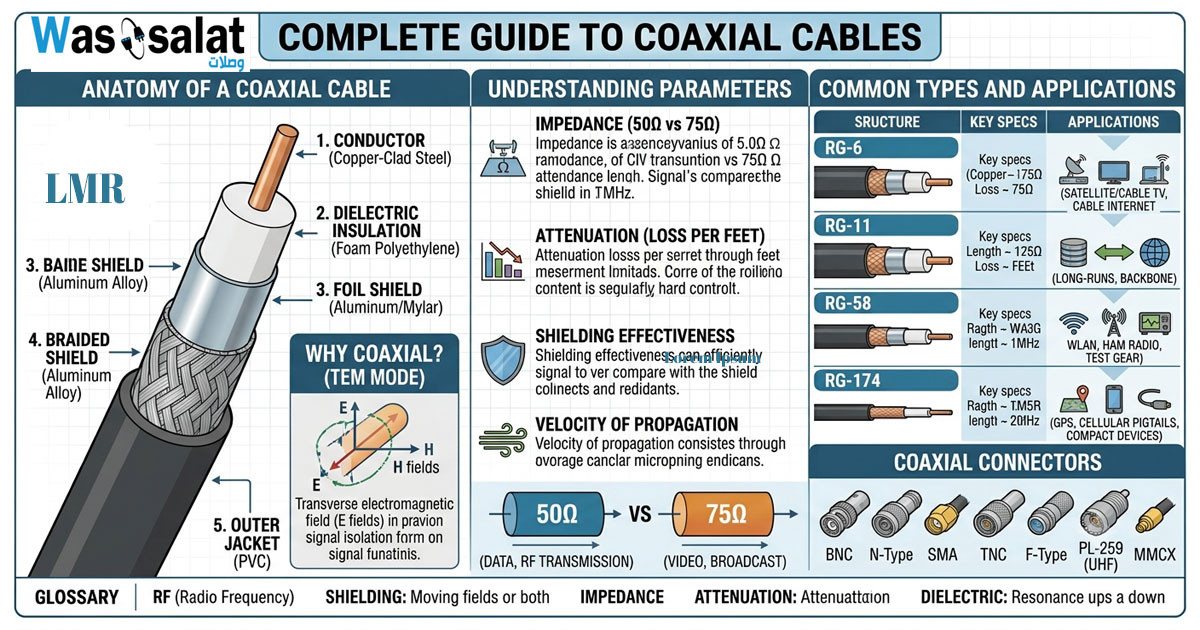
Everything you need to know about RG-6, LMR-400, impedance, connectors & troubleshooting.Read more
Complete Guide to Coaxial Cables
Everything you need to know about RG-6, LMR-400, impedance, connectors & troubleshooting.Read more -
 RG6 vs RG11 Coaxial Cables: Which One Do You Need?
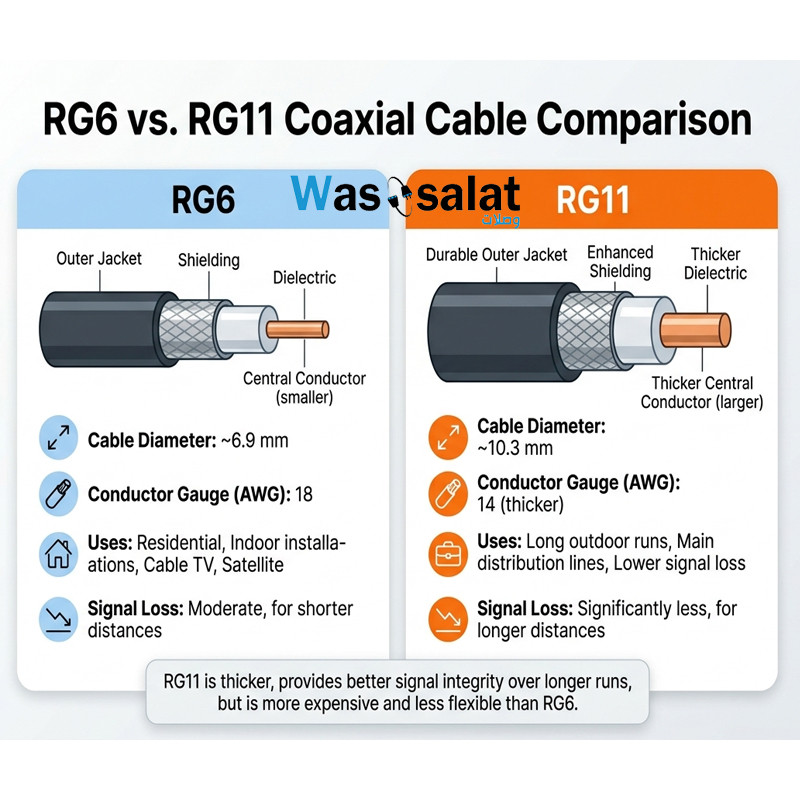
Compare RG6 and RG11 coaxial cables. Learn the differences in performance, distance, cost, and when to use each for...Read more
RG6 vs RG11 Coaxial Cables: Which One Do You Need?
Compare RG6 and RG11 coaxial cables. Learn the differences in performance, distance, cost, and when to use each for...Read more -
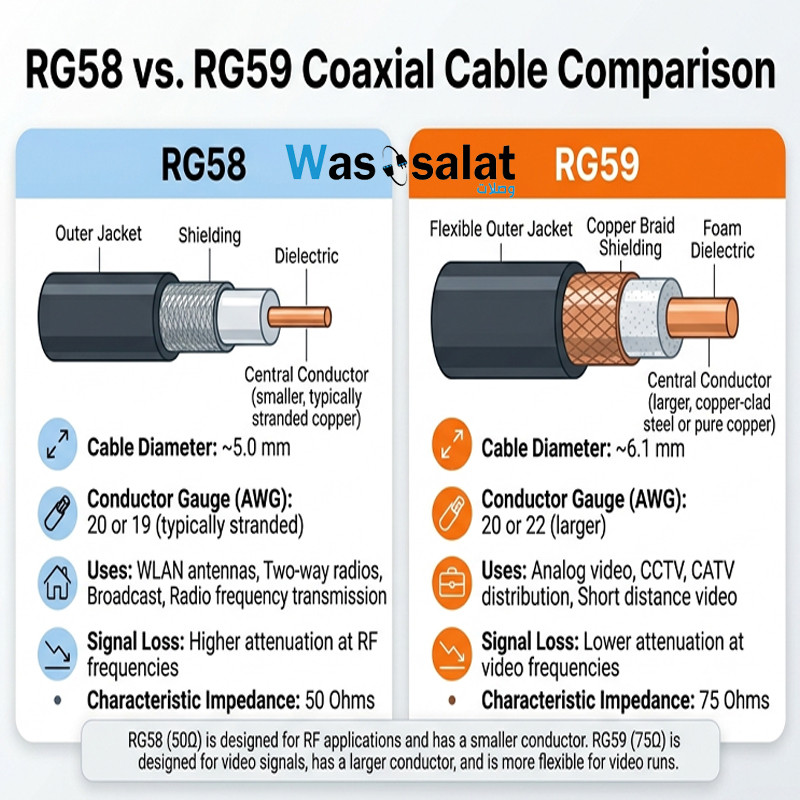 RG58 vs RG59 Coaxial Cables: What's the Difference?
Compare RG58 and RG59 coaxial cables. Learn the critical impedance difference, applications for RF vs video, and...Read more
RG58 vs RG59 Coaxial Cables: What's the Difference?
Compare RG58 and RG59 coaxial cables. Learn the critical impedance difference, applications for RF vs video, and...Read more -
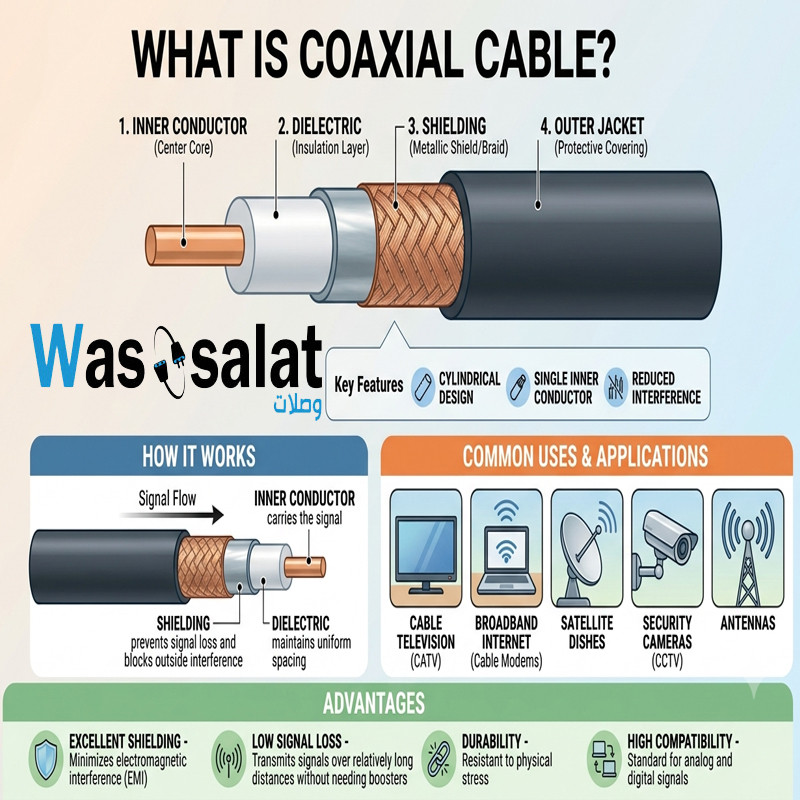 What Is a Coaxial Cable? The Complete Beginner's Guide
Learn what coaxial cables are, how they work, their construction, types, and applications. The beginner's guide to...Read more
What Is a Coaxial Cable? The Complete Beginner's Guide
Learn what coaxial cables are, how they work, their construction, types, and applications. The beginner's guide to...Read more -
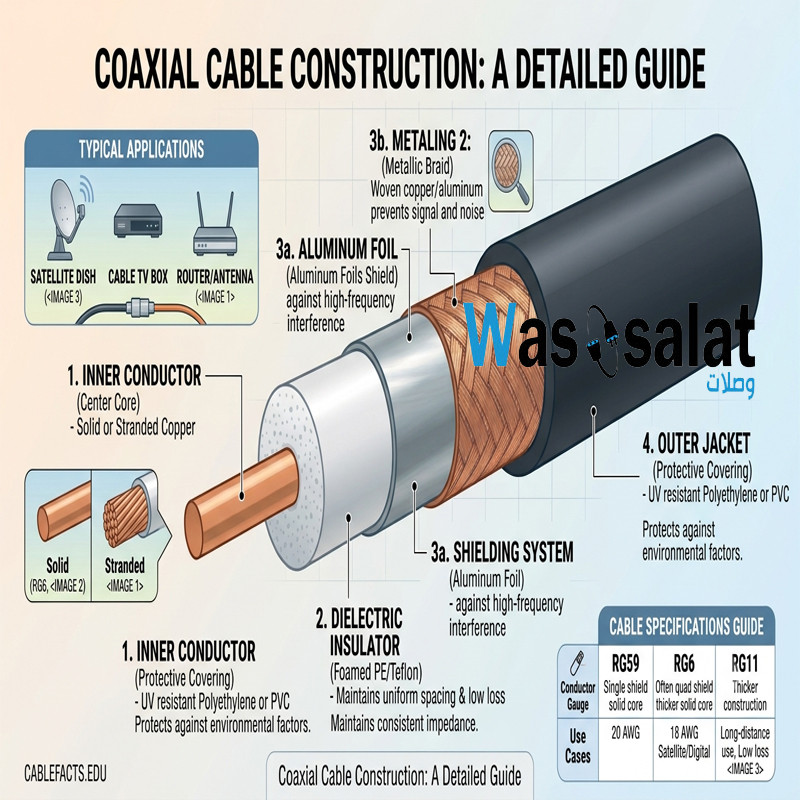 Coaxial Cable Construction: A Complete Layer-by-Layer Breakdown
Learn how coaxial cables are constructed. Understand each layer—conductor, dielectric, shield, and jacket—and how...Read more
Coaxial Cable Construction: A Complete Layer-by-Layer Breakdown
Learn how coaxial cables are constructed. Understand each layer—conductor, dielectric, shield, and jacket—and how...Read more
Latest posts
-
 Waterproof Coaxial Cable: The Complete GuideRead more
 -
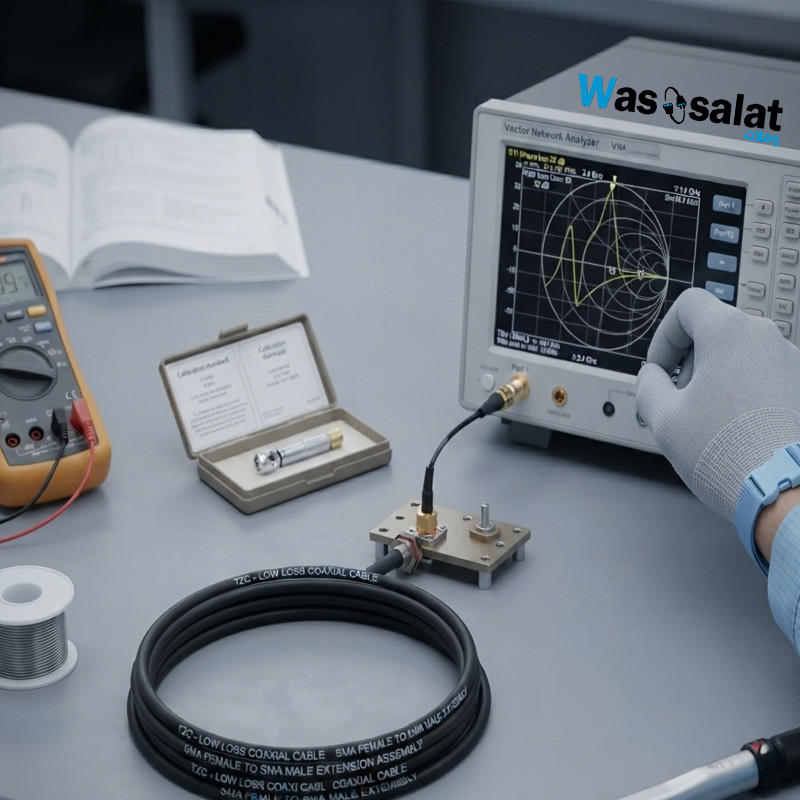 Testing Coaxial Cable: The Complete GuideRead more
This comprehensive guide covers everything you need to know about testing coaxial cable—from simple continuity checks...
-
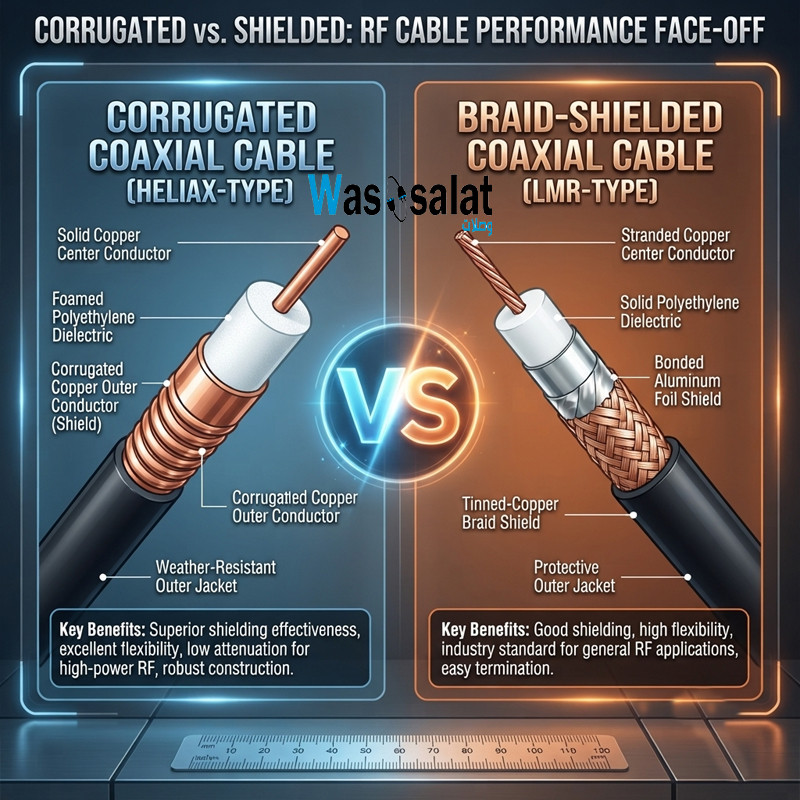 Corrugated Coaxial Cable vs Shielded Coaxial Cable: Complete ComparisonRead more
This comprehensive guide compares both technologies—explaining the differences in construction, performance,...
-
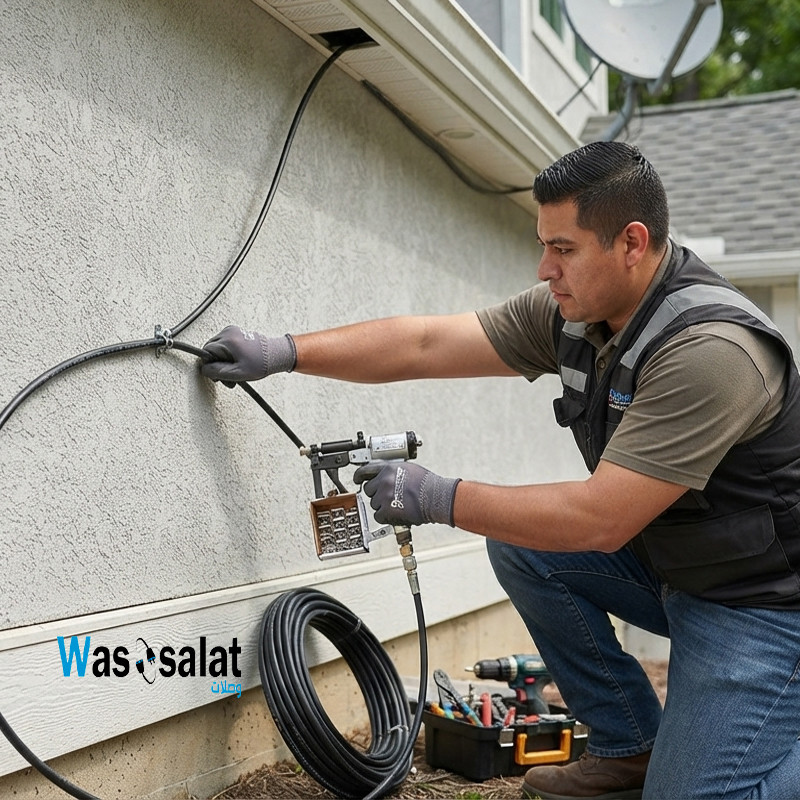 Installing Coaxial Cable: The Complete GuideRead more
This comprehensive guide compares double shield and quad shield coaxial cables—explaining the differences in...
-
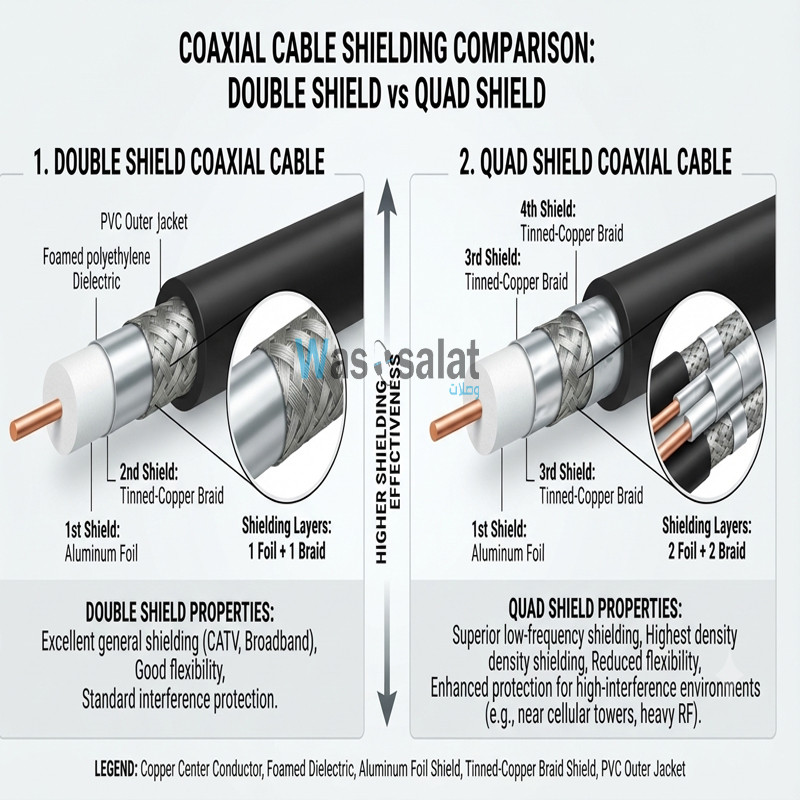 Double Shield vs Quad Shield: Which Coaxial Cable Should You Choose?Read more
This comprehensive guide compares double shield and quad shield coaxial cables—explaining the differences in...
-
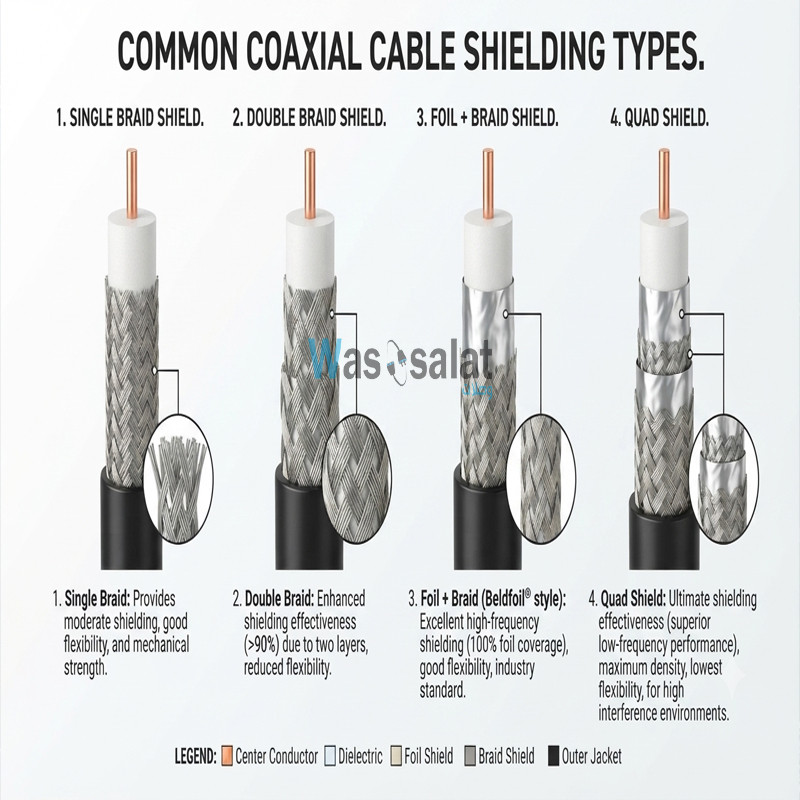 Shielding Types in Coaxial Cables: Complete GuideRead more
This comprehensive guide explains everything you need to know about shielding types—from single shield to quad...
-
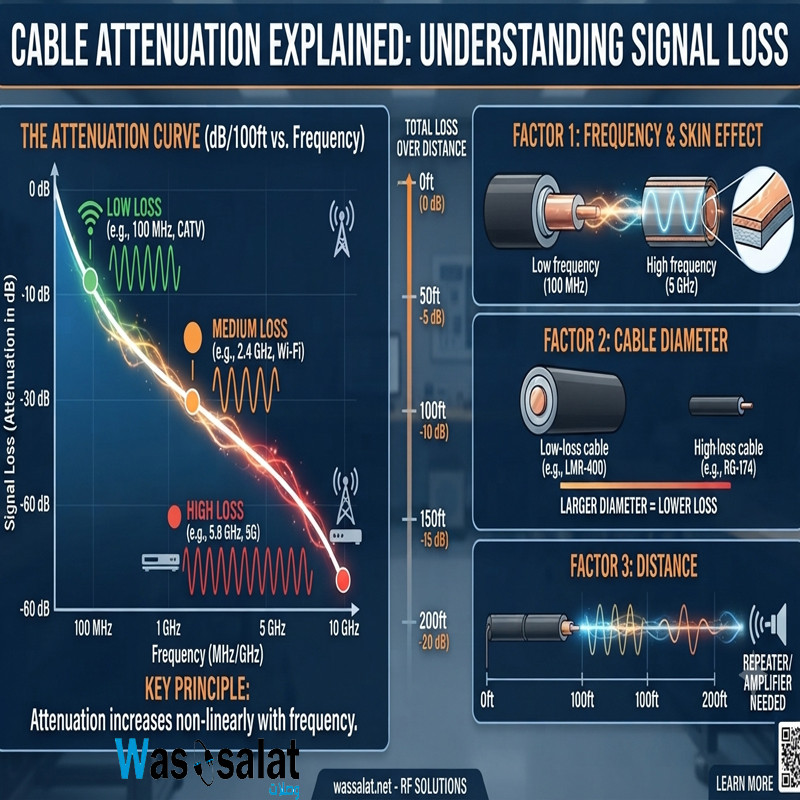 Cable Attenuation Explained: Understanding Signal LossRead more
This comprehensive guide explains everything you need to know about cable attenuation—what it is, what causes it, how...
-
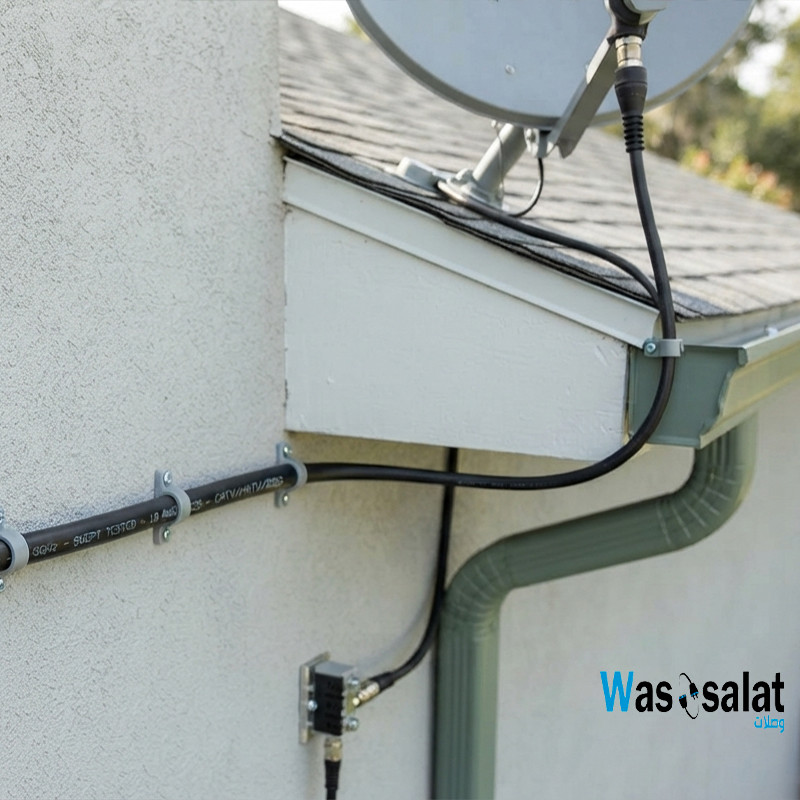 Outdoor Coaxial Cable: Complete Guide & Selection TipsRead more
Choose the right outdoor coaxial cable for your installation. Compare TZC-500/32 vs TZC-500/97, learn about PE...
-
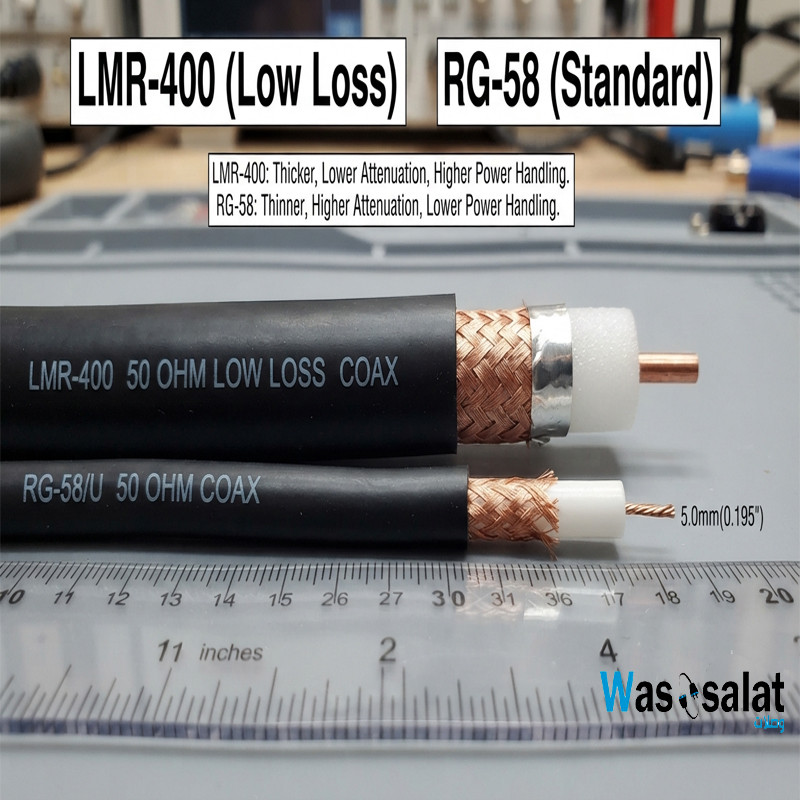 LMR-400 vs RG58: Which Coaxial Cable Should You Choose?Read more
Compare LMR-400 vs RG58 coaxial cables. Learn the differences in signal loss, construction, flexibility, and...
-
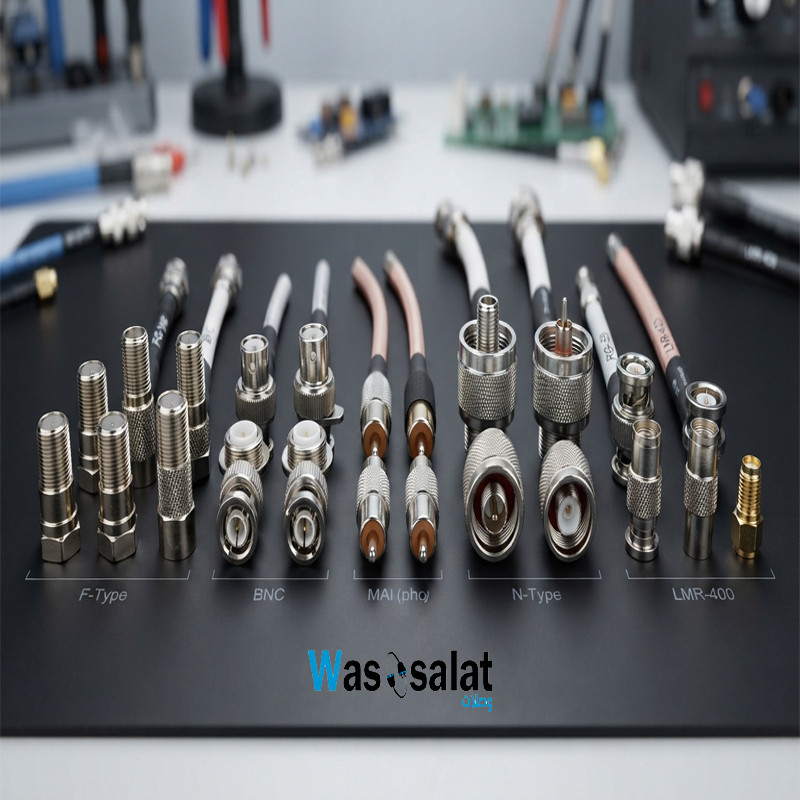 Coax Cable Connectors: Complete Guide to F-Type, BNC, N-Type, SMARead more
Learn about coaxial cable connectors—F-Type, BNC, N-Type, SMA, TNC, and UHF. Compare impedances, frequencies, and...
Leave a comment