

This comprehensive guide covers everything you need to know about waterproof coaxial cables—from understanding water...
Indoor Coaxial Cable: Complete Guide for Residential & Commercial
Indoor Coaxial Cable: The Complete Guide
Published by Wassalat Technical Team
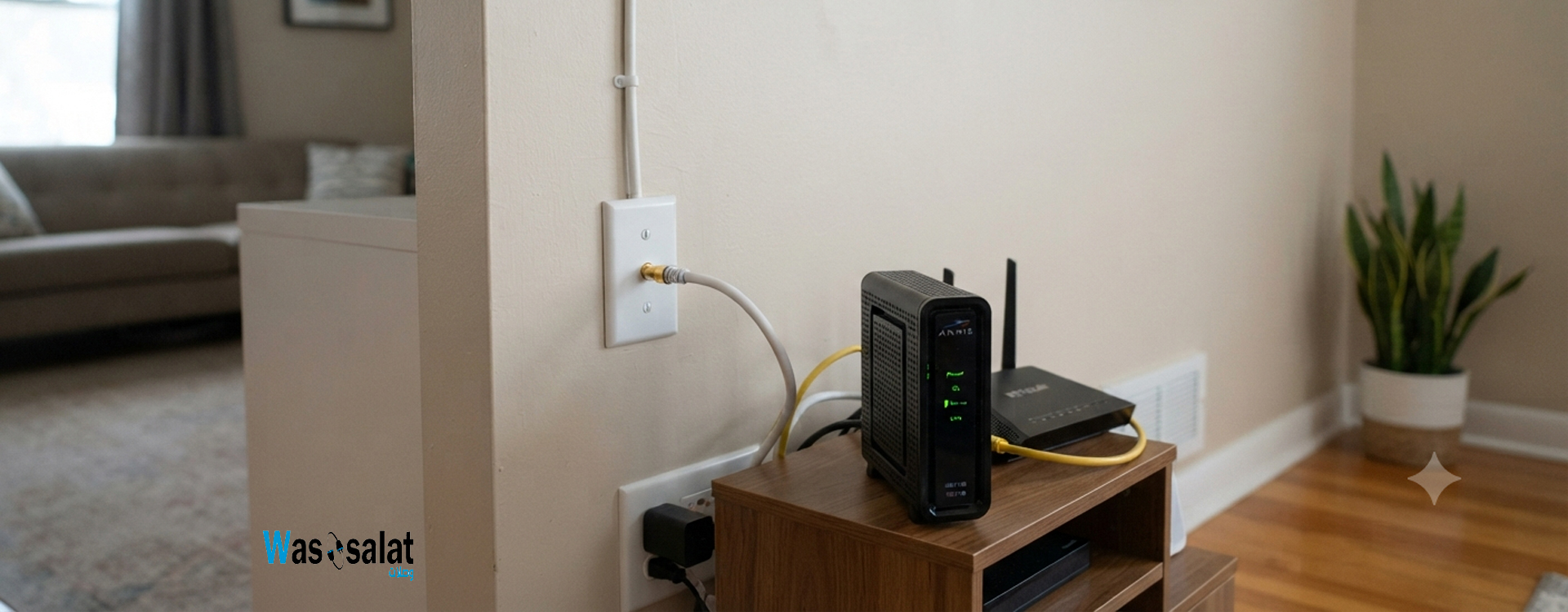
While outdoor cables face harsh environmental challenges, indoor coaxial cables have their own unique requirements—fire safety, flexibility, space constraints, and interference management are all critical factors to consider.
This comprehensive guide covers everything you need to know about indoor coaxial cables—from plenum ratings to installation techniques, and from residential wiring to commercial infrastructure.
? Table of Contents
Why Indoor Cables Are Different
Indoor coaxial cables face challenges that outdoor cables don't:
Indoor Environment Challenges
| Challenge | Effect on Cable | Solution |
|---|---|---|
| Fire Safety | Toxic smoke, fire spread | Plenum-rated, LSZH jackets |
| Space Constraints | Tight bends, wall cavities | Flexible cables, small diameter |
| Interference Sources | Power lines, electronics, WiFi | Proper shielding, cable separation |
| Aesthetics | Visible cables | White/color-matched jackets, concealment |
| Moisture (Indoor) | Condensation, humidity | Water-resistant jackets |
? Key Insight: Indoor cables prioritize safety and flexibility over weather resistance. Choosing the right indoor cable rating is essential for meeting building codes and ensuring fire safety.
Indoor Cable Types
Indoor coaxial cables are categorized by their jacket material and fire rating:
1. PVC (Polyvinyl Chloride)
Fire Rating: Standard (not plenum)
Jacket Color: Usually white, black, or gray
Best For: Residential, home theaters, standard office wiring
Pros: Affordable, flexible, easy to work with
Cons: Produces toxic smoke when burned; not allowed in plenum spaces
Common Use: Cable TV, satellite, antenna connections
2. Riser (CMR – Communications Multipurpose Cable, Riser)
Fire Rating: Riser-rated
Jacket Color: Usually white or gray
Best For: Vertical risers, between floors
Pros: Flame retardant, reduces fire spread
Cons: More expensive than PVC
Common Use: Multi-story buildings, commercial installations
3. Plenum (CMP – Communications Multipurpose Cable, Plenum)
Fire Rating: Plenum-rated
Jacket Material: FEP (Fluorinated Ethylene Propylene) or FRPVC
Jacket Color: Usually white, blue, or yellow
Best For: Air handling spaces, dropped ceilings, HVAC plenums
Pros: Low smoke, low toxicity, fire retardant
Cons: Most expensive, stiffer jacket
Common Use: Commercial buildings, schools, hospitals, offices
4. LSZH (Low Smoke Zero Halogen)
Fire Rating: Low smoke, halogen-free
Jacket Material: Polyolefin-based compound
Best For: Enclosed spaces, sensitive environments
Pros: No toxic gas, minimal smoke
Cons: More expensive
Common Use: Ships, submarines, tunnels, data centers
⚠️ Important: Building codes require specific cable ratings for different locations. Using the wrong cable type can violate fire codes and compromise safety.
Plenum vs Riser vs PVC: What's the Difference?
Plenum Spaces
What is a plenum space?
An air handling space used for heating, ventilation, and air conditioning (HVAC). Typically found in:
- Dropped ceilings
- Raised floors
- Air ducts
- HVAC return plenums
Cable Requirement: Plenum-rated (CMP)
Why: Standard PVC cables can release toxic smoke when burned, which would spread through the building via the air system.
Riser Spaces
What is a riser space?
Vertical shafts that run between floors in a building. Typically found in:
- Elevator shafts
- Electrical closets
- Telecom rooms
- Vertical cable shafts
Cable Requirement: Riser-rated (CMR)
Why: Cables in vertical shafts can spread fire between floors. Riser-rated cables resist flame spread.
General Purpose (PVC)
What is a general purpose space?
Standard indoor areas not used for air handling or vertical shafts:
- Living rooms
- Bedrooms
- Offices
- Retail spaces
Cable Requirement: General purpose (CM/CMG)
Why: Lower fire risk areas where standard PVC cables are acceptable.
Cable Rating Comparison
| Rating | NEC Designation | Fire Resistance | Smoke Level | Toxicity | Cost |
|---|---|---|---|---|---|
| PVC (CM/CMG) | CM/CMG | Low | High | High | $ |
| Riser (CMR) | CMR | Medium | Medium | Medium | $$ |
| Plenum (CMP) | CMP | High | Low | Low | $$$ |
| LSZH | - | High | Very Low | None | $$$$ |
RG6 Indoor Cable
RG6 is the most common indoor coaxial cable for residential and commercial video applications.
RG6 Indoor Specifications
| Parameter | RG6 Value |
|---|---|
| Impedance | 75Ω |
| Center Conductor | 18 AWG (Copper or CCS) |
| Dielectric | Foam PE |
| Shielding Options | Single, Dual, or Quad |
| Jacket Options | PVC (CM), Riser (CMR), Plenum (CMP) |
| Jacket Color | White (most common), Black, Gray |
| Outer Diameter | ~6.9 mm (0.270") |
RG6 Indoor Applications
- ✅ Cable TV (CATV) – Throughout homes and offices
- ✅ Satellite TV – Indoor runs from wall plates to receivers
- ✅ Broadband Internet – Cable modem connections
- ✅ Home Theater – Video distribution
- ✅ Backbone Wiring – Small building distribution
✅ Recommendation: For residential TV installations, use white PVC RG6 with dual shielding. For commercial installations, use the appropriate fire-rated cable.
RG59 Indoor Cable
RG59 is a thinner, more flexible cable used for short indoor video runs and CCTV applications.
RG59 Indoor Specifications
| Parameter | RG59 Value |
|---|---|
| Impedance | 75Ω |
| Center Conductor | 22 AWG (Copper or CCS) |
| Dielectric | Solid PE or Foam PE |
| Shielding Options | Single or Dual |
| Jacket Options | PVC (CM) only |
| Jacket Color | White, Black, Blue (CCTV) |
| Outer Diameter | ~6.1 mm (0.242") |
RG59 Indoor Applications
- ✅ CCTV Patch Cables – Short camera connections
- ✅ Video Patch Panels – Studio equipment interconnections
- ✅ Consumer Video – DVD players, game consoles
- ✅ Test Equipment – Laboratory connections
- ✅ Temporary Installations – Quick setups
⚠️ Note: RG59 is not suitable for long indoor runs or high-definition video. For runs over 50 feet or HD video, use RG6 instead.
Indoor Cable Comparison Table
| Feature | PVC (CM) | Riser (CMR) | Plenum (CMP) | LSZH |
|---|---|---|---|---|
| Fire Rating | Standard | Riser | Plenum | LSZH |
| Smoke Level | High | Medium | Low | Very Low |
| Toxic Gas | High | Medium | Low | None |
| Flexibility | ⭐⭐⭐⭐⭐ | ⭐⭐⭐⭐ | ⭐⭐⭐ | ⭐⭐⭐ |
| Cost | $ | $$ | $$$ | $$$$ |
| Residential Use | ✅ | ✅ | ❌ | ❌ |
| Commercial Use | ⚠️ | ✅ | ✅ | ✅ |
| Plenum Spaces | ❌ | ❌ | ✅ | ✅ |
| Riser Spaces | ❌ | ✅ | ✅ | ✅ |
Indoor Applications
1. Residential (Homes & Apartments)
Recommended Cable: PVC RG6 (CM-rated) with white jacket
Typical Uses:
- ? Cable TV distribution
- ? Satellite TV (receiver to wall plate)
- ? Cable broadband internet
- ? Home theater connections
Installation Tip: Use white cable to blend with walls and baseboards.
2. Commercial Offices
Recommended Cable: Plenum RG6 (CMP) or Riser RG6 (CMR)
Typical Uses:
- ? Video distribution systems
- ? Conference room AV systems
- ? Building-wide internet distribution
Installation Tip: Check local building codes for required cable ratings.
3. Hotels & Hospitality
Recommended Cable: Plenum RG6 (CMP) for public areas, PVC RG6 for rooms
Typical Uses:
- ? In-room TV distribution
- ? Satellite TV (head-end to rooms)
- ? Conference/event AV systems
Installation Tip: Use plenum-rated cable in corridors and common areas.
4. Data Centers
Recommended Cable: LSZH or Plenum-rated
Typical Uses:
- ? RF distribution
- ? Video monitoring systems
- ? Network infrastructure
Installation Tip: LSZH is preferred for data centers to minimize risk in case of fire.
Installation Best Practices
1. Plan Your Routes
- ✅ Map out cable paths before installation
- ✅ Identify obstacles (studs, pipes, electrical wiring)
- ✅ Choose shortest possible path
- ✅ Plan for service loops at each end
2. Keep Away from Interference Sources
| Interference Source | Minimum Separation |
|---|---|
| Power Cables (100-240V) | 12 inches |
| Power Cables (>240V) | 24 inches |
| Fluorescent Lighting | 12 inches |
| Motors / Transformers | 24 inches |
| WiFi Routers | 6 inches |
3. Use Proper Supports
- ✅ Use cable clips or staples (don't crush the cable)
- ✅ Support every 3-5 feet
- ✅ Use J-hooks for ceiling installations
- ✅ Use cable trays for large bundles
4. Avoid Sharp Bends
- ✅ Maintain minimum bend radius
- ✅ RG6: 2-3 inches
- ✅ RG59: 1.5-2 inches
- ✅ Use sweep bends (90° sweeps, not sharp corners)
5. Protect from Physical Damage
- ✅ Use conduit in exposed areas
- ✅ Use wall plates at termination points
- ✅ Avoid running across walking areas
- ✅ Secure cables away from moving parts
6. Label Everything
- ✅ Label both ends of each cable
- ✅ Use clear, readable labels
- ✅ Document cable routing
- ✅ Include date and installer info
Fire Safety & Building Codes
Understanding building codes is essential for indoor cable installations.
NEC (National Electrical Code) Requirements
Article 800 – Communications Circuits
The NEC specifies cable requirements based on location:
| Location | Required Cable Type | NEC Designation |
|---|---|---|
| General indoor spaces | General Purpose | CM / CMG |
| Vertical riser shafts | Riser-rated | CMR |
| Plenum / air handling spaces | Plenum-rated | CMP |
| Outdoor (indoor-run) | Outdoor-rated | CMX |
Common Code Violations
- ❌ Using PVC cable in plenum spaces
- ❌ Using PVC cable in riser shafts
- ❌ Overfilling conduits
- ❌ No cable supports
- ❌ Exceeding bend radius limits
- ❌ No fire-stopping at floor penetrations
⚠️ Warning: Code violations can result in failed inspections, costly rework, and potential liability in case of fire. Always follow local building codes.
Frequently Asked Questions (FAQ)
1. Can I use outdoor cable indoors?
Yes, outdoor cable can be used indoors. However, it's stiffer and harder to work with than indoor cable. It's also more expensive than necessary.
2. What's the difference between plenum and riser cable?
Plenum cable (CMP) is designed for air handling spaces and produces minimal smoke when burned. Riser cable (CMR) is designed for vertical shafts and resists flame spread between floors.
3. Can I use PVC cable in a commercial building?
Only in non-plenum, non-riser spaces. Check local building codes. Many commercial buildings require plenum or riser-rated cable throughout.
4. What color is indoor coaxial cable?
White is most common for residential installations. Commercial cables come in white, blue, yellow, gray, and black. Color doesn't affect performance.
5. Can I run coax cable through walls?
Yes. Use in-wall rated cable (CM, CMR, or CMP depending on location). Use wall plates with F-Type connectors at termination points.
6. Can I run coax cable next to electrical wiring?
Avoid running coax parallel to electrical wiring. Maintain 12+ inches of separation. Cross at 90° angles when necessary.
7. How do I terminate indoor coax cable?
Use a coaxial stripper to prepare the cable, then attach a compression F-Type or BNC connector. Always test after termination.
8. What is the maximum length for indoor RG6?
For cable TV and satellite, RG6 can run up to 150-200 feet indoors. For longer runs, use RG11 or a signal amplifier.
9. Can I use RG6 for audio?
Yes, RG6 can be used for digital audio (S/PDIF) and some analog audio applications. However, dedicated audio cables are often preferred.
10. What is the best coax cable for in-wall installation?
For residential in-wall, use riser-rated (CMR) RG6 with dual shield. For commercial in-wall, use the appropriate cable for your local building codes.
11. Is LSZH cable required by code?
LSZH is not typically required by building codes but is often specified for data centers, ships, and tunnels where halogen-free cable is preferred.
12. Can I splice indoor coax cable?
Yes, using F-Type barrel connectors. However, each splice adds signal loss. Use a continuous cable when possible.
? Related Articles
- Complete Guide to Coaxial Cables
- Outdoor Coaxial Cable
- Coaxial Cable Construction
- RG6 vs RG11
- Coaxial Cable Connectors Guide
- Best Coax Cable for TV
- Browse Coaxial Cables →
? Need Indoor Coaxial Cables?
We stock a full range of indoor coaxial cables—from white PVC RG6 for residential installations to plenum-rated and LSZH cables for commercial applications.
Last Updated: July 2026
© 2026 Wassalat. All rights reserved.
Posted in:
Coaxial Cables
Related posts
-
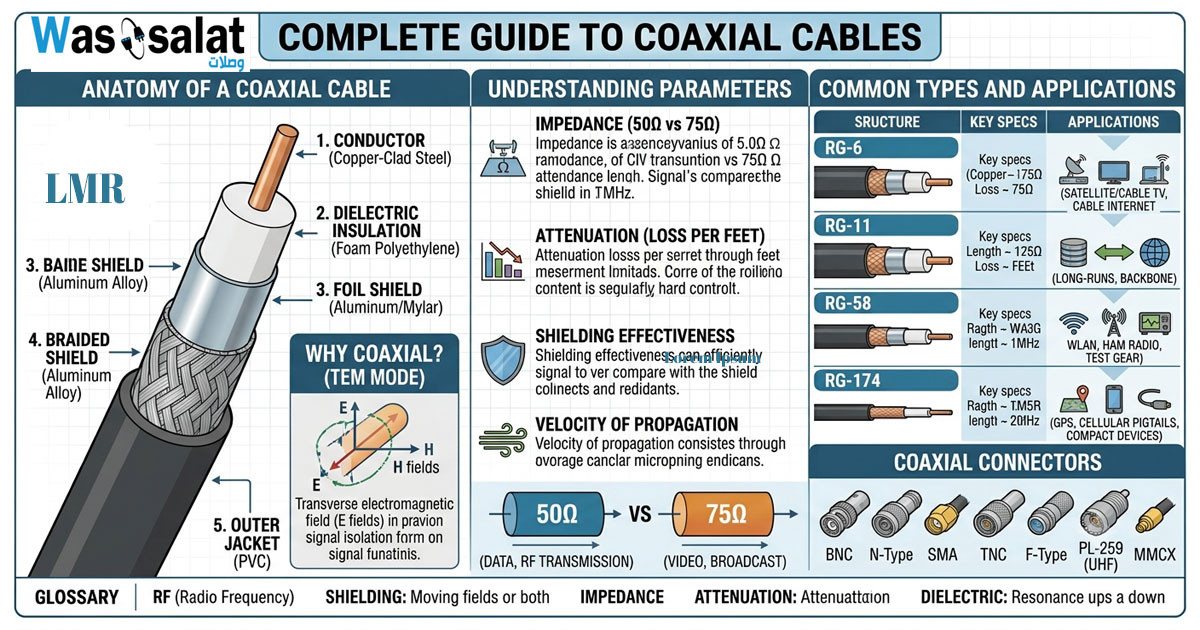 Complete Guide to Coaxial Cables
Everything you need to know about RG-6, LMR-400, impedance, connectors & troubleshooting.Read more
Complete Guide to Coaxial Cables
Everything you need to know about RG-6, LMR-400, impedance, connectors & troubleshooting.Read more -
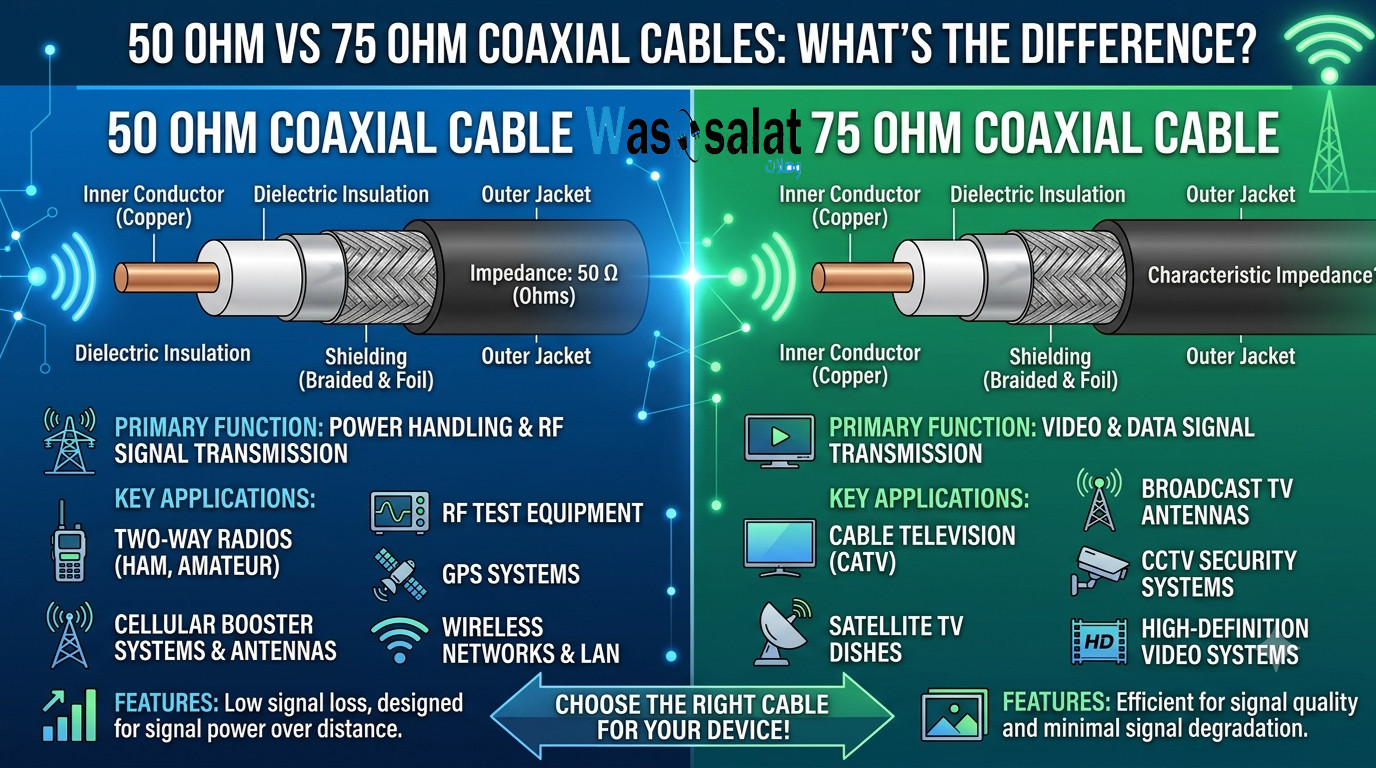 50 Ohm vs 75 Ohm Coaxial Cables: What's the Difference?
Learn the key differences between 50Ω and 75Ω coaxial cables. Find out which impedance you need for WiFi, TV, CCTV,...Read more
50 Ohm vs 75 Ohm Coaxial Cables: What's the Difference?
Learn the key differences between 50Ω and 75Ω coaxial cables. Find out which impedance you need for WiFi, TV, CCTV,...Read more -
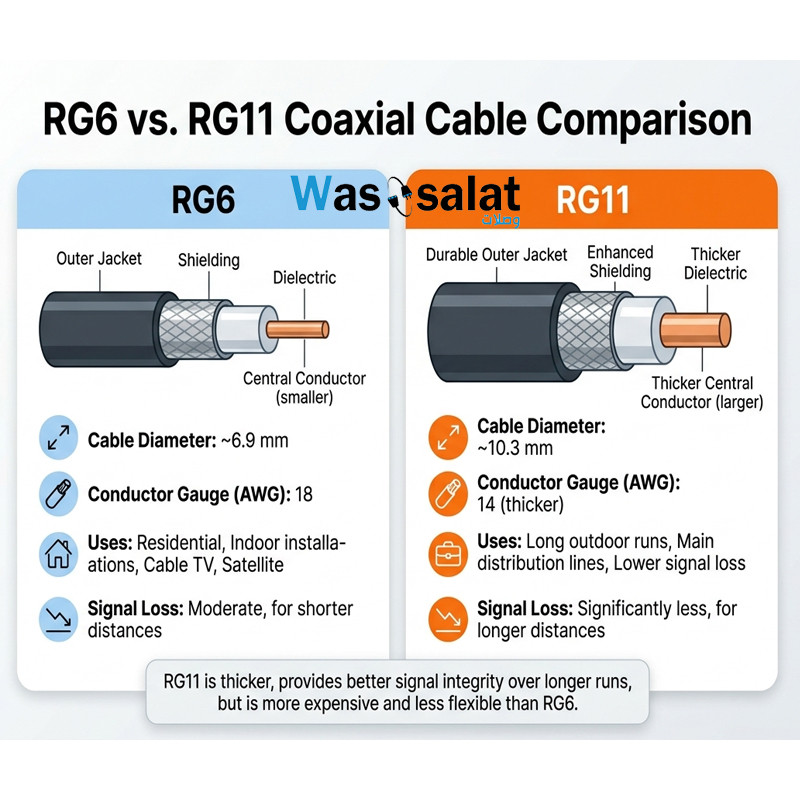 RG6 vs RG11 Coaxial Cables: Which One Do You Need?
Compare RG6 and RG11 coaxial cables. Learn the differences in performance, distance, cost, and when to use each for...Read more
RG6 vs RG11 Coaxial Cables: Which One Do You Need?
Compare RG6 and RG11 coaxial cables. Learn the differences in performance, distance, cost, and when to use each for...Read more -
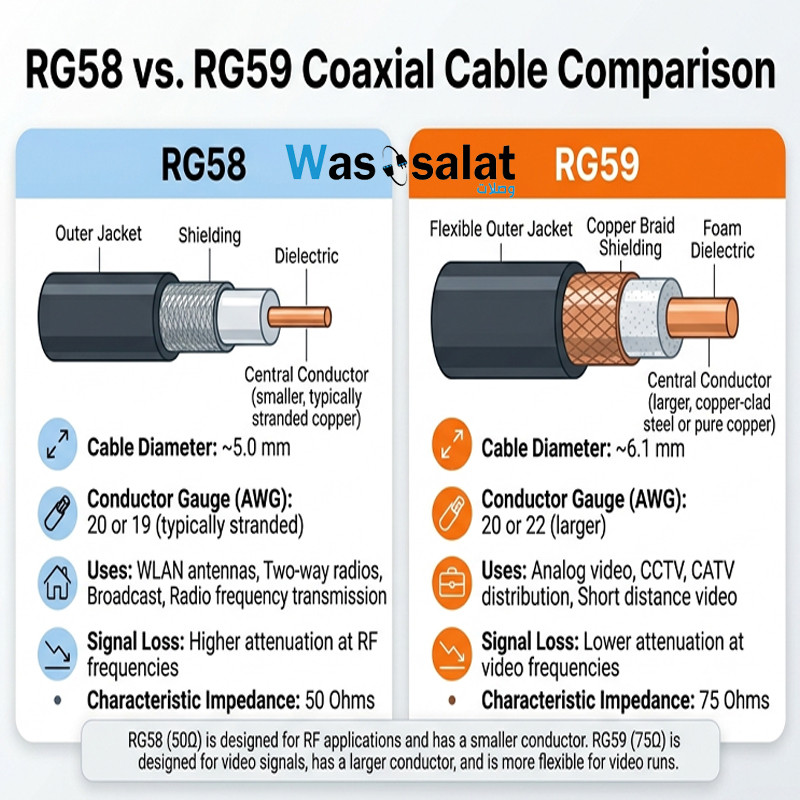 RG58 vs RG59 Coaxial Cables: What's the Difference?
Compare RG58 and RG59 coaxial cables. Learn the critical impedance difference, applications for RF vs video, and...Read more
RG58 vs RG59 Coaxial Cables: What's the Difference?
Compare RG58 and RG59 coaxial cables. Learn the critical impedance difference, applications for RF vs video, and...Read more -
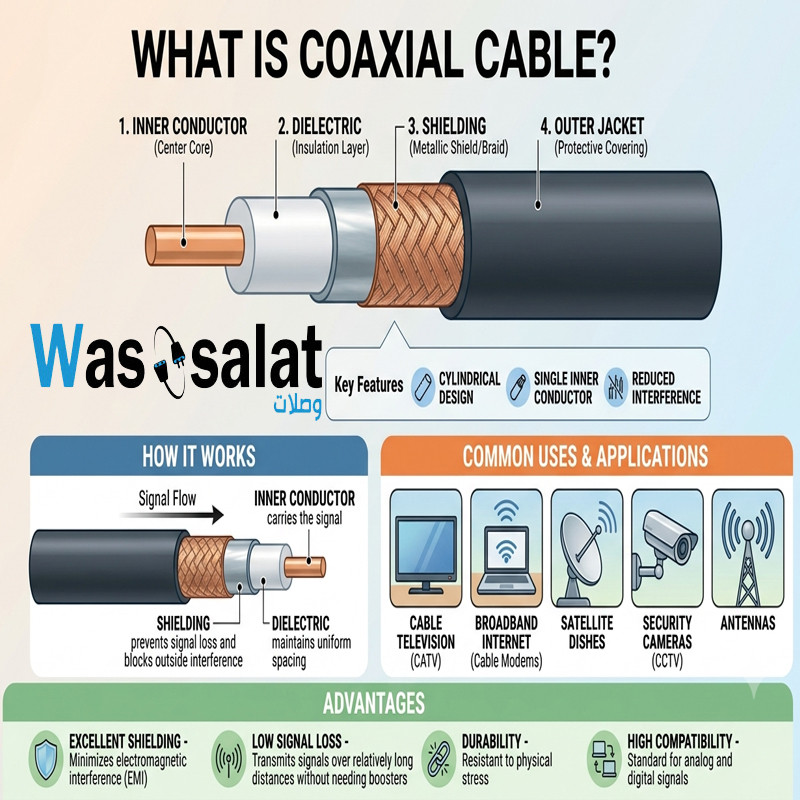 What Is a Coaxial Cable? The Complete Beginner's Guide
Learn what coaxial cables are, how they work, their construction, types, and applications. The beginner's guide to...Read more
What Is a Coaxial Cable? The Complete Beginner's Guide
Learn what coaxial cables are, how they work, their construction, types, and applications. The beginner's guide to...Read more
Latest posts
-
 Waterproof Coaxial Cable: The Complete GuideRead more
 -
 Testing Coaxial Cable: The Complete GuideRead more
This comprehensive guide covers everything you need to know about testing coaxial cable—from simple continuity checks...
-
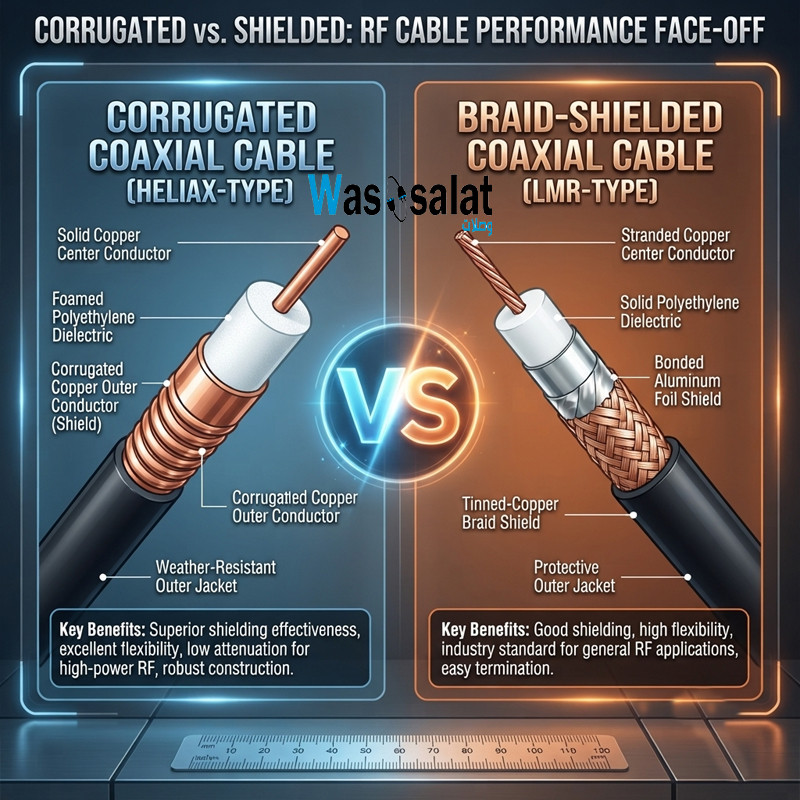 Corrugated Coaxial Cable vs Shielded Coaxial Cable: Complete ComparisonRead more
This comprehensive guide compares both technologies—explaining the differences in construction, performance,...
-
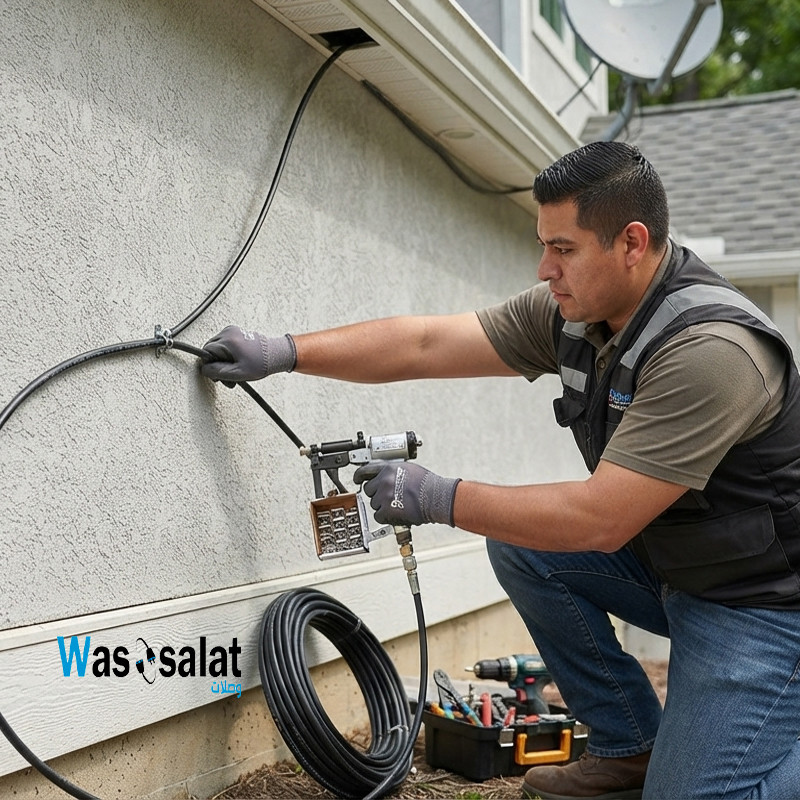 Installing Coaxial Cable: The Complete GuideRead more
This comprehensive guide compares double shield and quad shield coaxial cables—explaining the differences in...
-
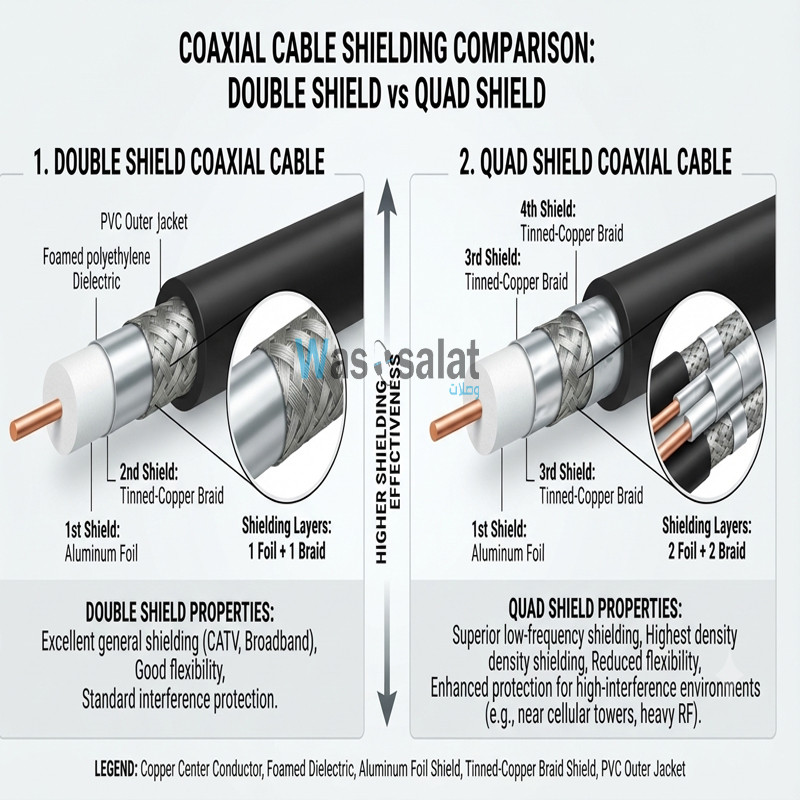 Double Shield vs Quad Shield: Which Coaxial Cable Should You Choose?Read more
This comprehensive guide compares double shield and quad shield coaxial cables—explaining the differences in...
-
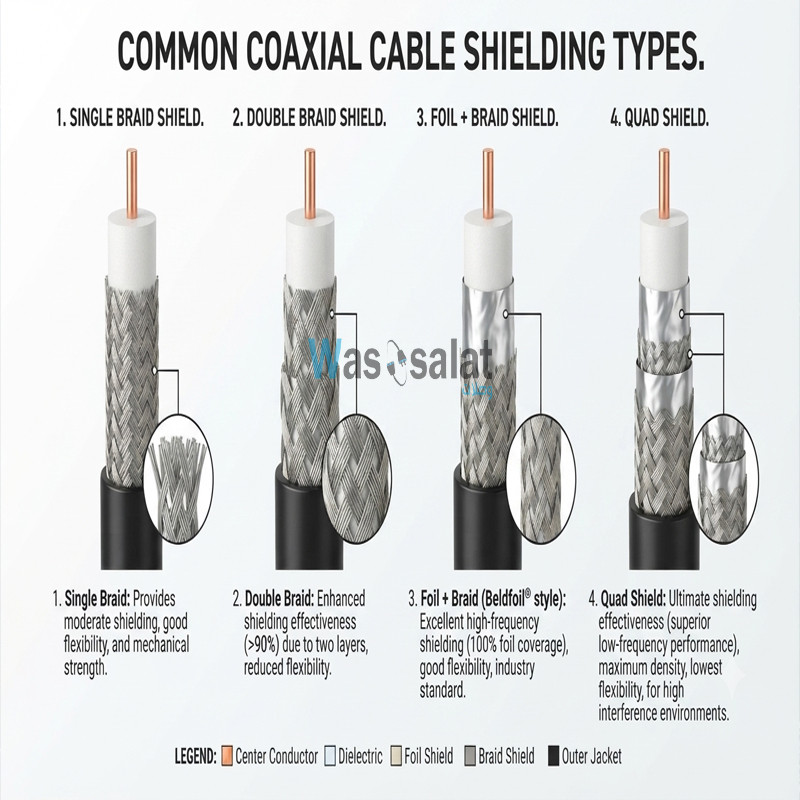 Shielding Types in Coaxial Cables: Complete GuideRead more
This comprehensive guide explains everything you need to know about shielding types—from single shield to quad...
-
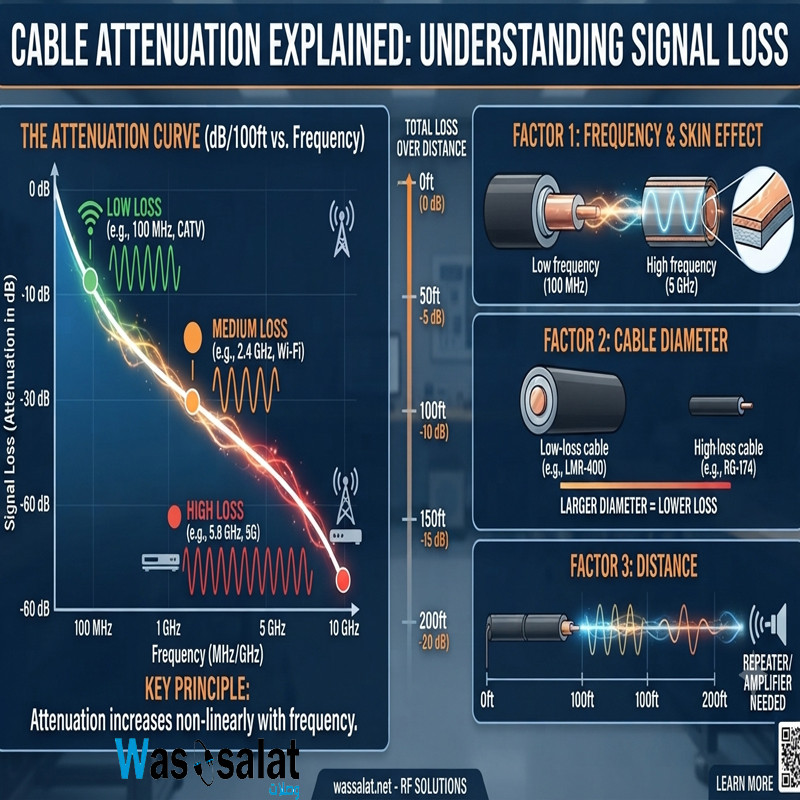 Cable Attenuation Explained: Understanding Signal LossRead more
This comprehensive guide explains everything you need to know about cable attenuation—what it is, what causes it, how...
-
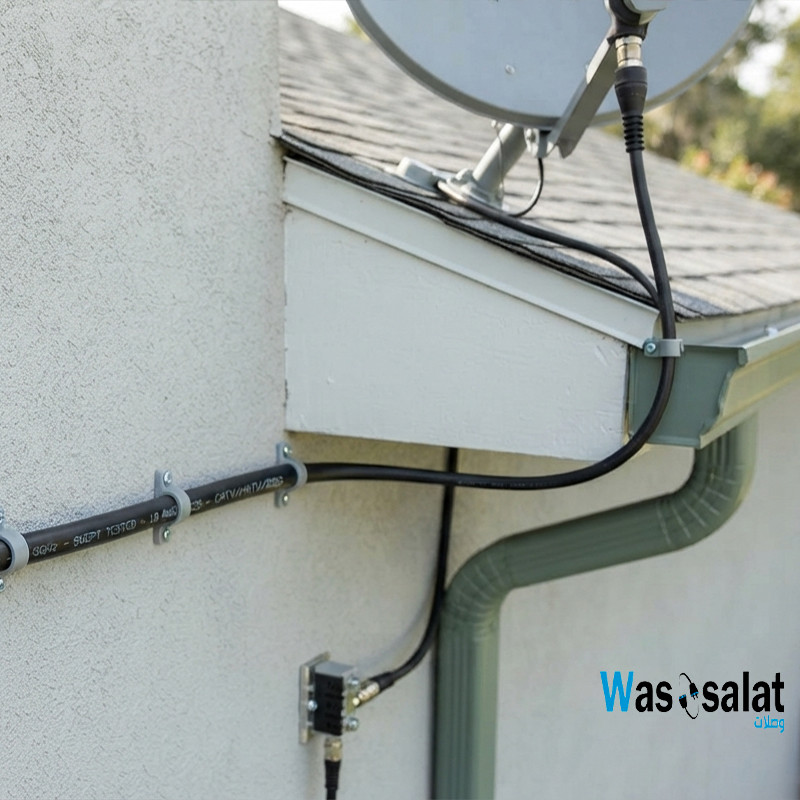 Outdoor Coaxial Cable: Complete Guide & Selection TipsRead more
Choose the right outdoor coaxial cable for your installation. Compare TZC-500/32 vs TZC-500/97, learn about PE...
-
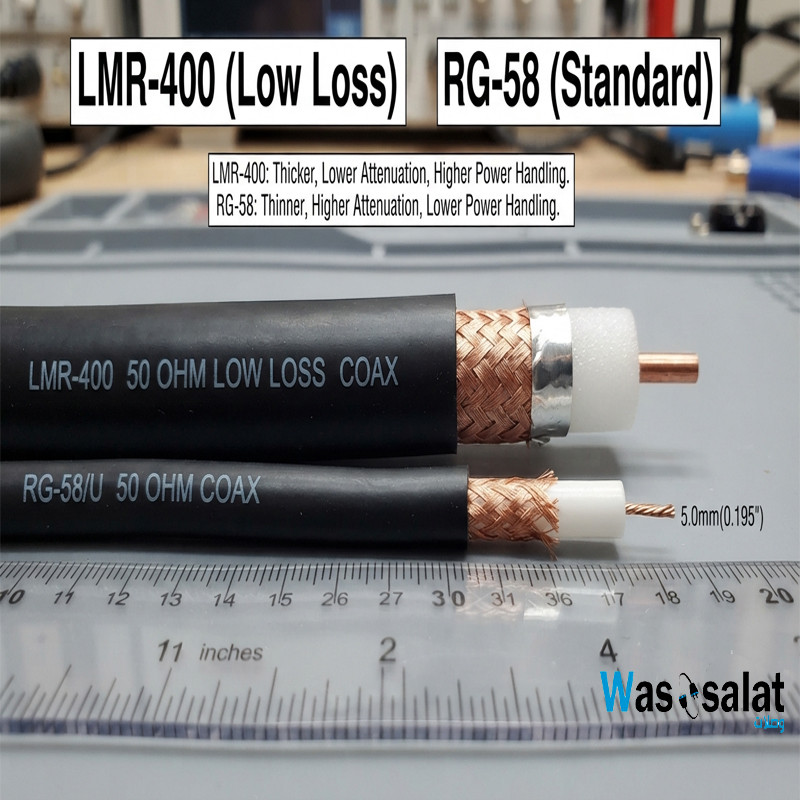 LMR-400 vs RG58: Which Coaxial Cable Should You Choose?Read more
Compare LMR-400 vs RG58 coaxial cables. Learn the differences in signal loss, construction, flexibility, and...
-
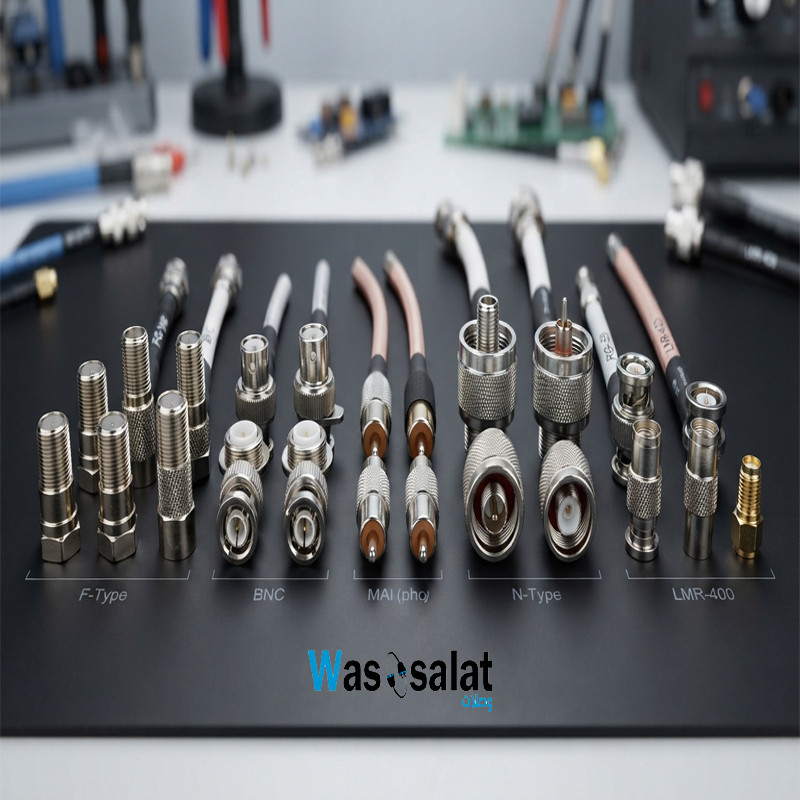 Coax Cable Connectors: Complete Guide to F-Type, BNC, N-Type, SMARead more
Learn about coaxial cable connectors—F-Type, BNC, N-Type, SMA, TNC, and UHF. Compare impedances, frequencies, and...
Leave a comment