
This comprehensive guide covers everything you need to know about waterproof coaxial cables—from understanding water...
Best Coax Cable for Mobile Networks (4G, 5G & Cellular)
Best Coax Cable for Mobile Networks (4G, 5G & Cellular)
Published by Wassalat Technical Team
When deploying mobile network equipment—whether it's a 4G LTE booster, a 5G router, a cellular base station, or a Distributed Antenna System (DAS)—choosing the right coaxial cable is critical for performance.
Mobile networks operate at high frequencies (700 MHz to 6 GHz) where signal loss is significant. The wrong cable can turn a strong signal into a weak one, reducing data speeds and call quality.
This comprehensive guide explains which coaxial cables work best for mobile networks, from small home boosters to large-scale carrier installations.
? Table of Contents
Why Coax Choice Matters for Mobile Networks
Mobile network signals are high-frequency RF signals that are extremely susceptible to cable loss. Here's why cable selection is critical:
The Frequency Challenge
Mobile networks operate across multiple frequency bands:
| Technology | Frequency Range | Signal Loss Challenge |
|---|---|---|
| 4G LTE | 700–2600 MHz | Moderate to High |
| 5G Sub-6 | 3.5–6 GHz | High |
| 5G mmWave | 24–39 GHz | Extreme (requires specialized cables) |
? Key Insight: Signal loss increases with frequency. A cable that works fine for TV (750 MHz) may lose 2-3x more signal at 5G frequencies (3.5 GHz). Always choose low-loss cables for mobile applications.
The 50Ω Standard
All mobile network equipment uses 50Ω impedance. This includes:
- 4G and 5G routers
- Cellular signal boosters
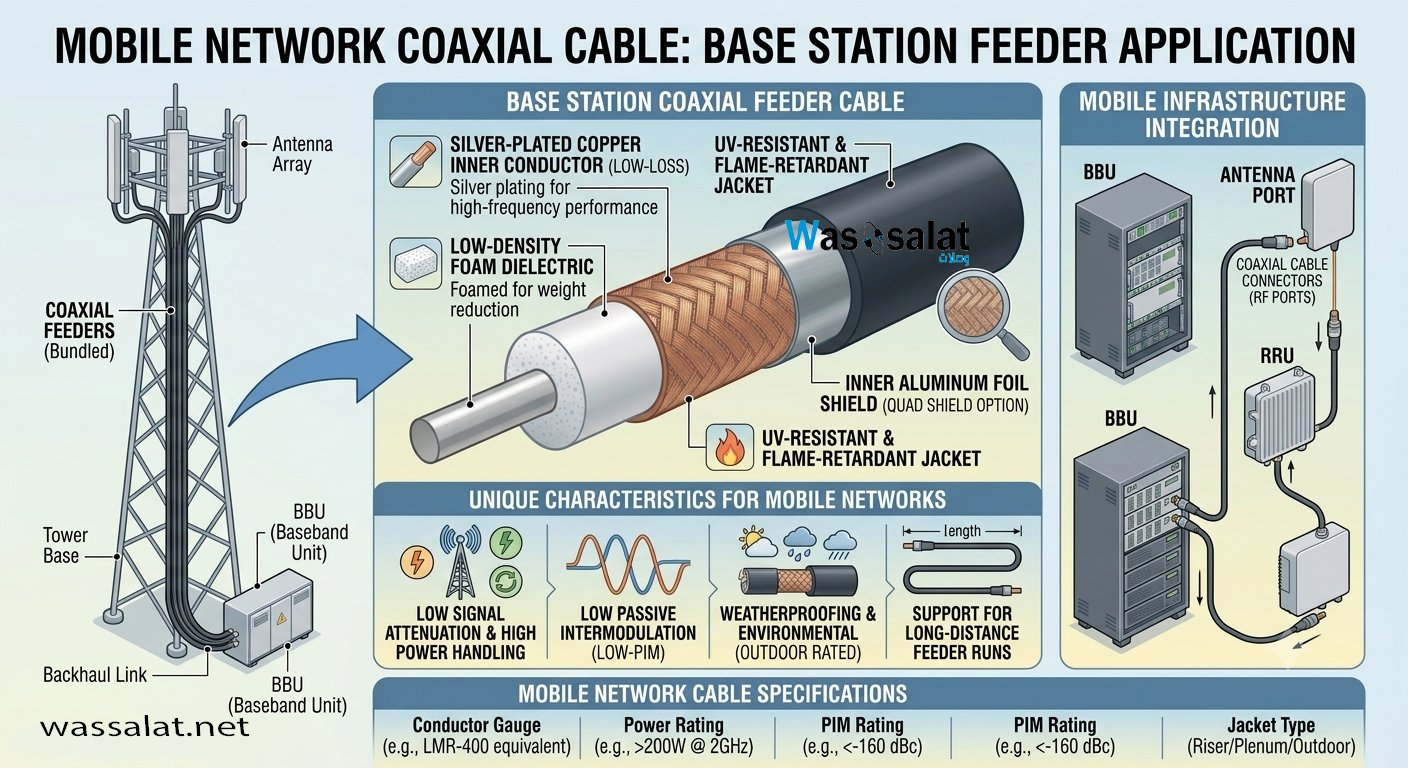
- Base stations and towers
- Distributed Antenna Systems (DAS)
- Mobile network antennas
Using a 75Ω cable (like RG-6) will cause impedance mismatch, signal reflections, and poor performance. Always use 50Ω cables for mobile network applications.[citation:2][citation:5][citation:8]
⚠️ Critical: Never use RG-6 (75Ω) for mobile network connections. Use only 50Ω coaxial cables like LMR-400, Wilson400, or RG-58.
Best Cables for Home & Small Office
For home cellular boosters, 5G routers, and small office installations, these cables offer the right balance of performance and cost.
1. Wilson RG-6 (Not Recommended for Mobile!)
Impedance: 75Ω
⚠️ NOT RECOMMENDED: While some consumer boosters come with RG-6, it's 75Ω and not ideal for mobile. Use 50Ω cables instead.[citation:3]
2. Wilson400 (LMR-400 Equivalent)
Impedance: 50Ω
Attenuation: Ultra low-loss
Best For: Home boosters, 5G routers, short to medium runs (under 50 ft)
Key Feature: UV and weather resistant for outdoor use. Excellent for 4G LTE and 5G Sub-6 signals.[citation:6]
3. LMR-240 / HF240
Impedance: 50Ω
Attenuation: Low-loss
Best For: Short runs (under 20 ft), indoor installations
Key Feature: More flexible than LMR-400, easier to route in tight spaces. Performs much better than RG-58 or LMR-195.[citation:7]
4. RG-58 (Budget Option)
Impedance: 50Ω
Attenuation: Moderate
Best For: Very short runs (under 10 ft), test equipment, temporary setups
Key Feature: Low cost, flexible, readily available. Not recommended for permanent installations due to higher loss at mobile frequencies.[citation:10]
| Cable | Impedance | Best Run Length | Best For |
|---|---|---|---|
| Wilson400 / LMR-400 | 50Ω | Up to 50 ft | Home boosters, routers |
| LMR-240 / HF240 | 50Ω | Up to 20 ft | Indoor, tight spaces |
| RG-58 | 50Ω | Up to 10 ft | Budget, temporary |
Best Cables for Professional Installations
For professional installations—including WISPs, cellular repeaters, and commercial buildings—these cables offer industry-leading performance.
1. LMR-400
Impedance: 50Ω
Attenuation: Ultra low-loss
Frequency Range: DC – 6 GHz
Applications: 4G/5G repeaters, WISP, WLAN, SCADA
Key Feature: Industry standard for low-loss RF. Excellent flexibility compared to rigid cables. UV-resistant PE jacket for outdoor service.[citation:4]
2. LMR-600
Impedance: 50Ω
Attenuation: Extremely low-loss
Frequency Range: DC – 6 GHz
Applications: Tower feeds, base stations, long antenna runs
Key Feature: Loss figures comparable to rigid corrugated cables but with superior flexibility. Designed for outdoor use with 20+ year lifespan. Popular for tower use and extreme low-loss applications.[citation:1][citation:4]
3. MIG-600 (LMR-600 Equivalent)
Impedance: 50Ω
Applications: Tower use, extreme low-loss applications
Key Feature: PE jacket resists harsh temperatures, grease, chemicals, and salt water. 20+ year lifespan. Suitable for direct burial.[citation:1]
4. HELIAX 7/8" (Carrier Grade)
Impedance: 50Ω
Shielding: Solid corrugated copper outer conductor (110 dB shielding)
Applications: Base stations, Distributed Antenna Systems (DAS), UHF, cellular towers
Key Feature: Low PIM (Passive Intermodulation) performance. 7/8" diameter with hollow copper inner conductor. Standard for carrier-grade installations.[citation:8]
✅ Professional Recommendation: For most professional installations, LMR-400 is the gold standard. For longer runs or tower feeds, upgrade to LMR-600 or MIG-600. For carrier-grade base stations, use HELIAX 7/8" or similar air-dielectric cables.[citation:2][citation:5]
Best Cables for Carrier & Base Station
For cellular carriers, mobile network operators, and large-scale infrastructure, these high-performance cables are used:
1. Air-Dielectric Cable (1-5/8")
Impedance: 50Ω
Applications: Base stations, broadcast, terrestrial microwave
Key Feature: Air dielectric provides extremely low attenuation. Solid copper inner and outer conductors virtually eliminate intermodulation.[citation:5]
2. HELIFLEX® 7/8" Air-Dielectric Cable
Impedance: 50Ω
Applications: Feedlines for broadcast and terrestrial microwave antennas, wireless cellular, PCS base stations
Key Feature: 93% velocity of propagation (signal speed). Solid outer conductor creates continuous RFI/EMI shield. 73 kW peak power rating. Low VSWR and outstanding intermodulation performance.[citation:2]
3. HELIAX® Series (CommScope)
Impedance: 50Ω
Shielding: Solid corrugated copper outer conductor
Applications: DAS, UHF, cellular base stations
Key Feature: 110 dB shielding effectiveness. Low PIM targets. Available in multiple sizes including 7/8" for extensive runs in large antenna systems.[citation:8]
Side-by-Side Comparison
| Cable | Impedance | Loss @ 900 MHz | Loss @ 2.4 GHz | Best Use |
|---|---|---|---|---|
| RG-58 | 50Ω | 32 dB/100m | 55 dB/100m | Short cables, budget |
| LMR-240 | 50Ω | ~17 dB/100m | ~28 dB/100m | Indoor, short runs |
| LMR-400 | 50Ω | ~10 dB/100m | ~17 dB/100m | Professional, medium runs |
| LMR-600 | 50Ω | ~6 dB/100m | ~10 dB/100m | Tower feeds, long runs |
| HELIAX 7/8" | 50Ω | ~4 dB/100m | ~6.5 dB/100m | Carrier, base stations |
Connector Types for Mobile Networks
Mobile network equipment uses specific connector types. Match your cable to your equipment:
| Connector | Impedance | Common Use |
|---|---|---|
| N-Type | 50Ω | Base stations, antennas, professional equipment |
| SMA | 50Ω | Routers, modems, 5G devices, small antennas |
| F-Type | 75Ω | ⚠️ Consumer boosters (not ideal for mobile) |
| BNC (50Ω) | 50Ω | Test equipment, some radios |
? Tip: Most 5G routers and cellular modems use SMA connectors. Professional base stations use N-Type. Always check your equipment's connector type before buying cable.[citation:10][citation:11]
Maximum Cable Length Guide
Cable length directly impacts signal strength. Use these guidelines:
| Cable | Max Length (4G LTE) | Max Length (5G Sub-6) | Application |
|---|---|---|---|
| RG-58 | 10-15 ft | 5-10 ft | Test equipment, temporary |
| LMR-240 | 20-30 ft | 15-20 ft | Indoor, short runs |
| LMR-400 | 50-100 ft | 30-60 ft | Professional, moderate runs |
| LMR-600 | 100-200 ft | 60-120 ft | Tower feeds, long runs |
| HELIAX 7/8" | 200-500 ft | 150-300 ft | Carrier infrastructure |
Note: These are guidelines. Actual distance depends on signal strength, equipment, and acceptable signal loss.
Installation Tips for Mobile Network Cables
1. Minimize Cable Length
Every foot of cable adds signal loss. Use the shortest possible cable run. For example, one user found that a 35 ft run of coax was causing issues with 5G n71 band (2.5 GHz) performance.[citation:11]
2. Use Proper Connectors
Match connectors to equipment. For 5G routers, SMA is common. For professional equipment, N-Type is standard.[citation:10]
3. Weatherproof Outdoor Connections
Outdoor cables should have UV-resistant PE jackets. Use weatherproof tape on connections exposed to the elements.[citation:1][citation:4]
4. Avoid Sharp Bends
Excessive bending can damage cables. Respect minimum bend radii. LMR-600 has a bend radius of about 4 inches, while HELIAX 7/8" requires 5 inches static bend radius.[citation:8]
5. Test After Installation
Use a cable tester or signal meter to verify proper performance after installation.
Frequently Asked Questions (FAQ)
1. Can I use RG-6 for 5G?
No. RG-6 is 75Ω and will cause impedance mismatch. Always use 50Ω cables like LMR-400 for 5G applications.
2. What cable should I use for a 4G booster?
For home boosters, use Wilson400 (LMR-400 equivalent) or LMR-240 for shorter runs. Both are 50Ω and designed for RF applications.[citation:6]
3. Is LMR-400 good for 5G?
Yes. LMR-400 is excellent for 5G Sub-6 frequencies (up to 6 GHz). It offers ultra-low loss and high flexibility.[citation:4]
4. What is the best cable for a 5G router antenna?
Use LMR-400 for runs up to 50 ft, or LMR-240 for runs under 20 ft. Match connectors to your router's antenna port (usually SMA or N-Type).[citation:10]
5. Can I use SMA connectors on LMR-400?
Yes, LMR-400 cables can be terminated with SMA connectors, N-Type, or other 50Ω connector types depending on your equipment.[citation:10]
6. What is the difference between LMR-400 and LMR-600?
LMR-600 has lower attenuation (signal loss) than LMR-400. It's used for longer runs or more demanding applications. Both are 50Ω and operate up to 6 GHz.[citation:4]
7. How long can I run LMR-400 for 5G?
For 5G Sub-6 (3.5 GHz), LMR-400 can run 30-60 feet with acceptable loss. For longer runs, upgrade to LMR-600 or use a signal amplifier.
8. What is HELIAX cable used for?
HELIAX is carrier-grade cable used in base stations, DAS, and cellular towers. It provides extremely low loss and excellent shielding for professional installations.[citation:8]
9. Is there a cable for 5G mmWave?
5G mmWave (24-39 GHz) typically requires specialized waveguides or high-frequency cables. Standard LMR cables may not perform well at these frequencies.
10. Can I use my existing TV coax for mobile network?
No. TV coax is 75Ω (RG-6) and will not work properly with 50Ω mobile network equipment. You need a 50Ω cable like LMR-400.
? Related Articles
- Complete Guide to Coaxial Cables
- 50 Ohm vs 75 Ohm Coax
- RG6 vs RG11
- Coaxial Cable Impedance
- The Complete Guide to Antennas
- Browse Coaxial Cables →
? Need Cables for Your Mobile Network?
We stock professional 50Ω coaxial cables for all mobile applications—from LMR-240 for indoor setups to LMR-600 for tower feeds and HELIAX for carrier installations.
Last Updated: July 2026
© 2026 Wassalat. All rights reserved.
Posted in:
Coaxial Cables
Related posts
-
 Complete Guide to Coaxial Cables
Everything you need to know about RG-6, LMR-400, impedance, connectors & troubleshooting.Read more
Complete Guide to Coaxial Cables
Everything you need to know about RG-6, LMR-400, impedance, connectors & troubleshooting.Read more -
 50 Ohm vs 75 Ohm Coaxial Cables: What's the Difference?
Learn the key differences between 50Ω and 75Ω coaxial cables. Find out which impedance you need for WiFi, TV, CCTV,...Read more
50 Ohm vs 75 Ohm Coaxial Cables: What's the Difference?
Learn the key differences between 50Ω and 75Ω coaxial cables. Find out which impedance you need for WiFi, TV, CCTV,...Read more -
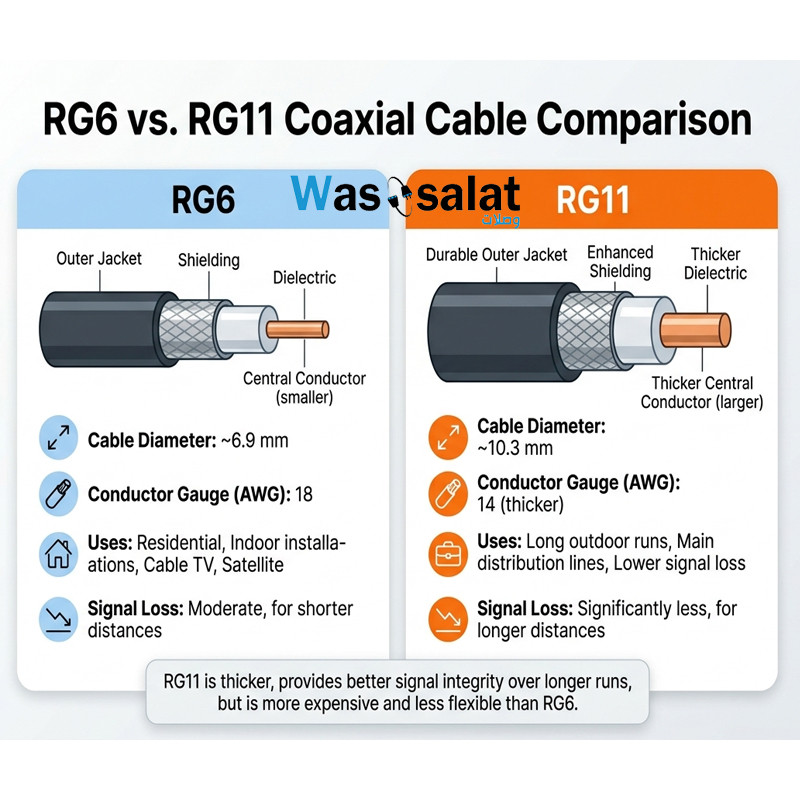 RG6 vs RG11 Coaxial Cables: Which One Do You Need?
Compare RG6 and RG11 coaxial cables. Learn the differences in performance, distance, cost, and when to use each for...Read more
RG6 vs RG11 Coaxial Cables: Which One Do You Need?
Compare RG6 and RG11 coaxial cables. Learn the differences in performance, distance, cost, and when to use each for...Read more -
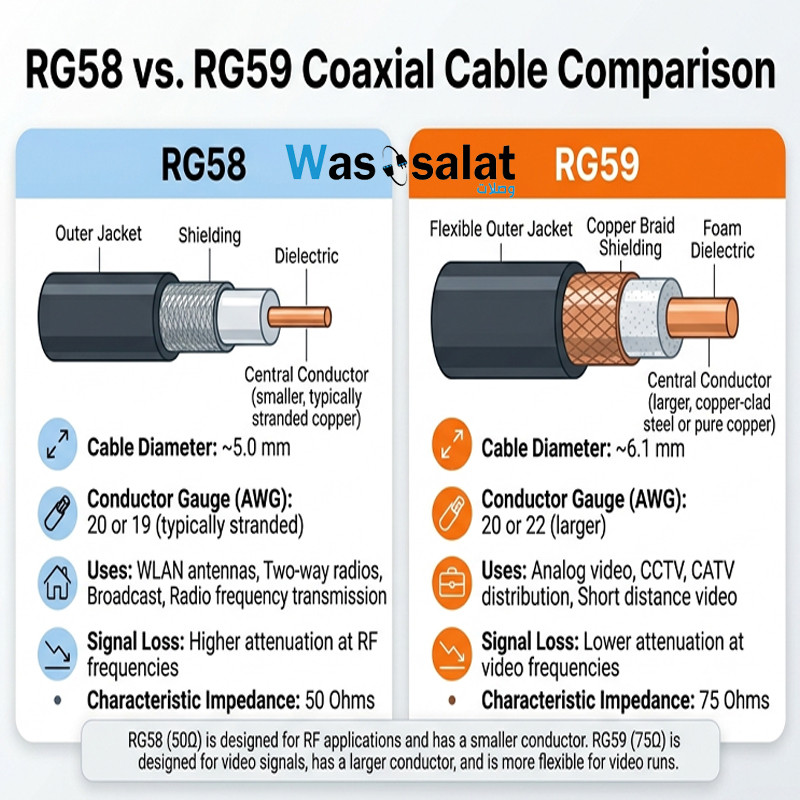 RG58 vs RG59 Coaxial Cables: What's the Difference?
Compare RG58 and RG59 coaxial cables. Learn the critical impedance difference, applications for RF vs video, and...Read more
RG58 vs RG59 Coaxial Cables: What's the Difference?
Compare RG58 and RG59 coaxial cables. Learn the critical impedance difference, applications for RF vs video, and...Read more -
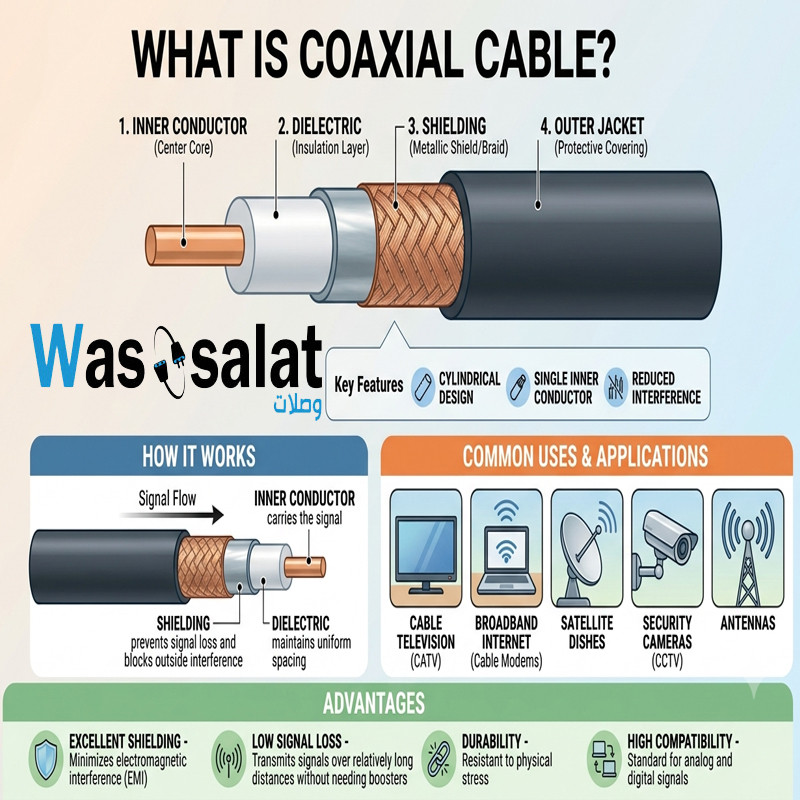 What Is a Coaxial Cable? The Complete Beginner's Guide
Learn what coaxial cables are, how they work, their construction, types, and applications. The beginner's guide to...Read more
What Is a Coaxial Cable? The Complete Beginner's Guide
Learn what coaxial cables are, how they work, their construction, types, and applications. The beginner's guide to...Read more
Latest posts
-
 Waterproof Coaxial Cable: The Complete GuideRead more
 -
 Testing Coaxial Cable: The Complete GuideRead more
This comprehensive guide covers everything you need to know about testing coaxial cable—from simple continuity checks...
-
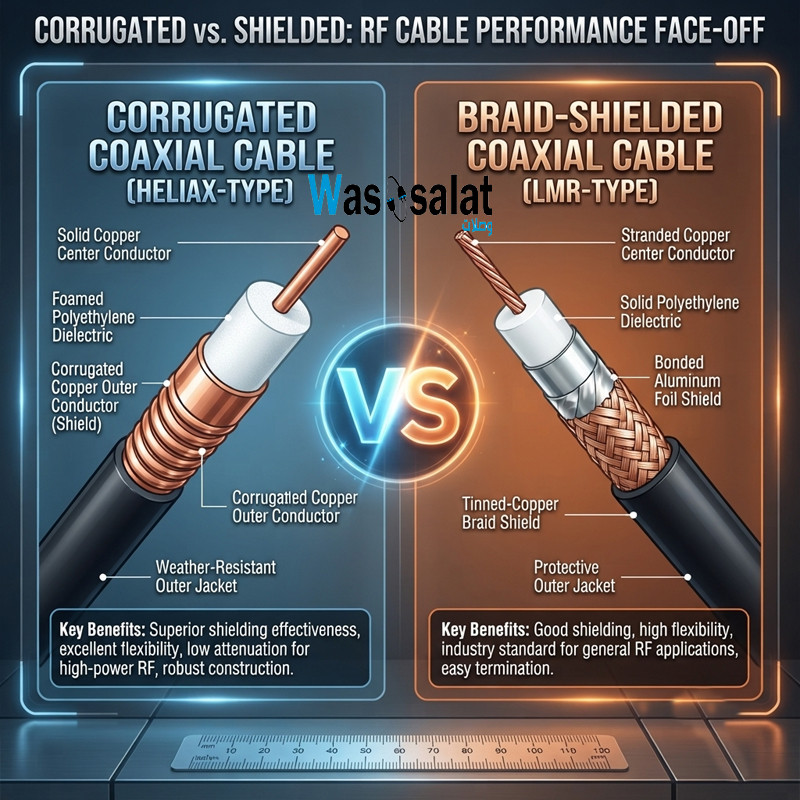 Corrugated Coaxial Cable vs Shielded Coaxial Cable: Complete ComparisonRead more
This comprehensive guide compares both technologies—explaining the differences in construction, performance,...
-
 Installing Coaxial Cable: The Complete GuideRead more
This comprehensive guide compares double shield and quad shield coaxial cables—explaining the differences in...
-
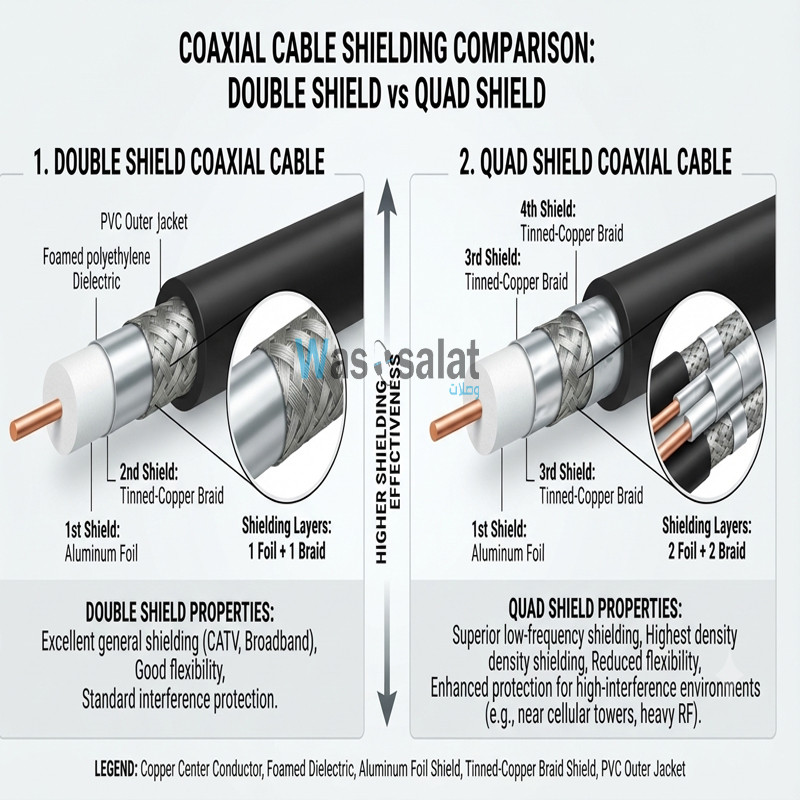 Double Shield vs Quad Shield: Which Coaxial Cable Should You Choose?Read more
This comprehensive guide compares double shield and quad shield coaxial cables—explaining the differences in...
-
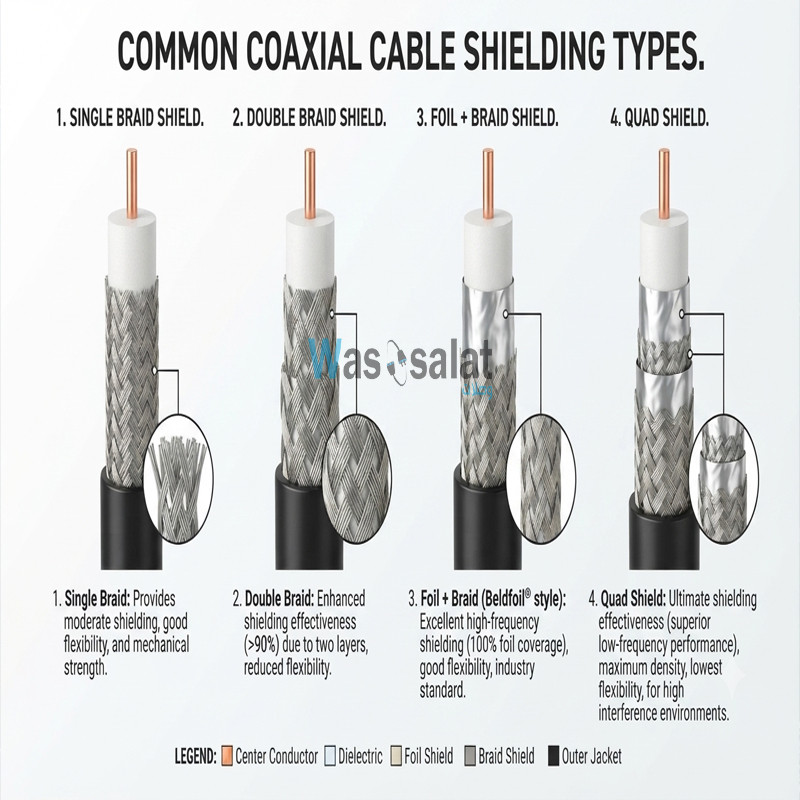 Shielding Types in Coaxial Cables: Complete GuideRead more
This comprehensive guide explains everything you need to know about shielding types—from single shield to quad...
-
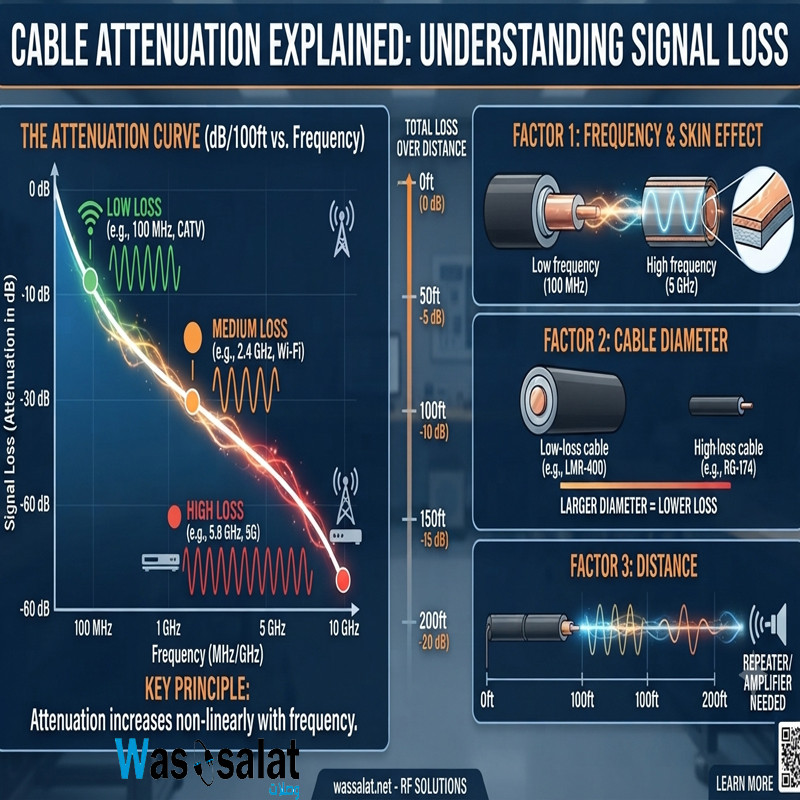 Cable Attenuation Explained: Understanding Signal LossRead more
This comprehensive guide explains everything you need to know about cable attenuation—what it is, what causes it, how...
-
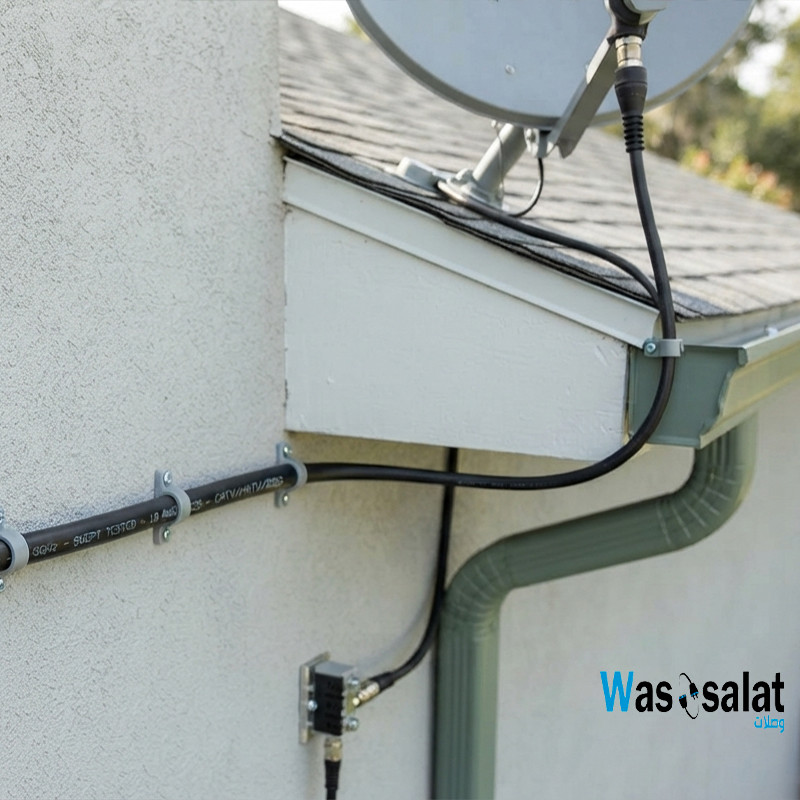 Outdoor Coaxial Cable: Complete Guide & Selection TipsRead more
Choose the right outdoor coaxial cable for your installation. Compare TZC-500/32 vs TZC-500/97, learn about PE...
-
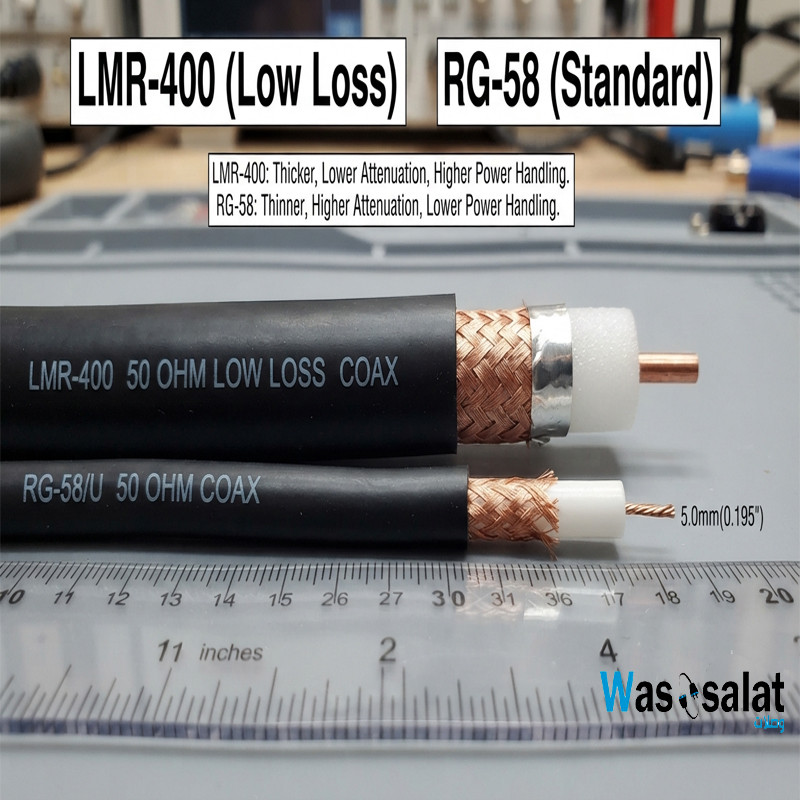 LMR-400 vs RG58: Which Coaxial Cable Should You Choose?Read more
Compare LMR-400 vs RG58 coaxial cables. Learn the differences in signal loss, construction, flexibility, and...
-
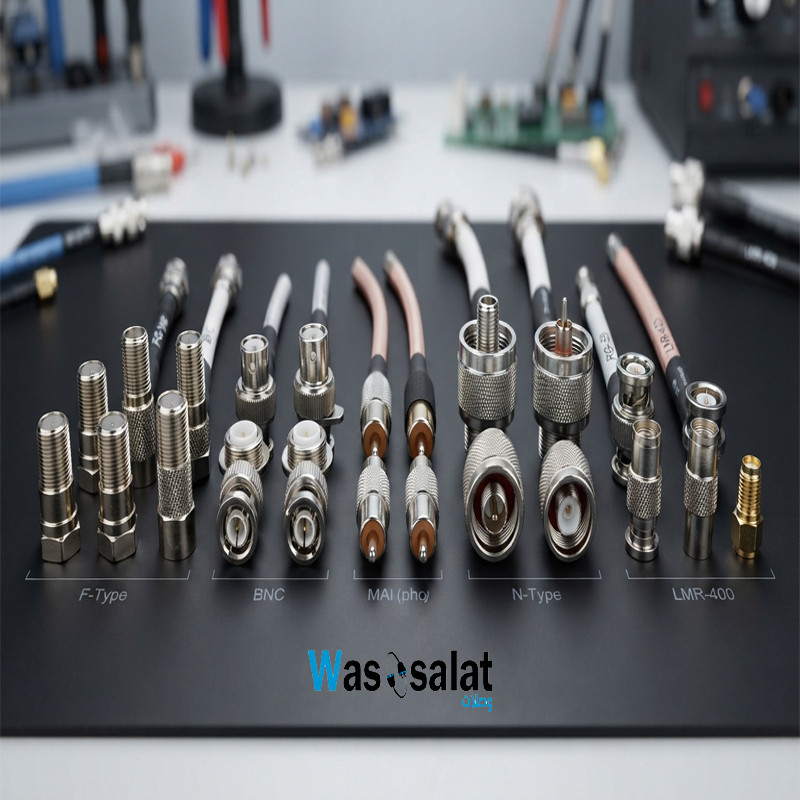 Coax Cable Connectors: Complete Guide to F-Type, BNC, N-Type, SMARead more
Learn about coaxial cable connectors—F-Type, BNC, N-Type, SMA, TNC, and UHF. Compare impedances, frequencies, and...
Leave a comment