

This comprehensive guide covers everything you need to know about waterproof coaxial cables—from understanding water...
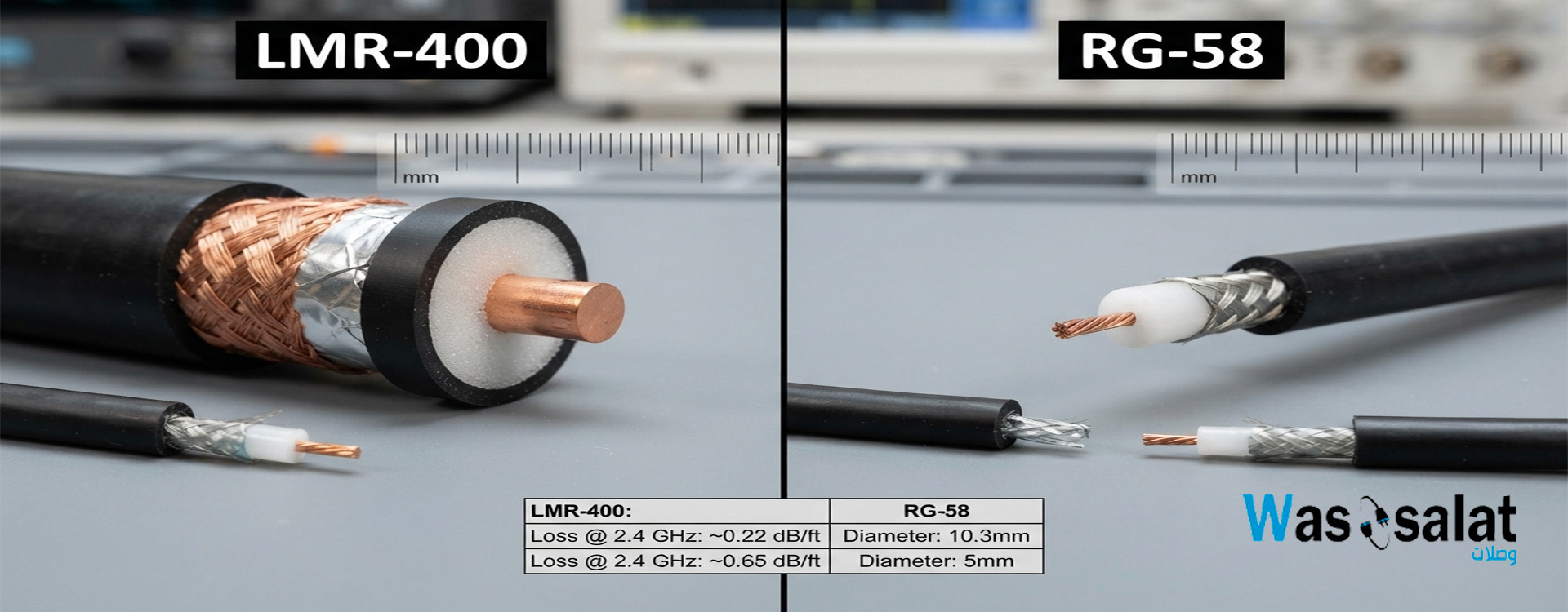
LMR-400 vs RG58: Which Coaxial Cable Should You Choose?
LMR-400 vs RG58: Which Coaxial Cable Should You Choose?
Published by Wassalat Technical Team
Choosing between LMR-400 and RG58 coaxial cables is one of the most common dilemmas for anyone setting up a wireless network, radio system, or antenna installation. Both are 50Ω cables, but their performance, construction, and applications are worlds apart.
This comprehensive guide compares LMR-400 and RG58 side-by-side—covering signal loss, construction, flexibility, cost, and ideal applications—so you can make the right choice for your project.
? Table of Contents
Quick Overview
The short answer is: for most modern, performance-critical applications, LMR-400 is the superior choice. The core difference lies in signal loss (attenuation) and intended application.
LMR-400 – The Low-Loss Champion
What it is: A professional-grade, ultra-low-loss 50Ω coaxial cable designed for high-performance, long-distance RF applications.
Key Strengths: Ultra-low signal loss, high frequency support (6 GHz), outdoor-rated, durable
Best For: Long cable runs, outdoor antennas, base stations, WISPs, 4G/5G, WiFi
RG58 – The Flexible & Affordable Option
What it is: A thin, flexible, budget-friendly 50Ω coaxial cable that has been a staple in the RF world for decades.
Key Strengths: Excellent flexibility, low cost, easy to work with
Best For: Short patch cables, test leads, internal equipment connections, mobile installations
? Key Insight: Both cables are 50Ω and can be used for the same applications. However, LMR-400 delivers dramatically better performance over distance. The choice is about performance vs. budget.
Key Specifications Comparison
| Parameter | LMR-400 | RG58 |
|---|---|---|
| Impedance | 50Ω | 50Ω |
| Max Frequency | 6 GHz | 1 GHz |
| Center Conductor | Solid Copper (BC) | Stranded or Solid Tinned Copper |
| Conductor Size | 13 AWG (1.78 mm) | 20 AWG (0.81 mm) |
| Dielectric Type | Foam PE | Solid PE |
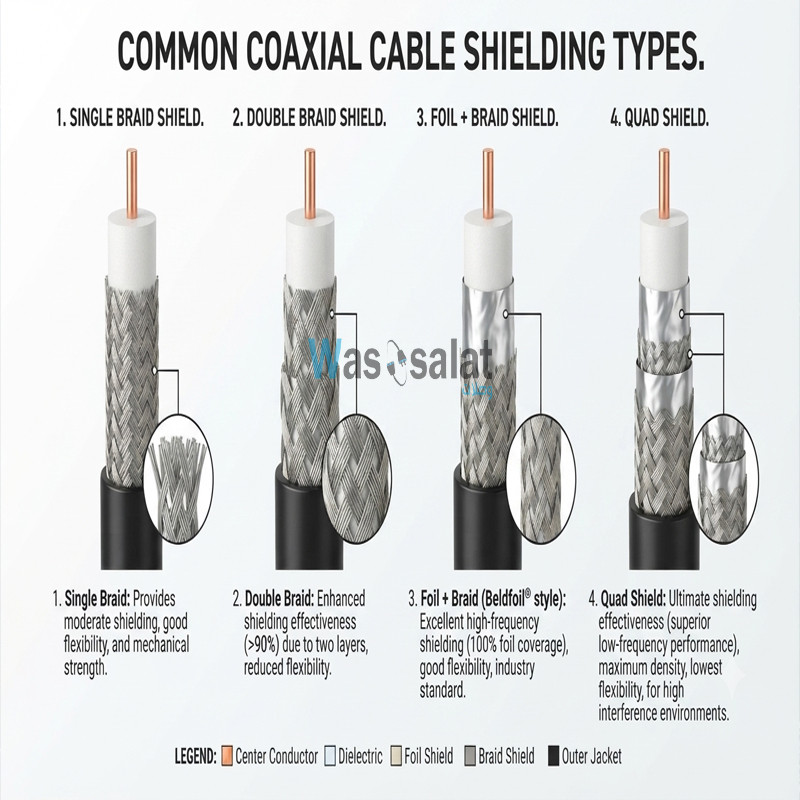
| Shield Type | Foil + Double Braid | Single Braid (90-95%) |
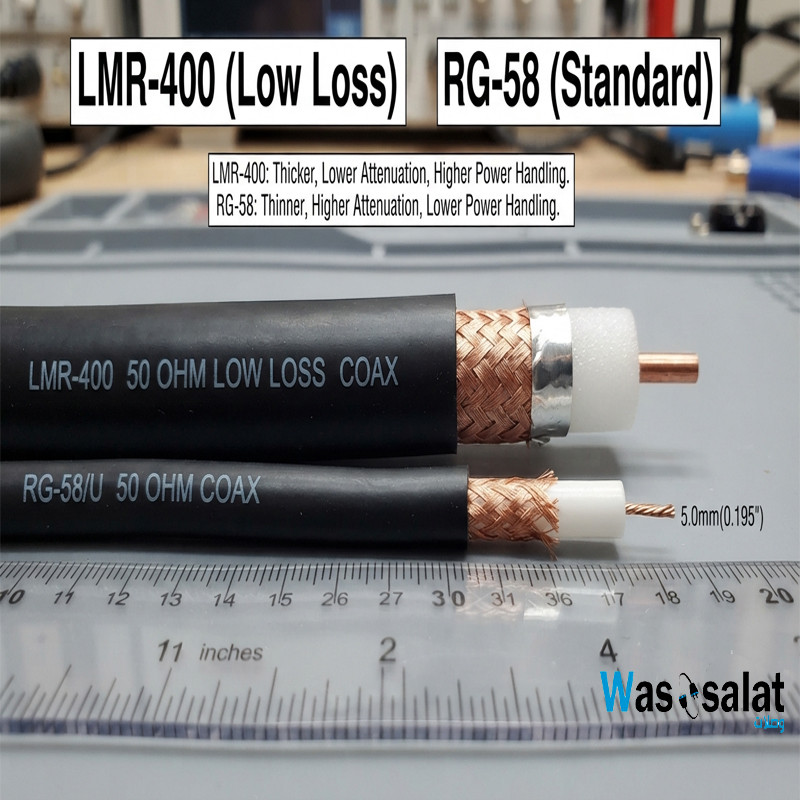
| Outer Diameter | 10.29 mm (0.405") | 4.95 mm (0.195") |
| Jacket Material | PE (Outdoor Rated) | PVC (Indoor Only) |
| Flexibility | ⭐⭐ | ⭐⭐⭐⭐⭐ |
| Weight (per 100 ft) | ~12 lbs | ~3 lbs |
| Cost (per 100 ft) | ~$80-120 | ~$20-30 |
Signal Loss (Attenuation) Comparison
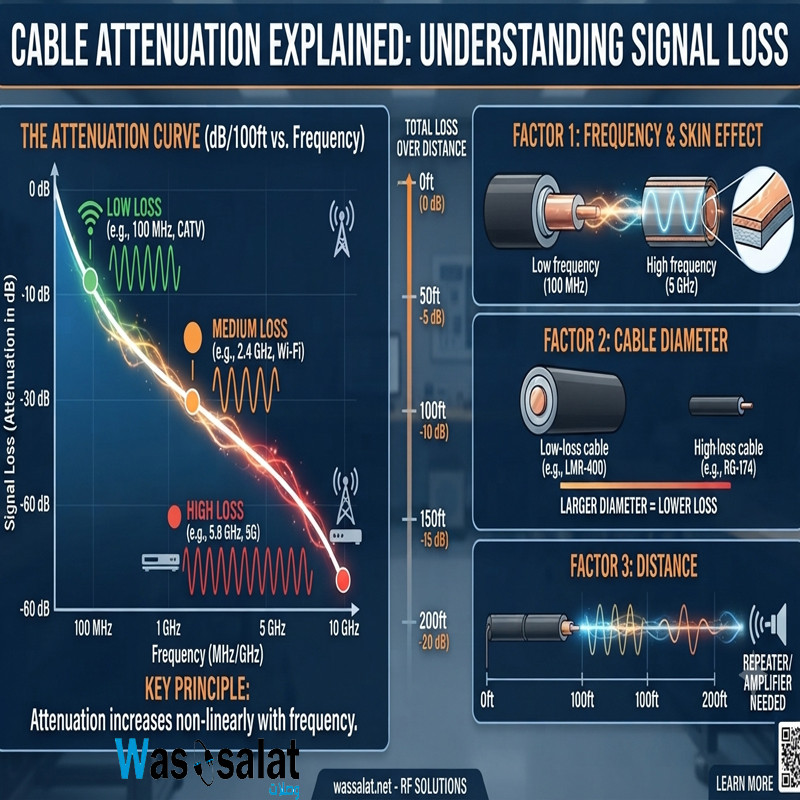
Signal loss is the single most important difference between LMR-400 and RG58. LMR-400 has dramatically lower loss at all frequencies.
Attenuation Table
| Frequency | LMR-400 (dB/100ft) | RG58 (dB/100ft) | LMR-400 Advantage |
|---|---|---|---|
| 30 MHz | 0.8 dB | 2.5 dB | 68% less loss |
| 100 MHz | 1.5 dB | 4.5 dB | 67% less loss |
| 400 MHz | 3.0 dB | 9.0 dB | 67% less loss |
| 900 MHz | 3.9 dB | 16.0 dB | 76% less loss |
| 1500 MHz | 5.1 dB | 22.0 dB | 77% less loss |
| 2400 MHz (2.4 GHz) | 6.7 dB | >30 dB | LMR-400 only viable option |
| 5800 MHz (5.8 GHz) | 11.0 dB | Not Recommended | RG58 unusable at this frequency |
Real-World Impact
Here's what these numbers mean in practice:
- At 100 MHz (FM Radio): A 100-foot run of LMR-400 loses 1.5 dB; RG58 loses 4.5 dB. The LMR-400 signal is twice as strong at the receiver.
- At 900 MHz (Cellular): A 100-foot run of LMR-400 loses 3.9 dB; RG58 loses 16.0 dB. The LMR-400 signal is over 15 times stronger at the receiver.
- At 2.4 GHz (WiFi): LMR-400 can run 100 feet with acceptable loss. RG58 is essentially unusable at this frequency for any run over a few feet.
⚠️ Critical: At 2.4 GHz (WiFi) and 5.8 GHz (5GHz WiFi), RG58 is NOT recommended for runs longer than 1-2 feet. The signal loss is catastrophic. Always use LMR-400 or better for WiFi antenna feeds.
Construction Differences
The physical construction of these cables explains their performance differences:
LMR-400 Construction
- Center Conductor: 13 AWG solid copper (thicker = lower resistance)
- Dielectric: Foam polyethylene (air bubbles reduce loss)
- Shield: Foil + double copper braid (triple shielding)
- Jacket: Polyethylene (PE) – UV and water resistant
- Result: Ultra-low loss, weather-resistant, high durability
RG58 Construction
- Center Conductor: 20 AWG stranded or solid tinned copper (thinner = higher resistance)
- Dielectric: Solid polyethylene (higher loss than foam)
- Shield: Single copper braid (90-95% coverage)
- Jacket: PVC (not UV resistant, not for outdoor use)
- Result: Flexible, low cost, higher loss, indoor only

LMR-400: The Low-Loss Champion
LMR-400 is a professional-grade 50Ω coaxial cable designed for minimal signal loss and maximum performance.
Why Choose LMR-400?
| Advantage | Benefit |
|---|---|
| Ultra-Low Signal Loss | Run cables 100+ feet without significant signal degradation |
| High Frequency Support | Handles signals up to 6 GHz – perfect for WiFi, 5G, and modern systems |
| Outdoor Durability | PE jacket resists UV, moisture, and temperature extremes |
| Triple Shielding | Foil + double braid provides excellent interference protection |
| Versatile | Works for cellular, WiFi, GPS, amateur radio, and more |
Common LMR-400 Applications
- ? Cellular base stations (4G/5G)
- ? WiFi access points and outdoor antennas
- ? WISP and point-to-point wireless links
- ?️ GPS and GNSS systems
- ? Amateur radio (HF, VHF, UHF)
- ? DAS (Distributed Antenna Systems)
- ? Microwave and backhaul links
✅ Recommendation: If your cable run is more than 10-20 feet, you are installing an outdoor antenna, or you are working with frequencies above 1 GHz, choose LMR-400. The cost is justified by the reliable, high-performance signal it delivers.
RG58: The Flexible & Affordable Option
RG58 is a thinner, more flexible 50Ω cable that has been a staple in the RF world for decades. Its main advantages are low cost and high flexibility.
Why Choose RG58?
| Advantage | Benefit |
|---|---|
| Excellent Flexibility | Easy to route around tight corners and in cramped spaces |
| Low Cost | Significantly cheaper than LMR-400 – about 75% less expensive |
| Lightweight | Easy to handle and install |
| Widely Available | Readily available at most electronics stores |
| Good for Short Runs | For runs under 10 feet, loss is acceptable for many applications |
Common RG58 Applications
- ? Short patch cables (under 10 feet)
- ? Test leads and laboratory equipment
- ? Internal equipment connections
- ? Mobile installations (vehicles)
- ? Amateur radio (VHF/UHF)
- ? Temporary setups
- ? Prototyping and development
⚠️ Note: RG58 is NOT recommended for:
- Runs longer than 10-20 feet
- Outdoor installations (PVC jacket degrades in sunlight)
- Frequencies above 1 GHz (WiFi, 5G, etc.)
- High-power transmission
Side-by-Side Comparison Table
| Feature | LMR-400 | RG58 |
|---|---|---|
| Impedance | 50Ω | 50Ω |
| Max Frequency | 6 GHz | 1 GHz |
| Conductor Size | 13 AWG | 20 AWG |
| Loss @ 100 MHz | 1.5 dB/100ft | 4.5 dB/100ft |
| Loss @ 900 MHz | 3.9 dB/100ft | 16.0 dB/100ft |
| Loss @ 2.4 GHz | 6.7 dB/100ft | >30 dB/100ft |
| Max Recommended Length | 100-200 ft | 10-20 ft |
| Shielding | Triple (Foil + 2 Braids) | Single Braid |
| Jacket | PE (Outdoor) | PVC (Indoor) |
| Outer Diameter | 10.29 mm | 4.95 mm |
| Flexibility | ⭐⭐ | ⭐⭐⭐⭐⭐ |
| Cost (per 100 ft) | ~$80-120 | ~$20-30 |
| Best For | Long runs, outdoor, high frequency | Short runs, flexible, budget |
Applications: When to Use Each
WiFi & Wireless Networks
| Scenario | Recommended Cable | Reason |
|---|---|---|
| Outdoor WiFi antenna (2.4/5 GHz) | LMR-400 | Low loss at high frequencies, outdoor-rated |
| Indoor router to antenna (short run) | LMR-240 or RG58 | Short run, flexibility more important |
| WISP backhaul (long run) | LMR-400 or LMR-600 | Long distance, minimal loss critical |
Cellular / Mobile
| Scenario | Recommended Cable | Reason |
|---|---|---|
| 4G/5G antenna (long run) | LMR-400 | Low loss at cellular frequencies |
| Vehicle antenna (short run) | RG58 | Flexible, short run, mobile environment |
| Base station (tower) | LMR-400 or HELIAX | Professional installation, long distance |
Amateur Radio
| Scenario | Recommended Cable | Reason |
|---|---|---|
| HF (3-30 MHz) long run | LMR-400 or RG-8 | Low loss at HF, durable |
| VHF/UHF (144/440 MHz) | LMR-400 | Low loss critical at these frequencies |
| Portable operation | RG58 | Flexible, lightweight, portable |
How to Decide: LMR-400 or RG58?
Flowchart Decision Guide
- How long is your cable run?
- Under 10 feet → Consider RG58
- 10-20 feet → Either cable works; LMR-400 preferred
- Over 20 feet → Choose LMR-400
- What frequency are you using?
- Below 100 MHz → Both work; RG58 may be sufficient for short runs
- 100 MHz to 1 GHz → LMR-400 is strongly recommended
- Above 1 GHz (WiFi, 5G, etc.) → Must use LMR-400
- Is the installation outdoors?
- Yes → Must use LMR-400 (PE jacket)
- No → Both work; RG58 is more flexible
- What is your power level?
- Low power (under 100W) → Both work
- High power (100W+) → LMR-400 recommended
- What is your budget?
- Budget-conscious → RG58 for short, indoor runs
- Performance-critical → Invest in LMR-400
Quick Decision Table
| Your Application | Recommended Cable |
|---|---|
| Outdoor WiFi antenna (any length) | LMR-400 |
| Long cable run (>20 ft) | LMR-400 |
| Cellular 4G/5G antenna | LMR-400 |
| Internal patch cable (under 5 ft) | RG58 |
| Test equipment leads | RG58 |
| Mobile/vehicle installation | RG58 |
| Amateur radio base station | LMR-400 |
✅ Simple Rule:
- Short run, low frequency, indoor, budget-conscious → RG58
- Long run, high frequency, outdoor, performance-critical → LMR-400
Frequently Asked Questions (FAQ)
1. What is the main difference between LMR-400 and RG58?
The main difference is signal loss. LMR-400 has significantly lower attenuation (signal loss) than RG58, especially at higher frequencies. LMR-400 also has better shielding and an outdoor-rated jacket.
2. Can I use RG58 for WiFi?
No. RG58 is not recommended for WiFi (2.4 GHz or 5 GHz) runs longer than 1-2 feet. The signal loss is catastrophic. Use LMR-400 or LMR-240 for WiFi applications.
3. Can I use LMR-400 for CB radio?
Yes. LMR-400 works very well for CB radio (27 MHz). However, it's overkill for this application—RG58 or RG-8 would also work fine for CB frequencies.
4. Is LMR-400 worth the extra cost?
For long runs, high frequencies, or outdoor installations, yes, absolutely. The performance difference is dramatic. For short, indoor, low-frequency runs, RG58 is more cost-effective.
5. Can I use RG58 outdoors?
No. RG58 has a PVC jacket that degrades in sunlight. It will crack and fail within 1-2 years outdoors. Use LMR-400 with a PE jacket for outdoor installations.
6. What connectors do LMR-400 and RG58 use?
Both cables use 50Ω connectors. Common options include:
- LMR-400: N-Type, SMA, UHF/PL-259
- RG58: BNC, SMA, UHF/PL-259
7. Which cable is more flexible?
RG58 is much more flexible than LMR-400. RG58's 0.195" diameter and stranded conductor make it easy to route in tight spaces.
8. How long can LMR-400 run for 5G?
For 5G Sub-6 (3.5-6 GHz), LMR-400 can run 50-100 feet with acceptable loss. For longer runs, consider LMR-600 or a signal amplifier.
9. How long can RG58 run for VHF?
For VHF (144 MHz), RG58 can run 20-30 feet with acceptable loss. For longer runs, RG8 or LMR-400 is recommended.
10. Is there a cable between LMR-400 and RG58?
Yes. LMR-240 is a good middle-ground option. It's more flexible than LMR-400 but has lower loss than RG58. LMR-195 is another option for shorter runs.
11. Can I use RG58 for 4G LTE?
For short runs (under 10 feet), RG58 can work for 4G LTE. For longer runs, LMR-400 is strongly recommended to maintain signal quality.
12. What is the power handling of LMR-400 vs RG58?
LMR-400 can handle higher power than RG58 due to its thicker conductor. At 100 MHz, LMR-400 can handle ~500W, while RG58 handles ~100W.
? Related Articles
- Complete Guide to Coaxial Cables
- 50 Ohm vs 75 Ohm Coax
- RG6 vs RG11
- RG58 vs RG59
- Outdoor Coaxial Cable
- Coaxial Cable Connectors Guide
- Browse Coaxial Cables →
? Need LMR-400 or RG58 Cables?
We stock professional LMR-400 cables for high-performance installations and RG58 for short, flexible connections. Choose the right cable for your application.
Last Updated: July 2026
© 2026 Wassalat. All rights reserved.
Posted in:
Coaxial Cables
Related posts
-
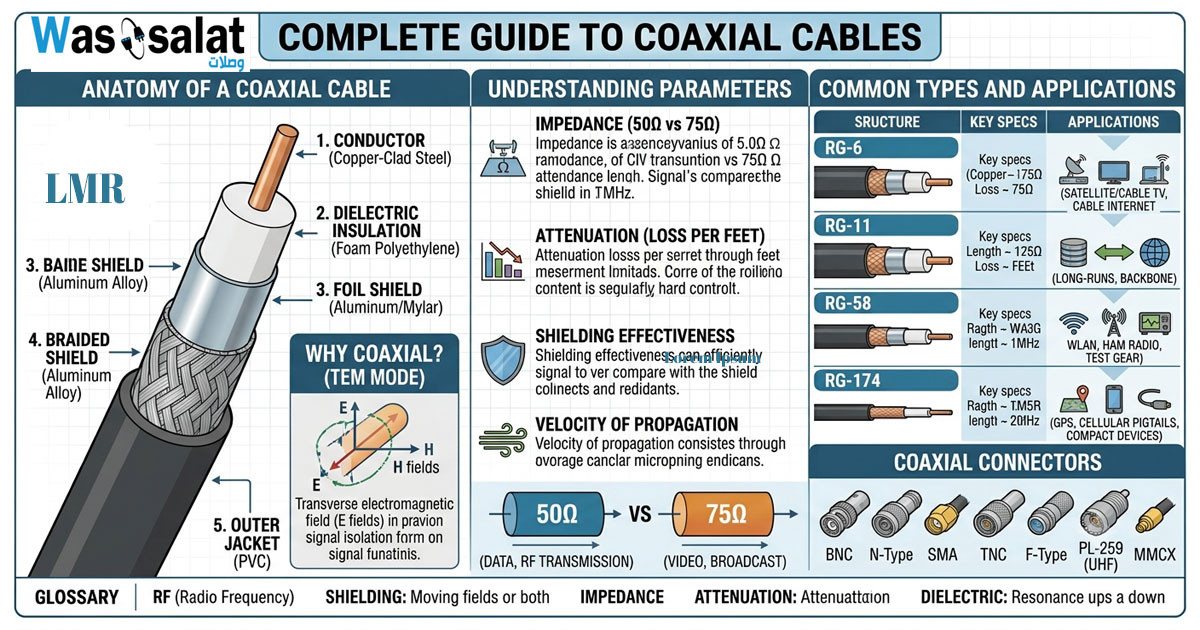 Complete Guide to Coaxial Cables
Everything you need to know about RG-6, LMR-400, impedance, connectors & troubleshooting.Read more
Complete Guide to Coaxial Cables
Everything you need to know about RG-6, LMR-400, impedance, connectors & troubleshooting.Read more -
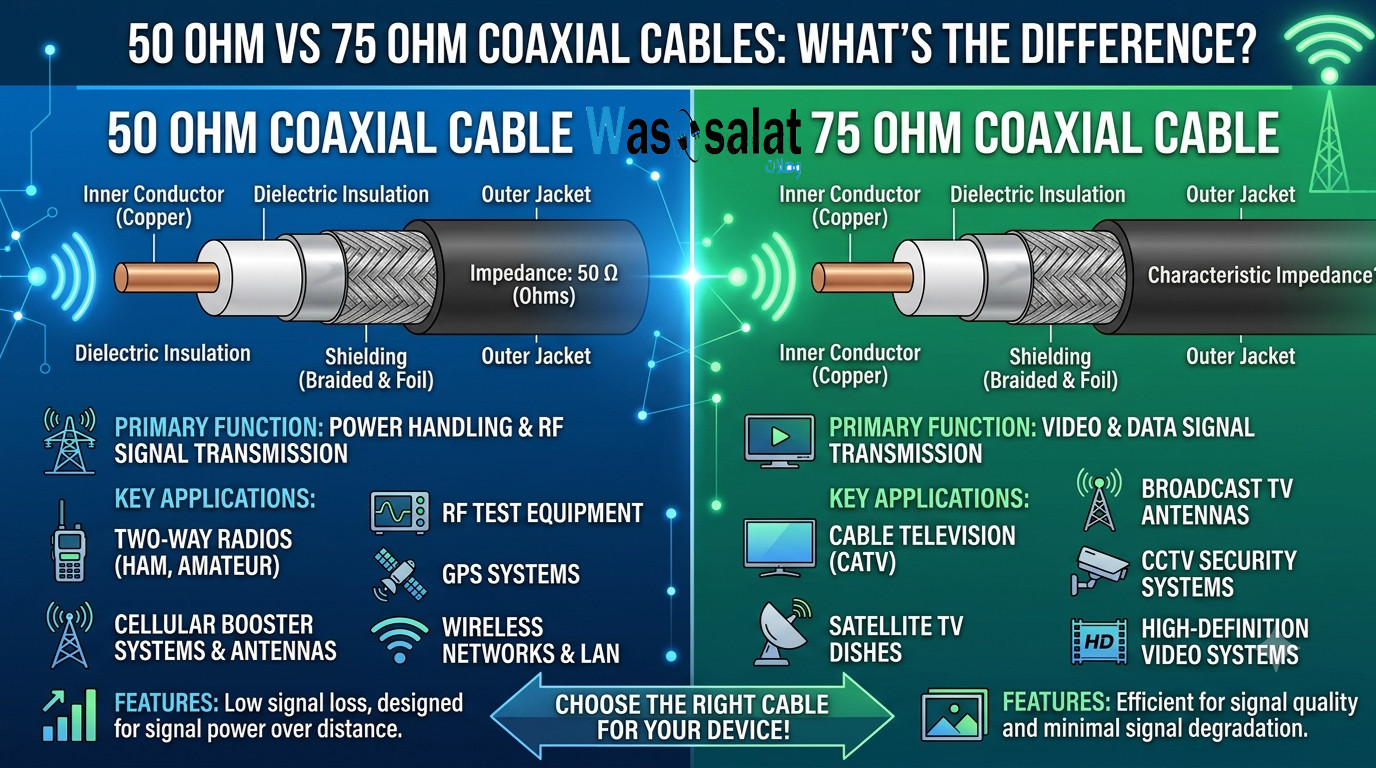 50 Ohm vs 75 Ohm Coaxial Cables: What's the Difference?
Learn the key differences between 50Ω and 75Ω coaxial cables. Find out which impedance you need for WiFi, TV, CCTV,...Read more
50 Ohm vs 75 Ohm Coaxial Cables: What's the Difference?
Learn the key differences between 50Ω and 75Ω coaxial cables. Find out which impedance you need for WiFi, TV, CCTV,...Read more -
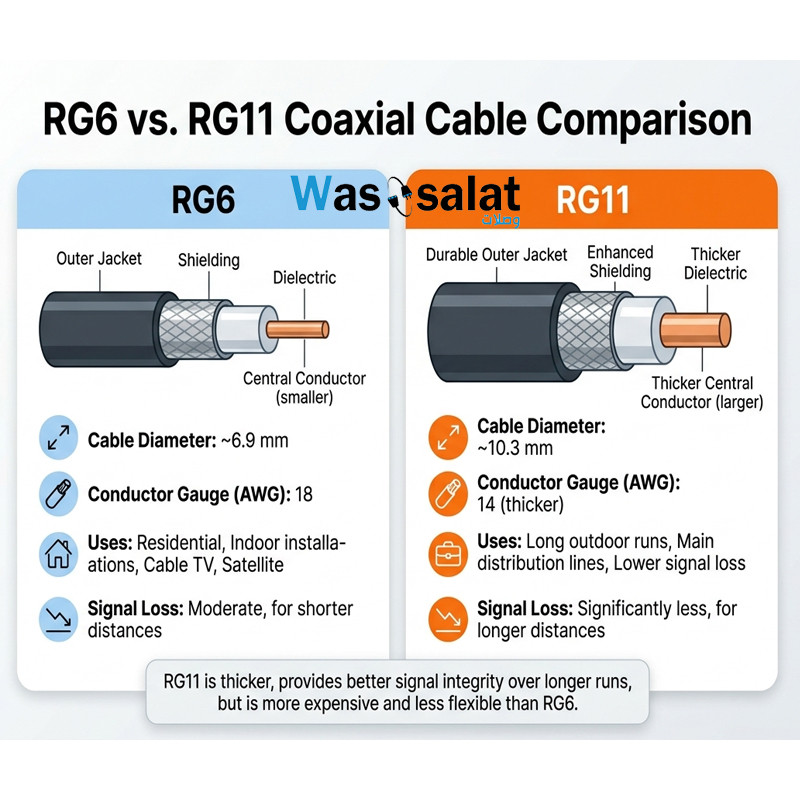 RG6 vs RG11 Coaxial Cables: Which One Do You Need?
Compare RG6 and RG11 coaxial cables. Learn the differences in performance, distance, cost, and when to use each for...Read more
RG6 vs RG11 Coaxial Cables: Which One Do You Need?
Compare RG6 and RG11 coaxial cables. Learn the differences in performance, distance, cost, and when to use each for...Read more -
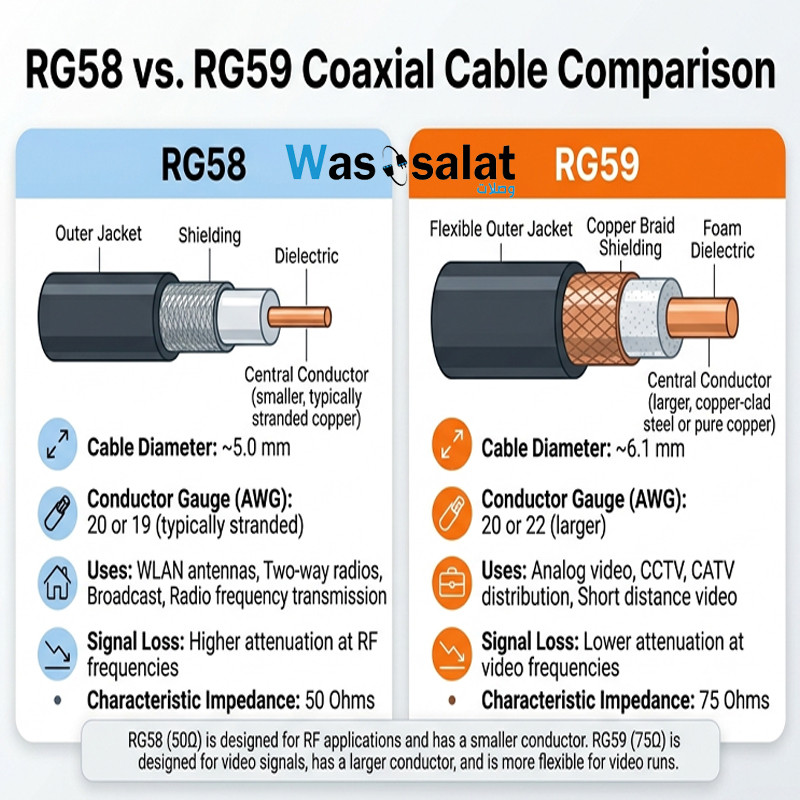 RG58 vs RG59 Coaxial Cables: What's the Difference?
Compare RG58 and RG59 coaxial cables. Learn the critical impedance difference, applications for RF vs video, and...Read more
RG58 vs RG59 Coaxial Cables: What's the Difference?
Compare RG58 and RG59 coaxial cables. Learn the critical impedance difference, applications for RF vs video, and...Read more -
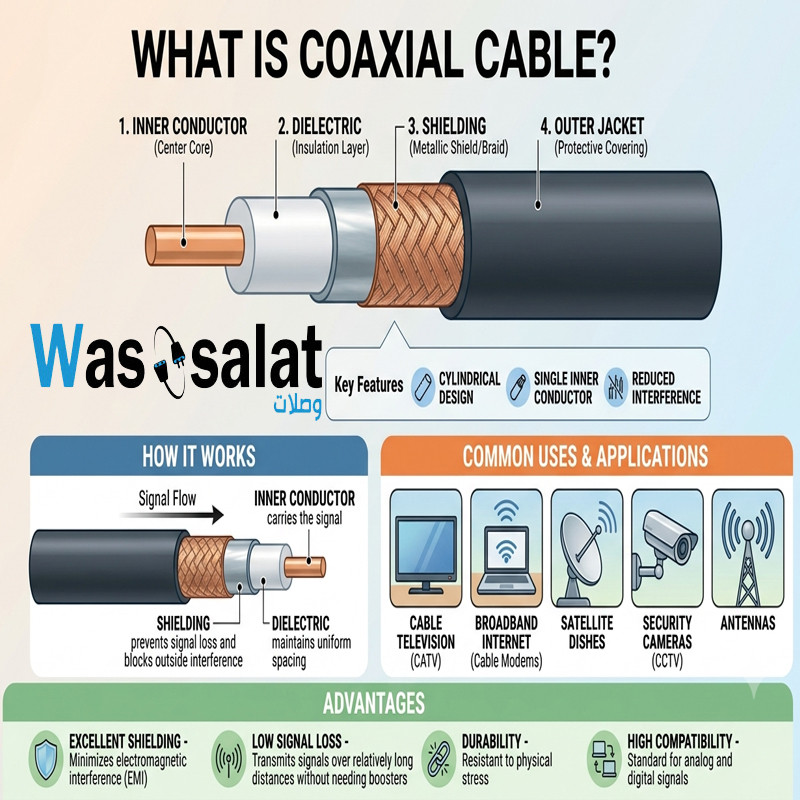 What Is a Coaxial Cable? The Complete Beginner's Guide
Learn what coaxial cables are, how they work, their construction, types, and applications. The beginner's guide to...Read more
What Is a Coaxial Cable? The Complete Beginner's Guide
Learn what coaxial cables are, how they work, their construction, types, and applications. The beginner's guide to...Read more
Latest posts
-
 Waterproof Coaxial Cable: The Complete GuideRead more
 -
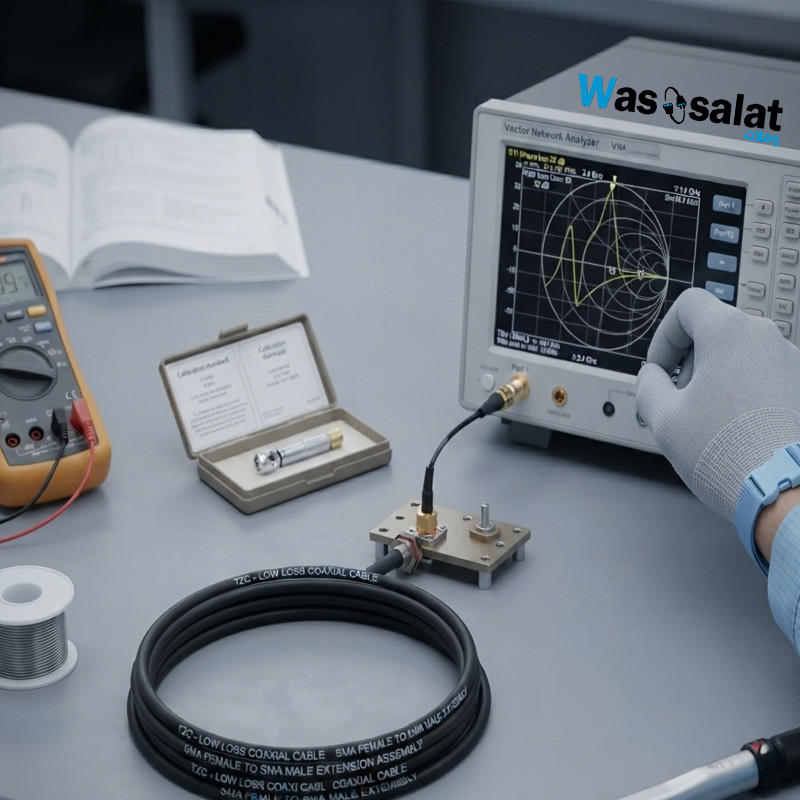 Testing Coaxial Cable: The Complete GuideRead more
This comprehensive guide covers everything you need to know about testing coaxial cable—from simple continuity checks...
-
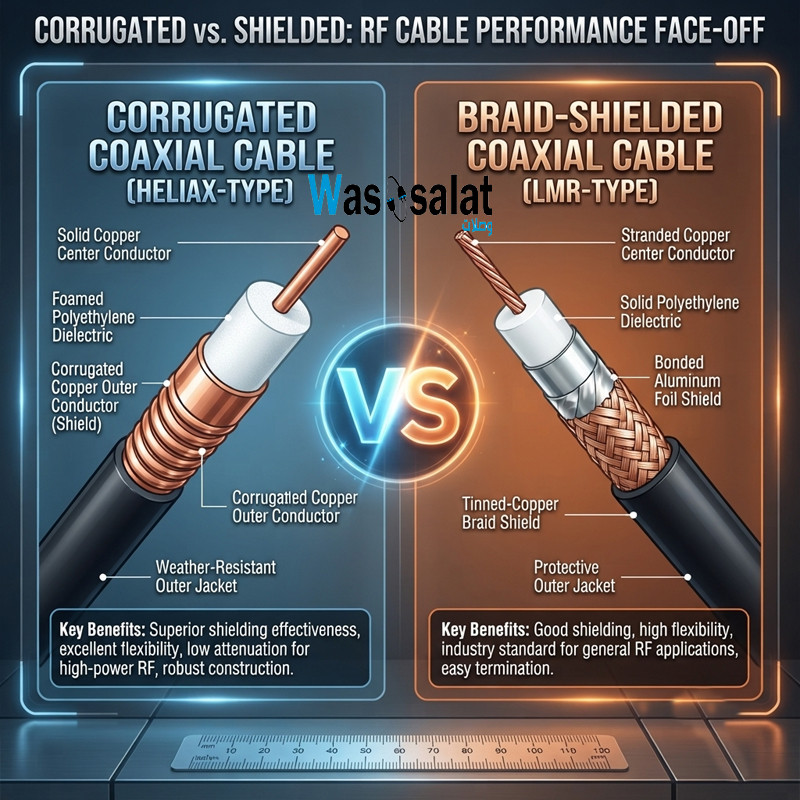 Corrugated Coaxial Cable vs Shielded Coaxial Cable: Complete ComparisonRead more
This comprehensive guide compares both technologies—explaining the differences in construction, performance,...
-
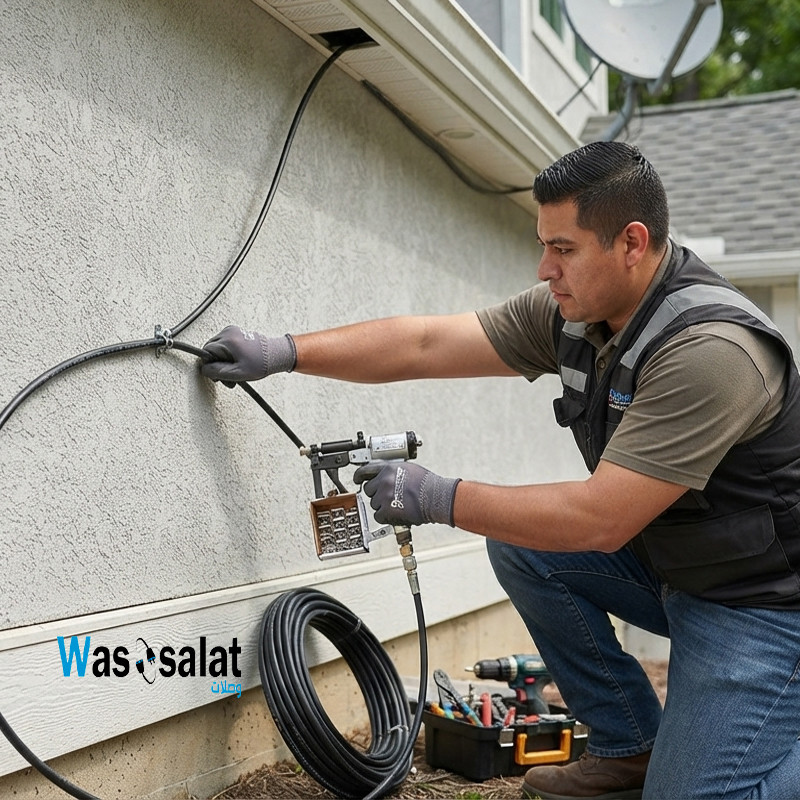 Installing Coaxial Cable: The Complete GuideRead more
This comprehensive guide compares double shield and quad shield coaxial cables—explaining the differences in...
-
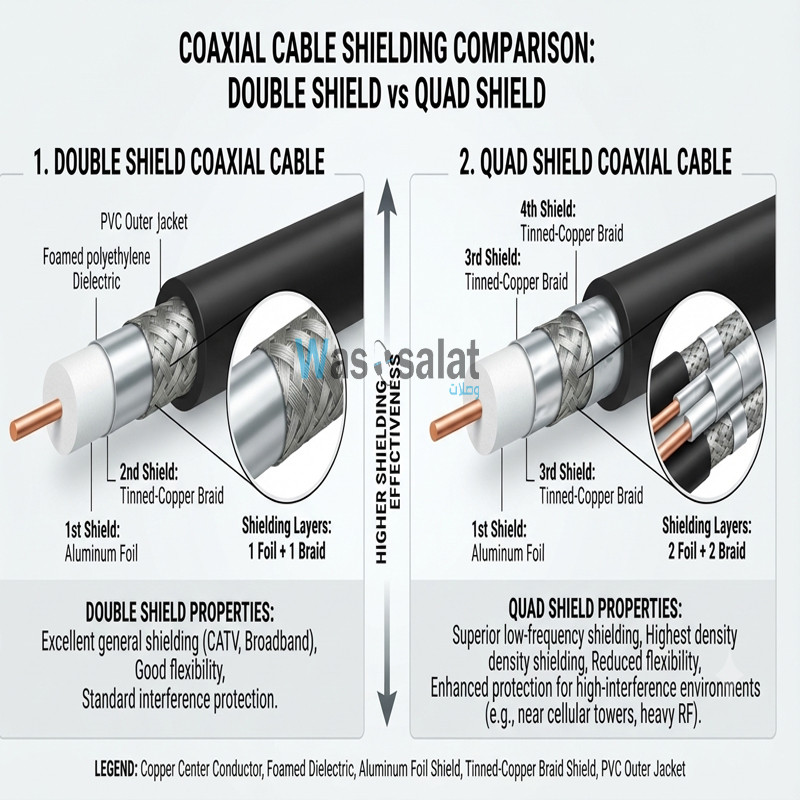 Double Shield vs Quad Shield: Which Coaxial Cable Should You Choose?Read more
This comprehensive guide compares double shield and quad shield coaxial cables—explaining the differences in...
-
 Shielding Types in Coaxial Cables: Complete GuideRead more
This comprehensive guide explains everything you need to know about shielding types—from single shield to quad...
-
 Cable Attenuation Explained: Understanding Signal LossRead more
This comprehensive guide explains everything you need to know about cable attenuation—what it is, what causes it, how...
-
 Outdoor Coaxial Cable: Complete Guide & Selection TipsRead more
Choose the right outdoor coaxial cable for your installation. Compare TZC-500/32 vs TZC-500/97, learn about PE...
-
 LMR-400 vs RG58: Which Coaxial Cable Should You Choose?Read more
Compare LMR-400 vs RG58 coaxial cables. Learn the differences in signal loss, construction, flexibility, and...
-
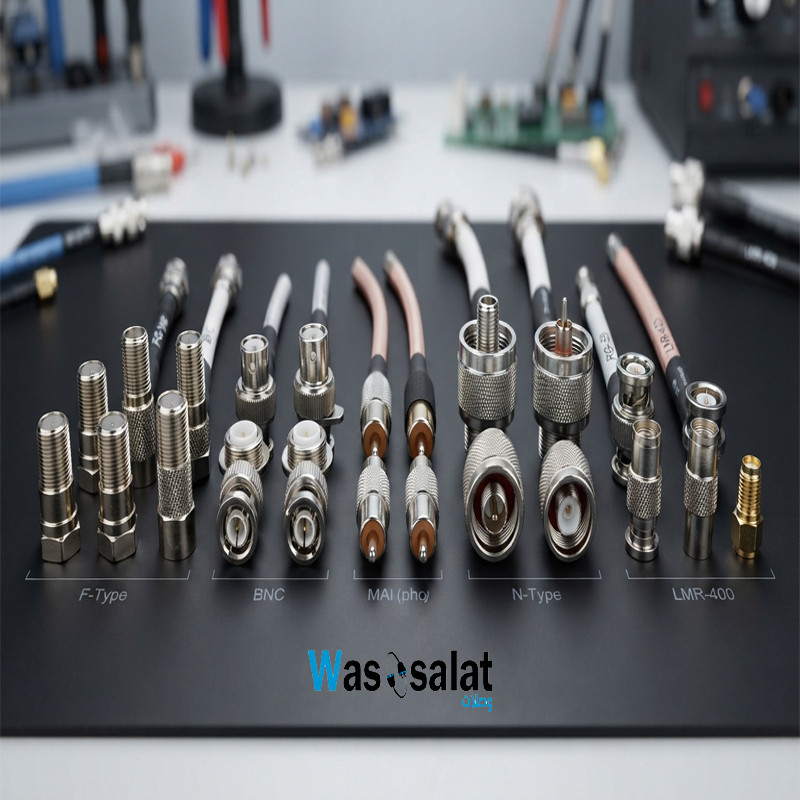 Coax Cable Connectors: Complete Guide to F-Type, BNC, N-Type, SMARead more
Learn about coaxial cable connectors—F-Type, BNC, N-Type, SMA, TNC, and UHF. Compare impedances, frequencies, and...
Leave a comment