

This comprehensive guide covers everything you need to know about waterproof coaxial cables—from understanding water...
Outdoor Coaxial Cable: Complete Guide & Selection Tips
Outdoor Coaxial Cable: The Complete Guide
Published by Wassalat Technical Team
Installing coaxial cable outdoors presents unique challenges that indoor cables simply don't face. UV radiation, moisture, temperature extremes, and physical damage can all degrade cable performance over time.
This comprehensive guide covers everything you need to know about outdoor coaxial cables—from material selection to installation techniques, including specialized cables like TZC-500/32 and TZC-500/97.
? Table of Contents
Why Outdoor Cables Are Different
Outdoor coaxial cables face a harsh environment that indoor cables never experience:
Environmental Challenges
| Challenge | Effect on Cable | Solution |
|---|---|---|
| UV Radiation | Degrades PVC jacket, causes cracking | PE (Polyethylene) jacket |
| Moisture/Water | Corrosion, signal loss, short circuits | Water-blocking compounds, sealed connectors |
| Temperature Extremes | Brittle jacket, conductor expansion | Wide temperature range materials (-40°C to +80°C) |
| Physical Damage | Cut jacket, crushed cable | Thick, durable jacket, armored options |
| Rodents | Chewed cables | Armored cable, rodent-resistant jacket |
? Key Insight: Using indoor cable outdoors will result in jacket cracking within 1-2 years, leading to water ingress and signal failure. Always use properly rated outdoor cable.
Outdoor Cable Materials
Jacket Materials
| Material | UV Resistant | Water Resistant | Temperature Range | Common Use |
|---|---|---|---|---|
| PVC | ❌ | ⚠️ | -20°C to +80°C | Indoor only |
| PE (Polyethylene) | ✅ | ✅ | -40°C to +80°C | Outdoor standard |
| HDPE | ✅✅ | ✅✅ | -40°C to +90°C | Premium outdoor |
| FEP / Plenum | ✅ | ✅ | 0°C to +75°C | Plenum/air ducts |
Conductor Materials
| Material | Conductivity | Corrosion Resistance | Outdoor Suitability |
|---|---|---|---|
| Solid Copper | Excellent | Good | ✅ Best |
| Copper-Clad Steel (CCS) | Good | Moderate | ⚠️ Acceptable |
| Copper-Clad Aluminum (CCA) | Fair | Poor | ❌ Not recommended |
Jacket Types: PE vs PVC
The jacket material is the most important difference between indoor and outdoor cables.
PVC (Polyvinyl Chloride)
Characteristics:
- Flexible and easy to work with
- Low cost
- ❌ Degrades in sunlight – Becomes brittle and cracks
- ❌ Absorbs moisture – Over time
- ❌ Not suitable for outdoor use
When to Use: Indoor installations only, wall cavities, under floors, ceiling spaces.
PE (Polyethylene)
Characteristics:
- UV resistant – Does not degrade in sunlight
- Water resistant – Does not absorb moisture
- Wide temperature range (-40°C to +80°C)
- More durable than PVC
- Slightly stiffer than PVC
When to Use: All outdoor installations, roof-mounted antennas, satellite dishes, external walls, buried cables.
⚠️ Critical: Never use PVC-jacketed cables outdoors. They will crack within 1-2 years of UV exposure, leading to water ingress and signal failure. Always use PE-jacketed cables for outdoor installations.
TZC-500/32 – Premium Outdoor Coaxial Cable
The TZC-500/32 is a premium outdoor coaxial cable designed for professional installations requiring low signal loss and excellent weather resistance.
Specifications
| Parameter | TZC-500/32 Value |
|---|---|
| Impedance | 50Ω |
| Center Conductor | Solid Copper |
| Conductor Size | 1.13 mm |
| Dielectric | Foam PE (Low Loss) |
| Shield Type | Foil + Braid (Double Shield) |
| Jacket Material | PE (UV Resistant) |
| Outer Diameter | 6.15 mm |
| Temperature Range | -40°C to +80°C |
| Max Frequency | 6 GHz |
Attenuation (Signal Loss)
| Frequency | Loss (dB/100m) | Loss (dB/100ft) |
|---|---|---|
| 30 MHz | 2.0 dB | 0.6 dB |
| 100 MHz | 3.6 dB | 1.1 dB |
| 400 MHz | 7.2 dB | 2.2 dB |
| 900 MHz | 11.0 dB | 3.4 dB |
| 1800 MHz | 15.8 dB | 4.8 dB |
| 2400 MHz | 18.3 dB | 5.6 dB |
| 5800 MHz | 28.9 dB | 8.8 dB |
TZC-500/32 Applications
- ✅ Wi-Fi access point connections (2.4GHz & 5GHz)
- ✅ 4G & 5G antenna feeds
- ✅ Public safety communication systems
- ✅ ISP and WISP wireless networks
- ✅ DAS (Distributed Antenna Systems)
- ✅ Low-power RF systems
- ✅ In-building wireless enhancement
- ✅ SCADA and telemetry systems
✅ TZC-500/32 Advantage: Excellent balance of performance and flexibility. The PE jacket provides superior UV and water resistance while maintaining good flexibility for installation. Ideal for professional outdoor RF installations.
TZC-500/97 – Heavy-Duty Outdoor Coaxial Cable
The TZC-500/97 is a heavy-duty outdoor coaxial cable designed for demanding installations requiring maximum durability and ultra-low signal loss.
Specifications
| Parameter | TZC-500/97 Value |
|---|---|
| Impedance | 50Ω |
| Center Conductor | Solid Copper |
| Conductor Size | 1.63 mm (Larger = Lower Loss) |
| Dielectric | Foam PE (Ultra Low Loss) |
| Shield Type | Foil + Double Braid (Triple Shield) |
| Jacket Material | HDPE (High-Density Polyethylene) |
| Outer Diameter | 9.50 mm |
| Temperature Range | -40°C to +85°C |
| Max Frequency | 6 GHz |
| Bend Radius (Static) | 10 x Diameter |
| Bend Radius (Dynamic) | 18 x Diameter |
Attenuation (Signal Loss)
| Frequency | Loss (dB/100m) | Loss (dB/100ft) |
|---|---|---|
| 30 MHz | 1.4 dB | 0.4 dB |
| 100 MHz | 2.5 dB | 0.8 dB |
| 400 MHz | 5.0 dB | 1.5 dB |
| 900 MHz | 7.6 dB | 2.3 dB |
| 1800 MHz | 10.9 dB | 3.3 dB |
| 2400 MHz | 12.6 dB | 3.8 dB |
| 5800 MHz | 20.0 dB | 6.1 dB |
TZC-500/97 Applications
- ✅ Long-range Wi-Fi and wireless backhaul
- ✅ 5G and 4G base station connections
- ✅ Tower-mounted antenna feeds
- ✅ Public safety and emergency communication systems
- ✅ High-power RF transmission
- ✅ Cellular DAS (Distributed Antenna Systems)
- ✅ Microwave links and point-to-point systems
- ✅ Military and aerospace communication
- ✅ Industrial and SCADA systems with long cable runs
✅ TZC-500/97 Advantage: Superior low-loss performance with heavy-duty HDPE jacket. Ideal for long cable runs (300+ feet) and demanding outdoor environments. The triple shield provides excellent interference protection.
Cable Comparison Table
| Feature | RG6 (Indoor) | RG6 Outdoor | TZC-500/32 | TZC-500/97 |
|---|---|---|---|---|
| Impedance | 75Ω | 75Ω | 50Ω | 50Ω |
| Jacket Material | PVC | PE | PE | HDPE |
| UV Resistant | ❌ | ✅ | ✅ | ✅✅ |
| Shield Type | Dual | Quad | Double | Triple |
| Loss @ 900 MHz (dB/100ft) | 6.3 | 6.3 | 3.4 | 2.3 |
| Loss @ 2400 MHz (dB/100ft) | 13.5 | 13.5 | 5.6 | 3.8 |
| Max Recommended Length | 100 ft | 150 ft | 200 ft | 350 ft |
| Best For | Indoor video | Outdoor video | RF/Wi-Fi | Long-run RF |
Outdoor Applications
1. TV Antennas
Recommended Cable: Outdoor RG6 with PE jacket and quad shield
Considerations: Antenna signals are weak. Use shortest possible cable run and quad shield for interference protection.
2. Satellite Dishes
Recommended Cable: Outdoor RG6 with PE jacket and quad shield, or RG11 for long runs
Considerations: High frequency (950-2150 MHz). Quad shield is essential. Weatherproof all connections.
3. Cellular & 5G Antennas
Recommended Cable: TZC-500/32 or TZC-500/97
Considerations: 50Ω impedance. Low loss is critical at 4G/5G frequencies. Use N-Type or SMA connectors.
4. Wi-Fi & WISP Networks
Recommended Cable: TZC-500/32 for short runs, TZC-500/97 for long runs
Considerations: 50Ω impedance. 2.4GHz and 5GHz bands require low-loss cable. Outdoor PE jacket required.
5. DAS (Distributed Antenna Systems)
Recommended Cable: TZC-500/97 or larger
Considerations: Commercial and carrier-grade installations. Requires low-PIM connectors. Triple shield for maximum interference protection.
Installation Best Practices
1. Use the Right Cable
- ✅ PE jacket – UV and water resistant
- ✅ Solid copper conductor – Best performance and durability
- ✅ Quad or triple shield – Maximum interference protection
- ✅ Proper impedance – 50Ω for RF, 75Ω for video
2. Protect the Cable
- Use conduit for cables at ground level (protection from damage)
- Use cable trays or cable ties for rooftop installations
- Avoid running cable across walking areas
- Protect cables from sharp edges (use grommets)
3. Create Drip Loops
Always create a drip loop at the cable entry point to prevent water from running into the building:
- Form a U-shaped loop in the cable
- Loop should face downward
- Ensure loop is below the entry point
4. Avoid Sharp Bends
- RG6 – Minimum bend radius 2-3 inches
- RG11 – Minimum bend radius 4-6 inches
- TZC-500/32 – Minimum bend radius 3-4 inches
- TZC-500/97 – Minimum bend radius 4-6 inches
5. Secure the Cable
- Use cable clips or ties every 3-5 feet
- Allow for cable expansion/contraction with temperature changes
- Don't over-tighten cable ties
6. Ground the System
- Ground the outdoor antenna/dish
- Ground the cable entry point
- Use a grounding block or surge protector
- Follow local electrical codes
Weatherproofing Connections
Outdoor connections must be properly weatherproofed to prevent water ingress and corrosion.
Weatherproofing Methods
1. Weatherproof Connectors
Use connectors designed for outdoor use with built-in rubber seals or O-rings.
2. Self-Amalgamating Tape
Wrap connections with self-amalgamating tape (also called self-fusing silicone tape):
- Start 1-2 inches below the connector
- Wrap with 50% overlap
- Stretch the tape as you apply
- Extend 1-2 inches above the connector
3. Electrical Tape (Outer Layer)
Apply a layer of high-quality PVC electrical tape over the self-amalgamating tape for mechanical protection.
4. Weather Boots
For N-Type and other threaded connectors, use weather boots that slip over the connection and seal against moisture.
Weatherproofing Steps
- Clean – Clean the connector and cable
- Connect – Tighten the connector securely
- Wrap – Apply self-amalgamating tape
- Protect – Apply outer tape layer
- Test – Verify signal quality
⚠️ Warning: Failing to weatherproof outdoor connections is the #1 cause of signal failure in outdoor installations. Water ingress can corrode connectors within months.
Frequently Asked Questions (FAQ)
1. What's the difference between indoor and outdoor coaxial cable?
Outdoor cable has a PE (polyethylene) jacket that resists UV radiation and moisture. Indoor cable has a PVC jacket that degrades in sunlight.
2. Can I use indoor cable outdoors?
No. Indoor cable will crack and fail within 1-2 years when exposed to UV radiation and moisture.
3. Can I use outdoor cable indoors?
Yes. Outdoor cable can be used indoors, but it's stiffer and harder to work with than indoor cable.
4. What is TZC-500/32 cable?
TZC-500/32 is a premium 50Ω outdoor coaxial cable with PE jacket, double shielding, and low loss. Ideal for Wi-Fi, 4G, and 5G applications.
5. What is TZC-500/97 cable?
TZC-500/97 is a heavy-duty 50Ω outdoor cable with HDPE jacket, triple shielding, and ultra-low loss. Designed for long runs and demanding outdoor installations.
6. How long can outdoor coaxial cable run?
It depends on the cable type and frequency. TZC-500/32 can run up to 200 feet. TZC-500/97 can run up to 350 feet. RG6 outdoor can run up to 150 feet for video.
7. How do I weatherproof outdoor cable connections?
Use self-amalgamating tape wrapped tightly over the connection, followed by a layer of PVC electrical tape. For threaded connectors, use weather boots.
8. What is a drip loop?
A drip loop is a U-shaped bend in the cable at the building entry point that prevents water from running along the cable into the building.
9. Can I bury outdoor coaxial cable?
Yes, but use cable rated for direct burial. These cables have extra moisture protection and often a gel filling. Not all outdoor cables can be buried.
10. What connectors should I use outdoors?
Use weatherproof connectors with rubber seals. For N-Type connectors, use weather boots. For F-Type, use compression connectors with rubber gaskets.
11. How do I protect outdoor cables from rodents?
Use armored cable, metal conduit, or cable with rodent-resistant jacket. Avoid running cables in areas with known rodent activity.
12. What is the temperature range for outdoor cable?
Most outdoor cables are rated from -40°C to +80°C. TZC-500/97 is rated to +85°C for extreme environments.
? Related Articles
- Complete Guide to Coaxial Cables
- Coaxial Cable Construction
- RG6 vs RG11
- Satellite Coaxial Cables
- 50 Ohm vs 75 Ohm Coax
- Coaxial Cable Connectors Guide
- Browse Coaxial Cables →
☀️ Need Outdoor Coaxial Cables?
We stock professional outdoor coaxial cables including TZC-500/32 and TZC-500/97 for RF applications, plus outdoor RG6 for TV and satellite. All cables feature UV-resistant PE jackets for years of reliable outdoor service.
Shop Outdoor Coaxial Cables → View Weatherproof Connectors →
Last Updated: July 2026
© 2026 Wassalat. All rights reserved.
Posted in:
Coaxial Cables
Related posts
-
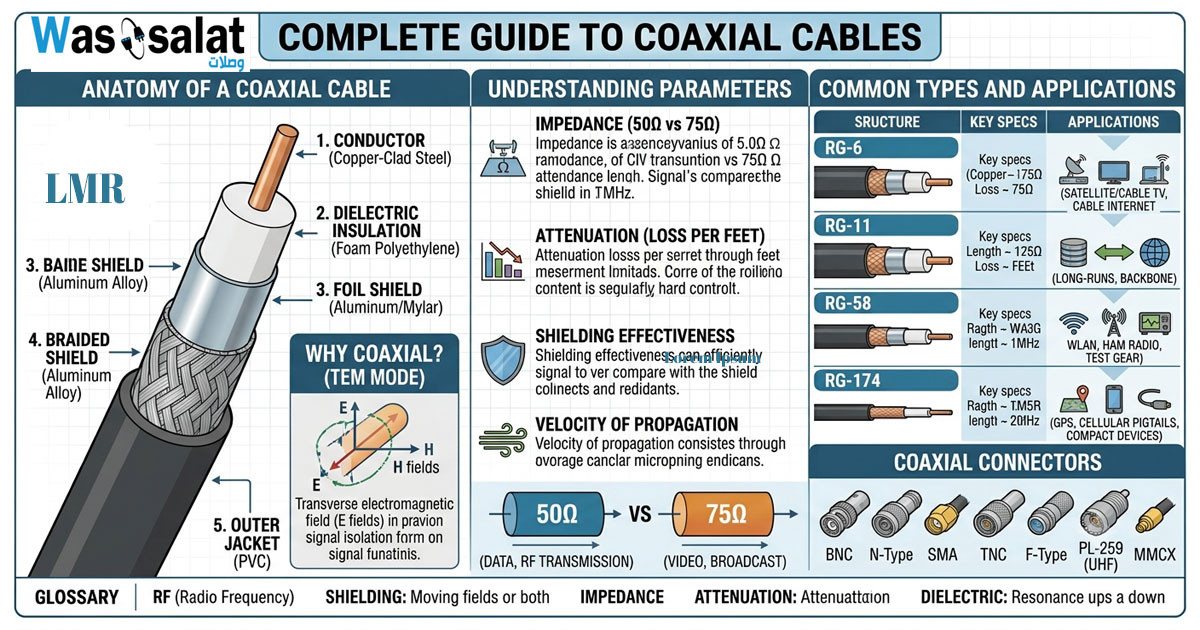 Complete Guide to Coaxial Cables
Everything you need to know about RG-6, LMR-400, impedance, connectors & troubleshooting.Read more
Complete Guide to Coaxial Cables
Everything you need to know about RG-6, LMR-400, impedance, connectors & troubleshooting.Read more -
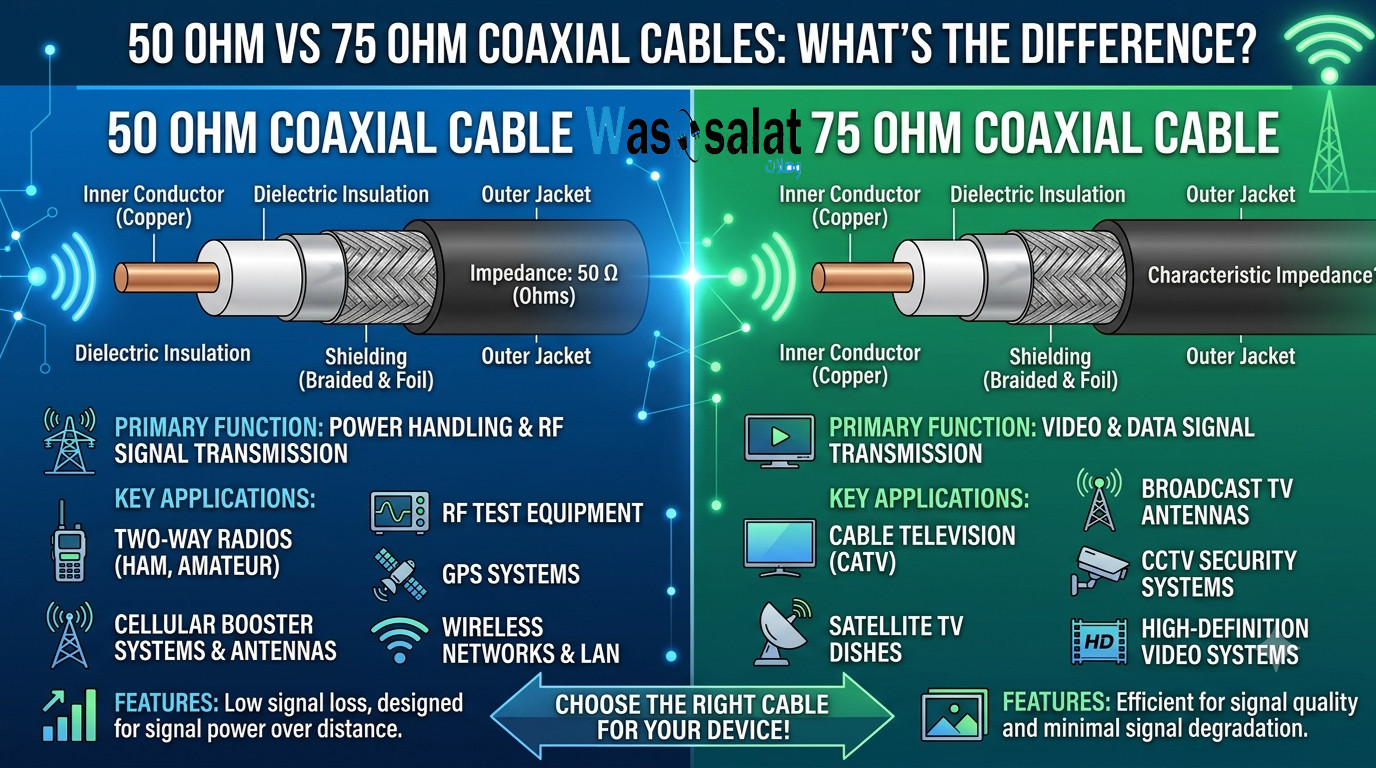 50 Ohm vs 75 Ohm Coaxial Cables: What's the Difference?
Learn the key differences between 50Ω and 75Ω coaxial cables. Find out which impedance you need for WiFi, TV, CCTV,...Read more
50 Ohm vs 75 Ohm Coaxial Cables: What's the Difference?
Learn the key differences between 50Ω and 75Ω coaxial cables. Find out which impedance you need for WiFi, TV, CCTV,...Read more -
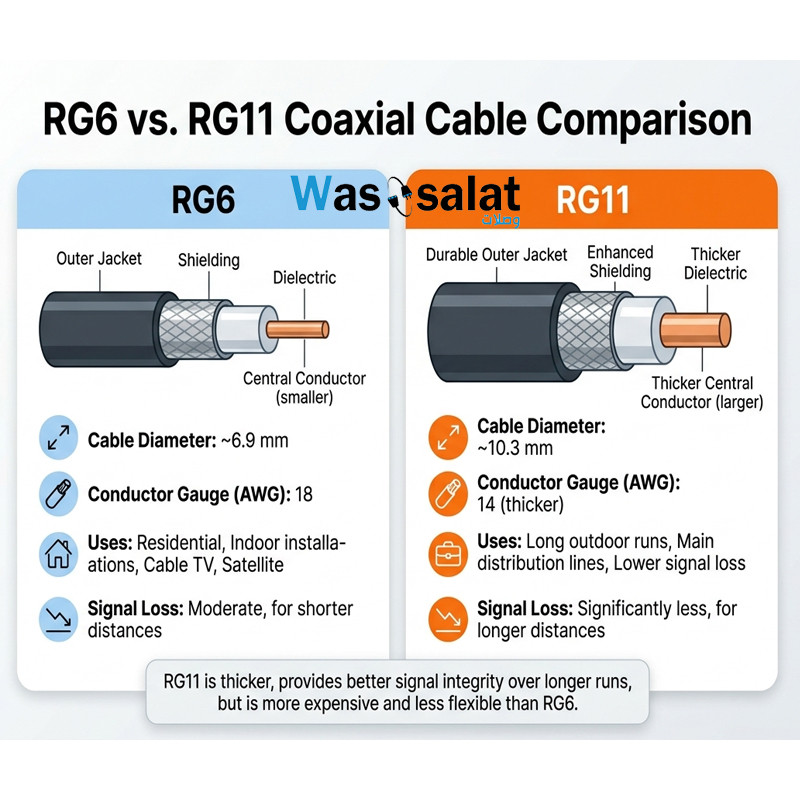 RG6 vs RG11 Coaxial Cables: Which One Do You Need?
Compare RG6 and RG11 coaxial cables. Learn the differences in performance, distance, cost, and when to use each for...Read more
RG6 vs RG11 Coaxial Cables: Which One Do You Need?
Compare RG6 and RG11 coaxial cables. Learn the differences in performance, distance, cost, and when to use each for...Read more -
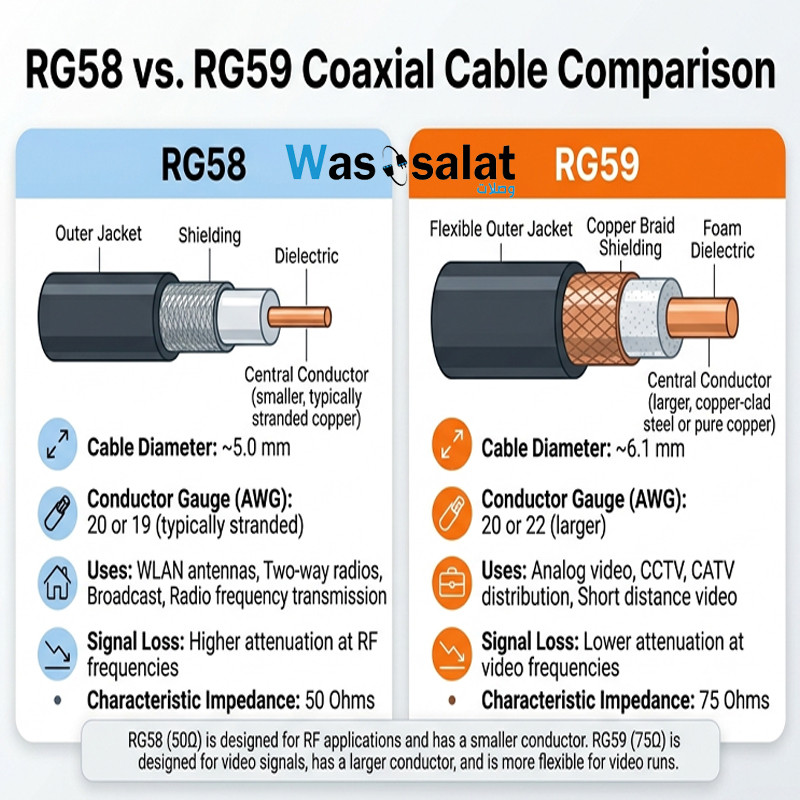 RG58 vs RG59 Coaxial Cables: What's the Difference?
Compare RG58 and RG59 coaxial cables. Learn the critical impedance difference, applications for RF vs video, and...Read more
RG58 vs RG59 Coaxial Cables: What's the Difference?
Compare RG58 and RG59 coaxial cables. Learn the critical impedance difference, applications for RF vs video, and...Read more -
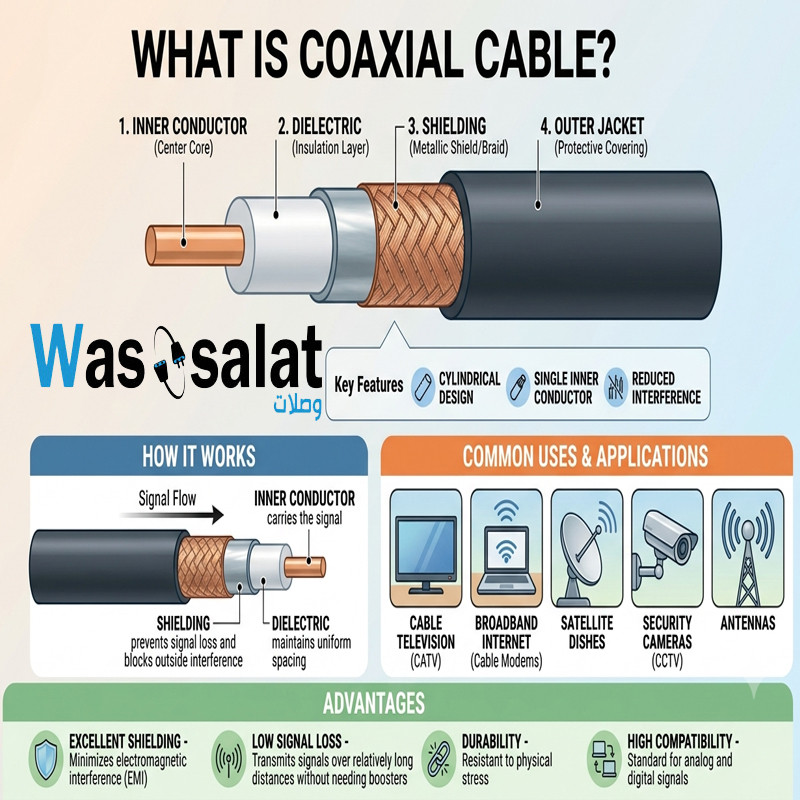 What Is a Coaxial Cable? The Complete Beginner's Guide
Learn what coaxial cables are, how they work, their construction, types, and applications. The beginner's guide to...Read more
What Is a Coaxial Cable? The Complete Beginner's Guide
Learn what coaxial cables are, how they work, their construction, types, and applications. The beginner's guide to...Read more
Latest posts
-
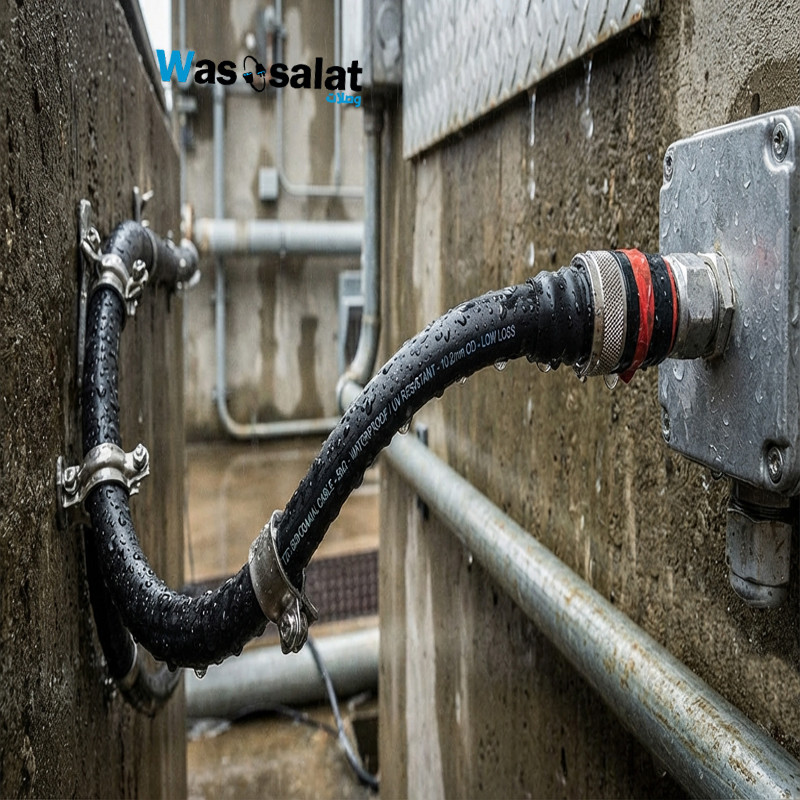 Waterproof Coaxial Cable: The Complete GuideRead more
 -
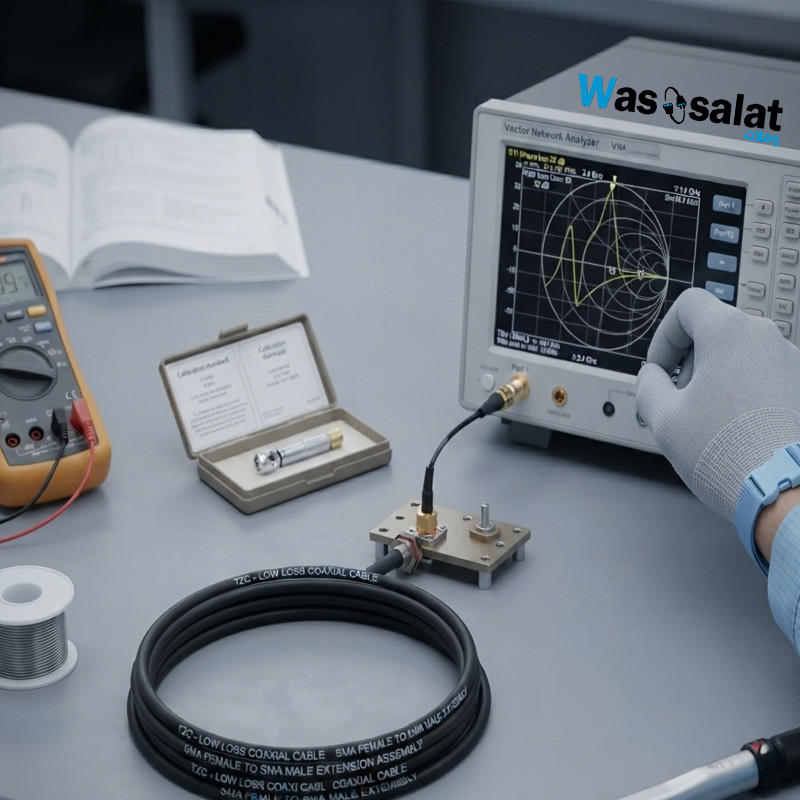 Testing Coaxial Cable: The Complete GuideRead more
This comprehensive guide covers everything you need to know about testing coaxial cable—from simple continuity checks...
-
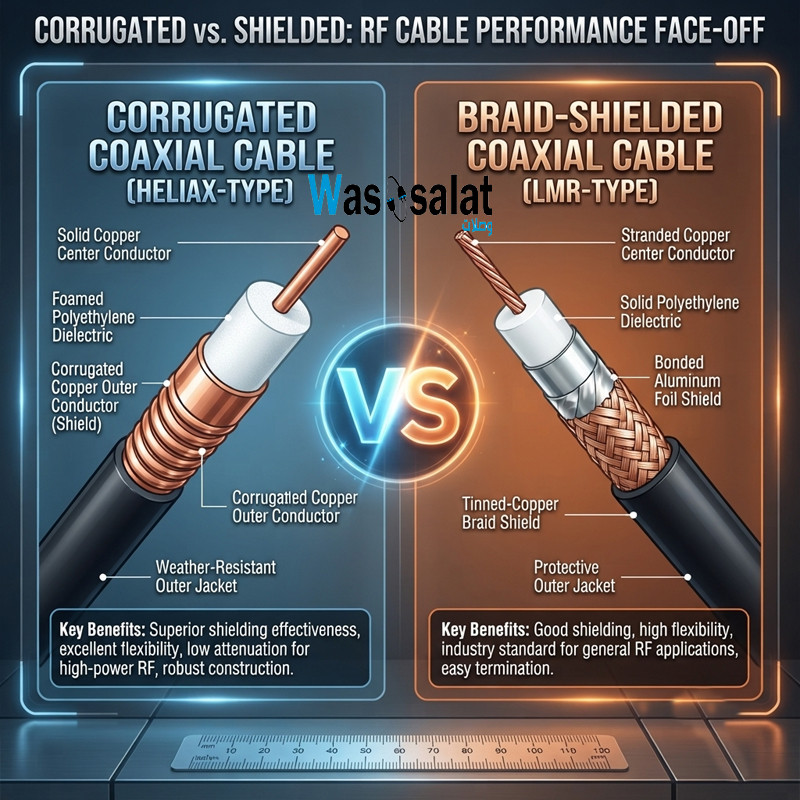 Corrugated Coaxial Cable vs Shielded Coaxial Cable: Complete ComparisonRead more
This comprehensive guide compares both technologies—explaining the differences in construction, performance,...
-
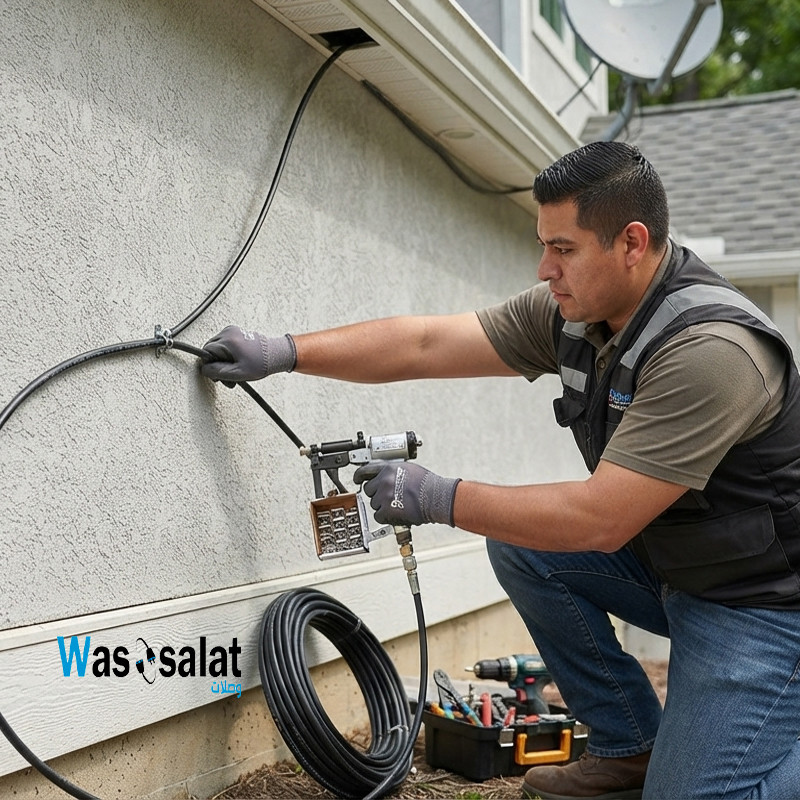 Installing Coaxial Cable: The Complete GuideRead more
This comprehensive guide compares double shield and quad shield coaxial cables—explaining the differences in...
-
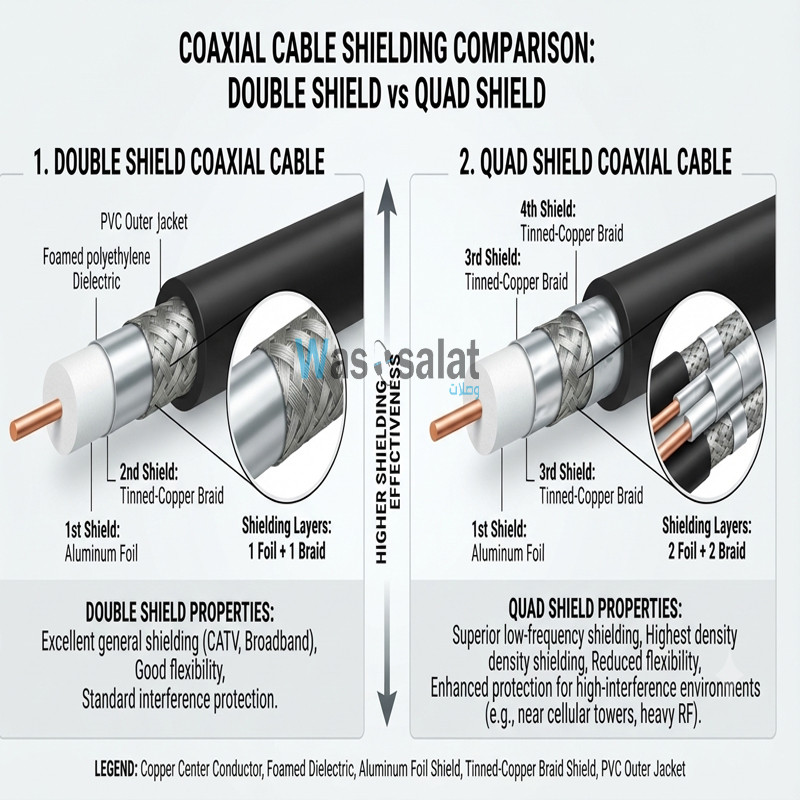 Double Shield vs Quad Shield: Which Coaxial Cable Should You Choose?Read more
This comprehensive guide compares double shield and quad shield coaxial cables—explaining the differences in...
-
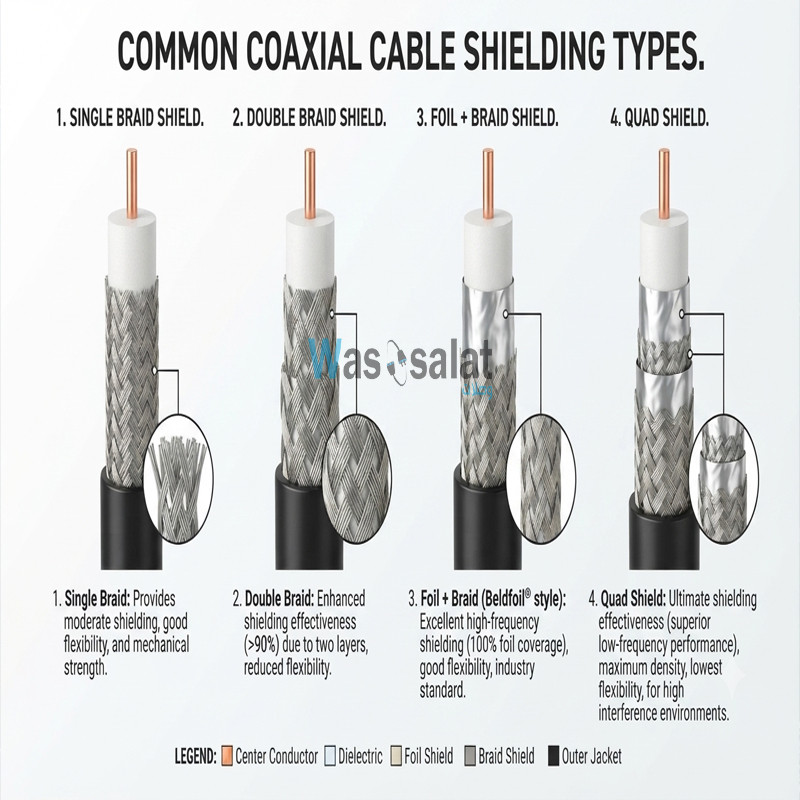 Shielding Types in Coaxial Cables: Complete GuideRead more
This comprehensive guide explains everything you need to know about shielding types—from single shield to quad...
-
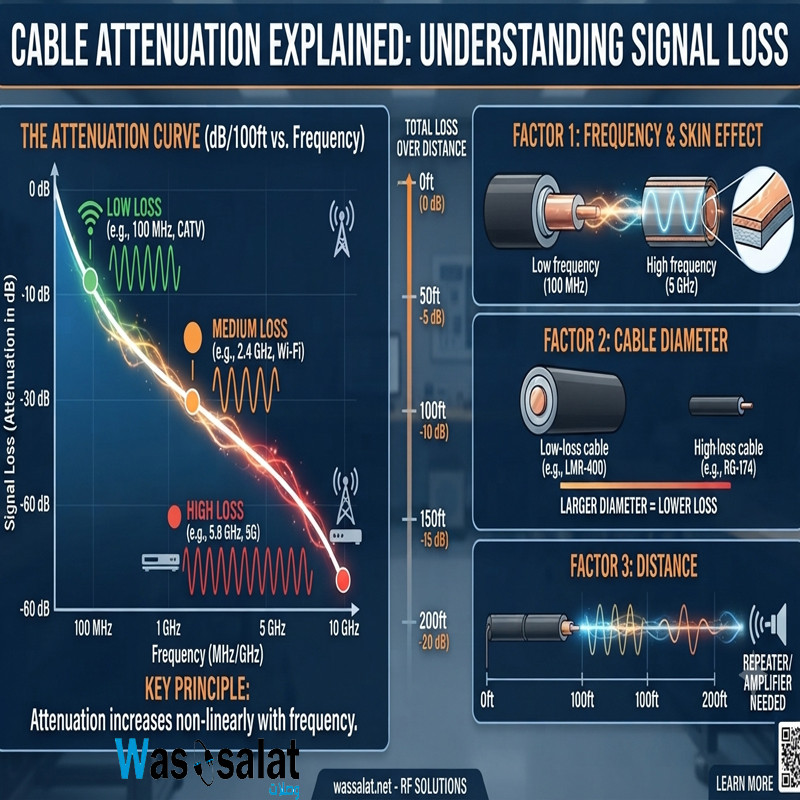 Cable Attenuation Explained: Understanding Signal LossRead more
This comprehensive guide explains everything you need to know about cable attenuation—what it is, what causes it, how...
-
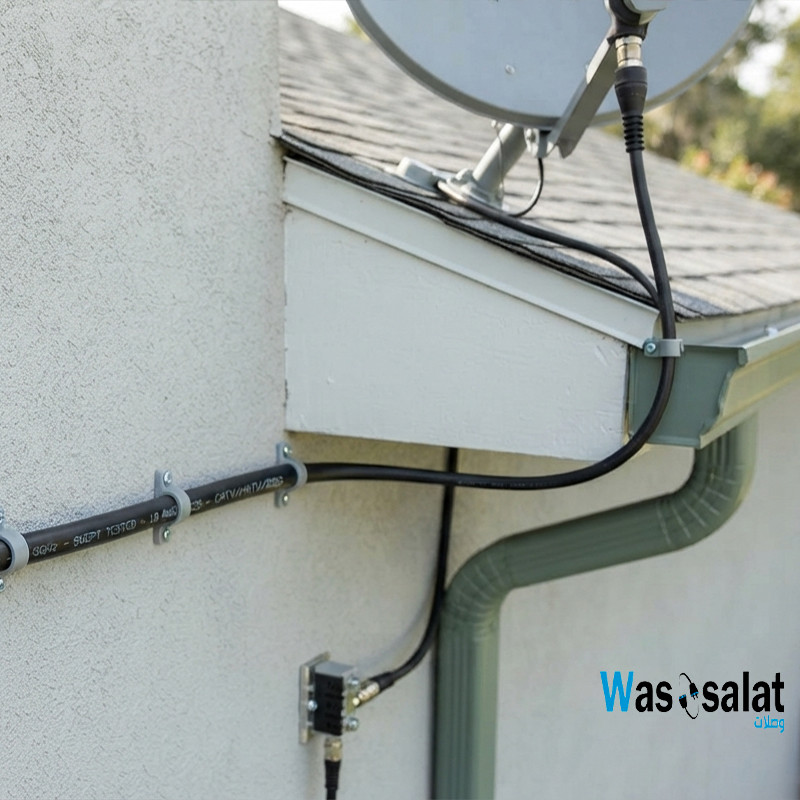 Outdoor Coaxial Cable: Complete Guide & Selection TipsRead more
Choose the right outdoor coaxial cable for your installation. Compare TZC-500/32 vs TZC-500/97, learn about PE...
-
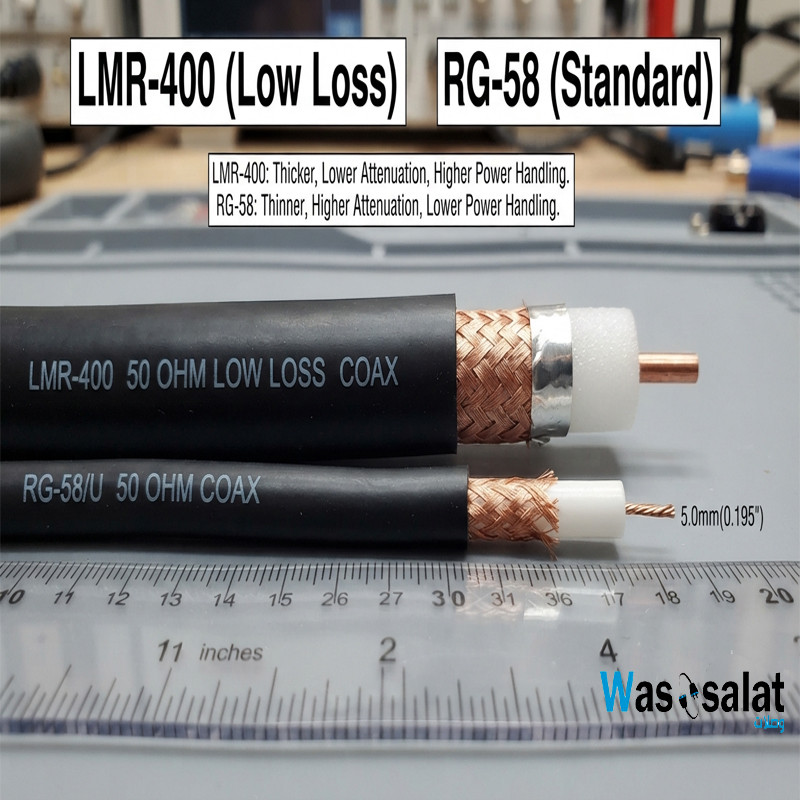 LMR-400 vs RG58: Which Coaxial Cable Should You Choose?Read more
Compare LMR-400 vs RG58 coaxial cables. Learn the differences in signal loss, construction, flexibility, and...
-
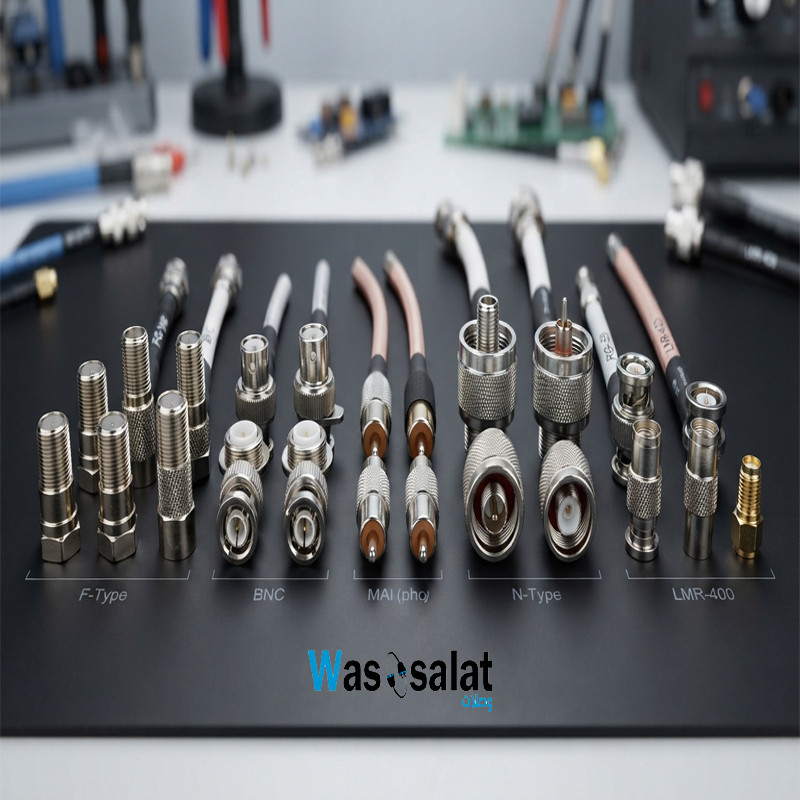 Coax Cable Connectors: Complete Guide to F-Type, BNC, N-Type, SMARead more
Learn about coaxial cable connectors—F-Type, BNC, N-Type, SMA, TNC, and UHF. Compare impedances, frequencies, and...
Leave a comment