
Choose the right outdoor coaxial cable for your installation. Compare TZC-500/32 vs TZC-500/97, learn about PE...

Published by Wassalat Technical Team
Choosing between LMR-400 and RG58 coaxial cables is one of the most common dilemmas for anyone setting up a wireless network, radio system, or antenna installation. Both are 50Ω cables, but their performance, construction, and applications are worlds apart.
This comprehensive guide compares LMR-400 and RG58 side-by-side—covering signal loss, construction, flexibility, cost, and ideal applications—so you can make the right choice for your project.
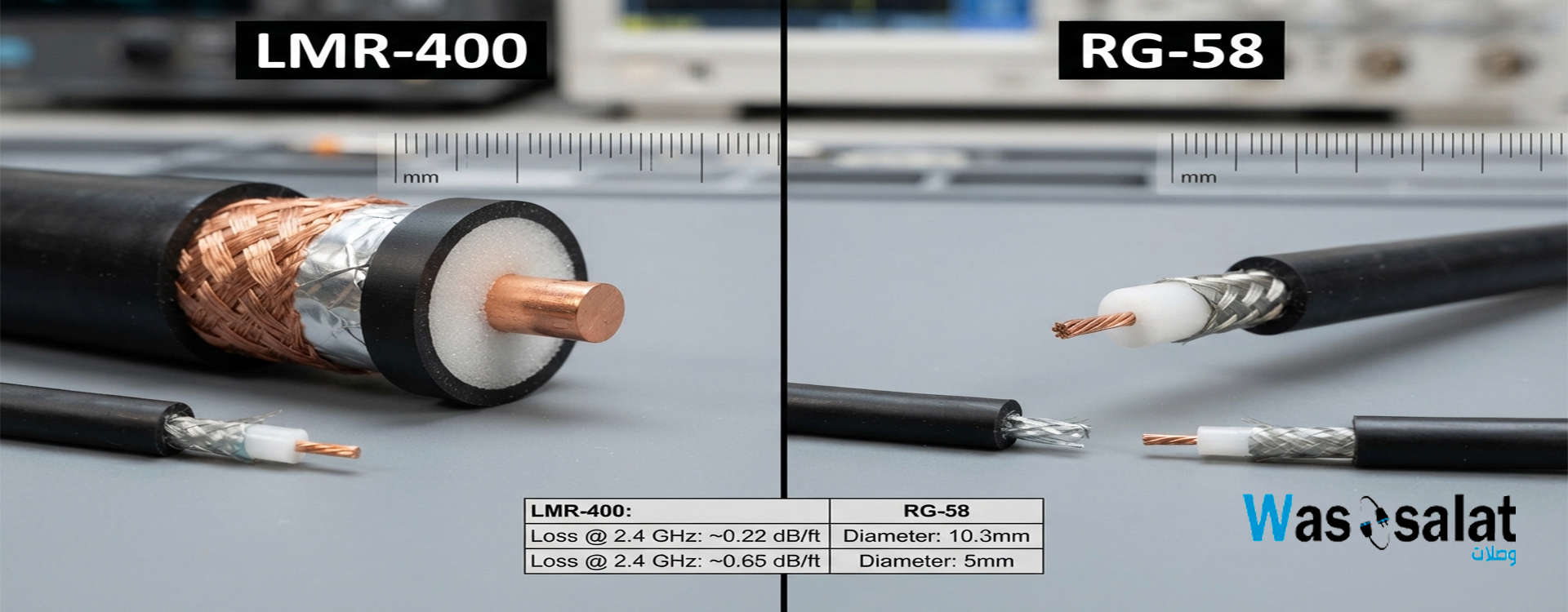
The short answer is: for most modern, performance-critical applications, LMR-400 is the superior choice. The core difference lies in signal loss (attenuation) and intended application.
What it is: A professional-grade, ultra-low-loss 50Ω coaxial cable designed for high-performance, long-distance RF applications.
Key Strengths: Ultra-low signal loss, high frequency support (6 GHz), outdoor-rated, durable
Best For: Long cable runs, outdoor antennas, base stations, WISPs, 4G/5G, WiFi
What it is: A thin, flexible, budget-friendly 50Ω coaxial cable that has been a staple in the RF world for decades.
Key Strengths: Excellent flexibility, low cost, easy to work with
Best For: Short patch cables, test leads, internal equipment connections, mobile installations
| Parameter | LMR-400 | RG58 |
|---|---|---|
| Impedance | 50Ω | 50Ω |
| Max Frequency | 6 GHz | 1 GHz |
| Center Conductor | Solid Copper (BC) | Stranded or Solid Tinned Copper |
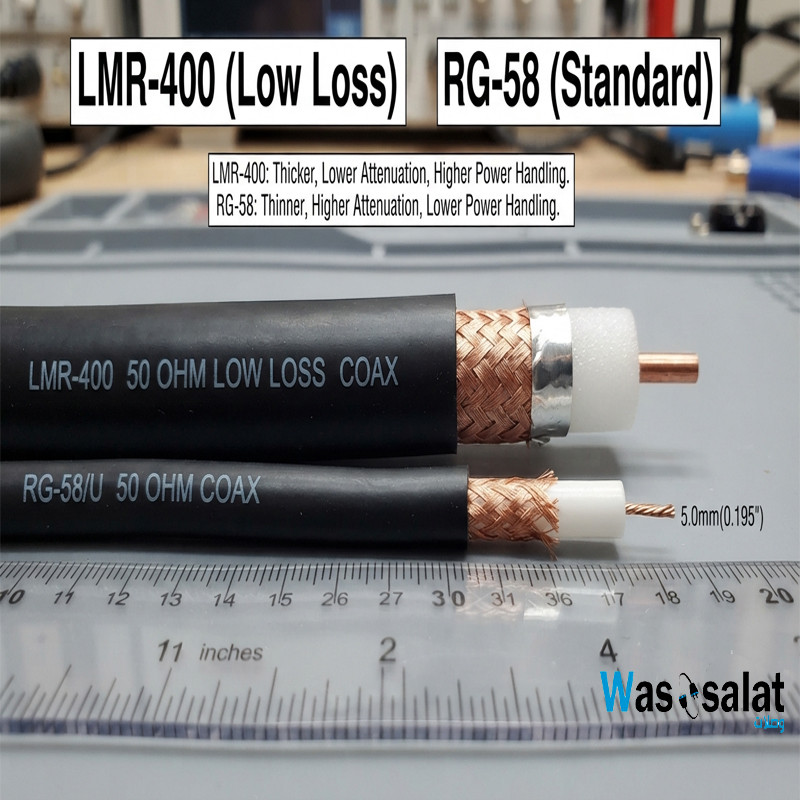
| Conductor Size | 13 AWG (1.78 mm) | 20 AWG (0.81 mm) |
| Dielectric Type | Foam PE | Solid PE |
| Shield Type | Foil + Double Braid | Single Braid (90-95%) |
| Outer Diameter | 10.29 mm (0.405") | 4.95 mm (0.195") |
| Jacket Material | PE (Outdoor Rated) | PVC (Indoor Only) |
| Flexibility | ⭐⭐ | ⭐⭐⭐⭐⭐ |
| Weight (per 100 ft) | ~12 lbs | ~3 lbs |
| Cost (per 100 ft) | ~$80-120 | ~$20-30 |
Signal loss is the single most important difference between LMR-400 and RG58. LMR-400 has dramatically lower loss at all frequencies.
| Frequency | LMR-400 (dB/100ft) | RG58 (dB/100ft) | LMR-400 Advantage |
|---|---|---|---|
| 30 MHz | 0.8 dB | 2.5 dB | 68% less loss |
| 100 MHz | 1.5 dB | 4.5 dB | 67% less loss |
| 400 MHz | 3.0 dB | 9.0 dB | 67% less loss |
| 900 MHz | 3.9 dB | 16.0 dB | 76% less loss |
| 1500 MHz | 5.1 dB | 22.0 dB | 77% less loss |
| 2400 MHz (2.4 GHz) | 6.7 dB | >30 dB | LMR-400 only viable option |
| 5800 MHz (5.8 GHz) | 11.0 dB | Not Recommended | RG58 unusable at this frequency |
Here's what these numbers mean in practice:
The physical construction of these cables explains their performance differences:

LMR-400 is a professional-grade 50Ω coaxial cable designed for minimal signal loss and maximum performance.
| Advantage | Benefit |
|---|---|
| Ultra-Low Signal Loss | Run cables 100+ feet without significant signal degradation |
| High Frequency Support | Handles signals up to 6 GHz – perfect for WiFi, 5G, and modern systems |
| Outdoor Durability | PE jacket resists UV, moisture, and temperature extremes |
| Triple Shielding | Foil + double braid provides excellent interference protection |
| Versatile | Works for cellular, WiFi, GPS, amateur radio, and more |
RG58 is a thinner, more flexible 50Ω cable that has been a staple in the RF world for decades. Its main advantages are low cost and high flexibility.
| Advantage | Benefit |
|---|---|
| Excellent Flexibility | Easy to route around tight corners and in cramped spaces |
| Low Cost | Significantly cheaper than LMR-400 – about 75% less expensive |
| Lightweight | Easy to handle and install |
| Widely Available | Readily available at most electronics stores |
| Good for Short Runs | For runs under 10 feet, loss is acceptable for many applications |
| Feature | LMR-400 | RG58 |
|---|---|---|
| Impedance | 50Ω | 50Ω |
| Max Frequency | 6 GHz | 1 GHz |
| Conductor Size | 13 AWG | 20 AWG |
| Loss @ 100 MHz | 1.5 dB/100ft | 4.5 dB/100ft |
| Loss @ 900 MHz | 3.9 dB/100ft | 16.0 dB/100ft |
| Loss @ 2.4 GHz | 6.7 dB/100ft | >30 dB/100ft |
| Max Recommended Length | 100-200 ft | 10-20 ft |
| Shielding | Triple (Foil + 2 Braids) | Single Braid |
| Jacket | PE (Outdoor) | PVC (Indoor) |
| Outer Diameter | 10.29 mm | 4.95 mm |
| Flexibility | ⭐⭐ | ⭐⭐⭐⭐⭐ |
| Cost (per 100 ft) | ~$80-120 | ~$20-30 |
| Best For | Long runs, outdoor, high frequency | Short runs, flexible, budget |
| Scenario | Recommended Cable | Reason |
|---|---|---|
| Outdoor WiFi antenna (2.4/5 GHz) | LMR-400 | Low loss at high frequencies, outdoor-rated |
| Indoor router to antenna (short run) | LMR-240 or RG58 | Short run, flexibility more important |
| WISP backhaul (long run) | LMR-400 or LMR-600 | Long distance, minimal loss critical |
| Scenario | Recommended Cable | Reason |
|---|---|---|
| 4G/5G antenna (long run) | LMR-400 | Low loss at cellular frequencies |
| Vehicle antenna (short run) | RG58 | Flexible, short run, mobile environment |
| Base station (tower) | LMR-400 or HELIAX | Professional installation, long distance |
| Scenario | Recommended Cable | Reason |
|---|---|---|
| HF (3-30 MHz) long run | LMR-400 or RG-8 | Low loss at HF, durable |
| VHF/UHF (144/440 MHz) | LMR-400 | Low loss critical at these frequencies |
| Portable operation | RG58 | Flexible, lightweight, portable |
| Your Application | Recommended Cable |
|---|---|
| Outdoor WiFi antenna (any length) | LMR-400 |
| Long cable run (>20 ft) | LMR-400 |
| Cellular 4G/5G antenna | LMR-400 |
| Internal patch cable (under 5 ft) | RG58 |
| Test equipment leads | RG58 |
| Mobile/vehicle installation | RG58 |
| Amateur radio base station | LMR-400 |
The main difference is signal loss. LMR-400 has significantly lower attenuation (signal loss) than RG58, especially at higher frequencies. LMR-400 also has better shielding and an outdoor-rated jacket.
No. RG58 is not recommended for WiFi (2.4 GHz or 5 GHz) runs longer than 1-2 feet. The signal loss is catastrophic. Use LMR-400 or LMR-240 for WiFi applications.
Yes. LMR-400 works very well for CB radio (27 MHz). However, it's overkill for this application—RG58 or RG-8 would also work fine for CB frequencies.
For long runs, high frequencies, or outdoor installations, yes, absolutely. The performance difference is dramatic. For short, indoor, low-frequency runs, RG58 is more cost-effective.
No. RG58 has a PVC jacket that degrades in sunlight. It will crack and fail within 1-2 years outdoors. Use LMR-400 with a PE jacket for outdoor installations.
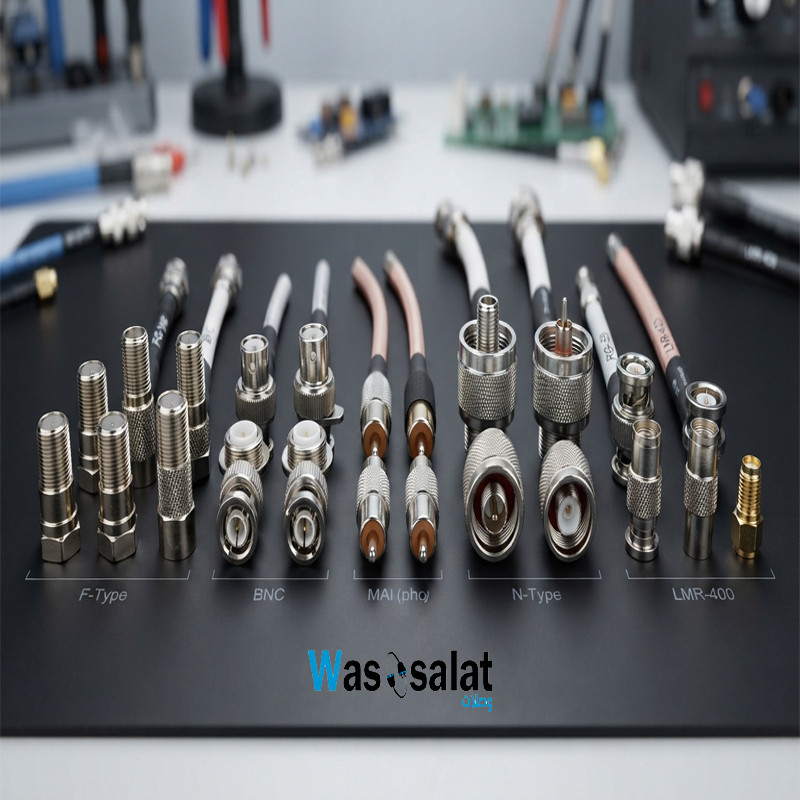
Both cables use 50Ω connectors. Common options include:
RG58 is much more flexible than LMR-400. RG58's 0.195" diameter and stranded conductor make it easy to route in tight spaces.
For 5G Sub-6 (3.5-6 GHz), LMR-400 can run 50-100 feet with acceptable loss. For longer runs, consider LMR-600 or a signal amplifier.
For VHF (144 MHz), RG58 can run 20-30 feet with acceptable loss. For longer runs, RG8 or LMR-400 is recommended.
Yes. LMR-240 is a good middle-ground option. It's more flexible than LMR-400 but has lower loss than RG58. LMR-195 is another option for shorter runs.
For short runs (under 10 feet), RG58 can work for 4G LTE. For longer runs, LMR-400 is strongly recommended to maintain signal quality.
LMR-400 can handle higher power than RG58 due to its thicker conductor. At 100 MHz, LMR-400 can handle ~500W, while RG58 handles ~100W.
We stock professional LMR-400 cables for high-performance installations and RG58 for short, flexible connections. Choose the right cable for your application.
Last Updated: July 2026
© 2026 Wassalat. All rights reserved.
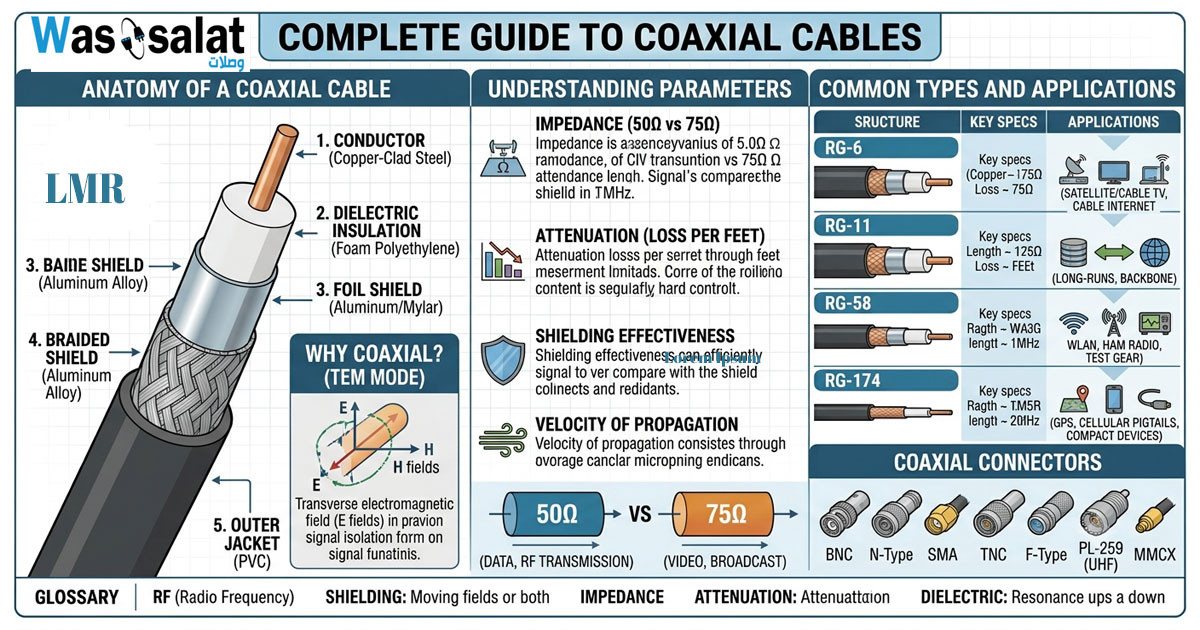 Complete Guide to Coaxial Cables
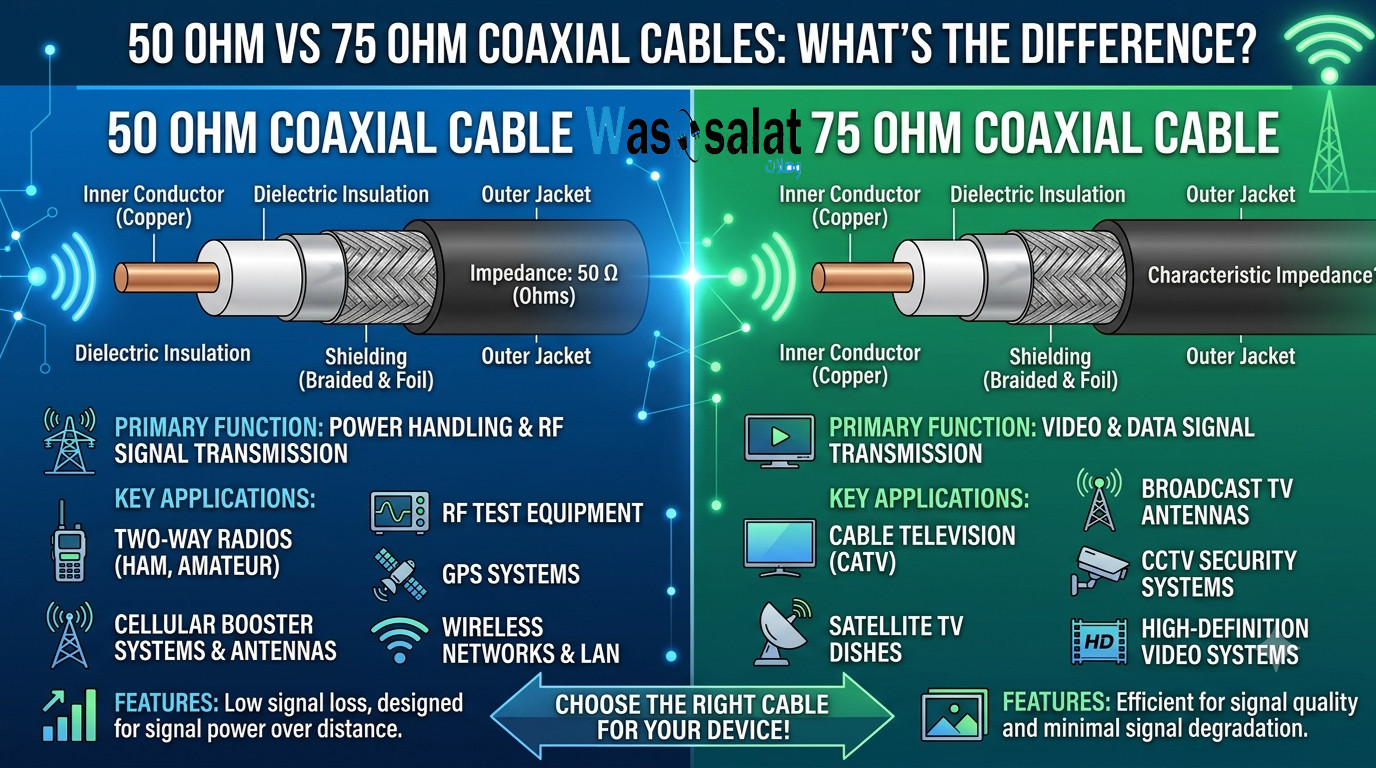 50 Ohm vs 75 Ohm Coaxial Cables: What's the Difference?
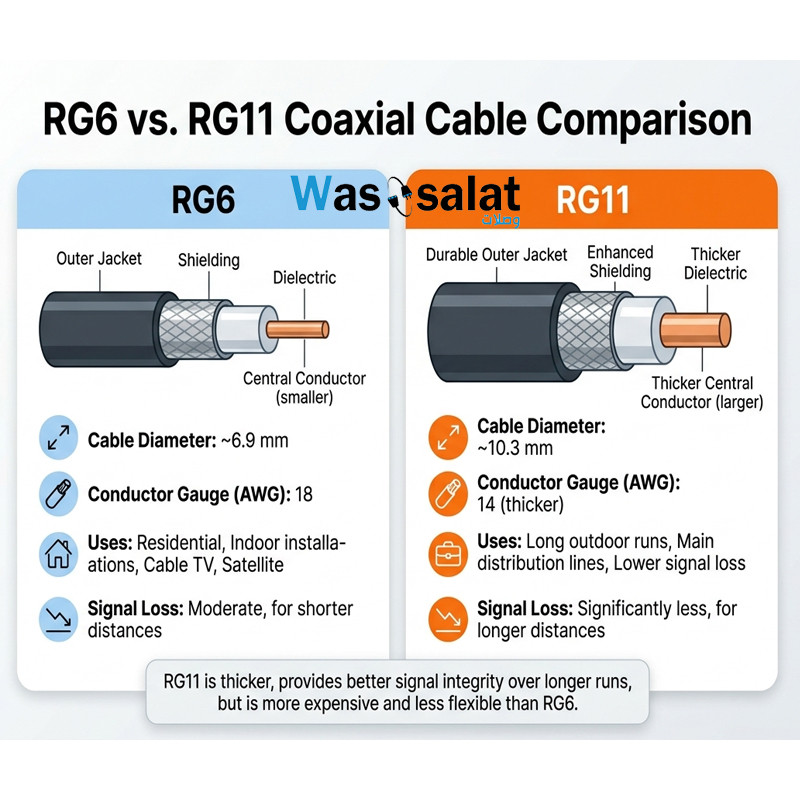 RG6 vs RG11 Coaxial Cables: Which One Do You Need?
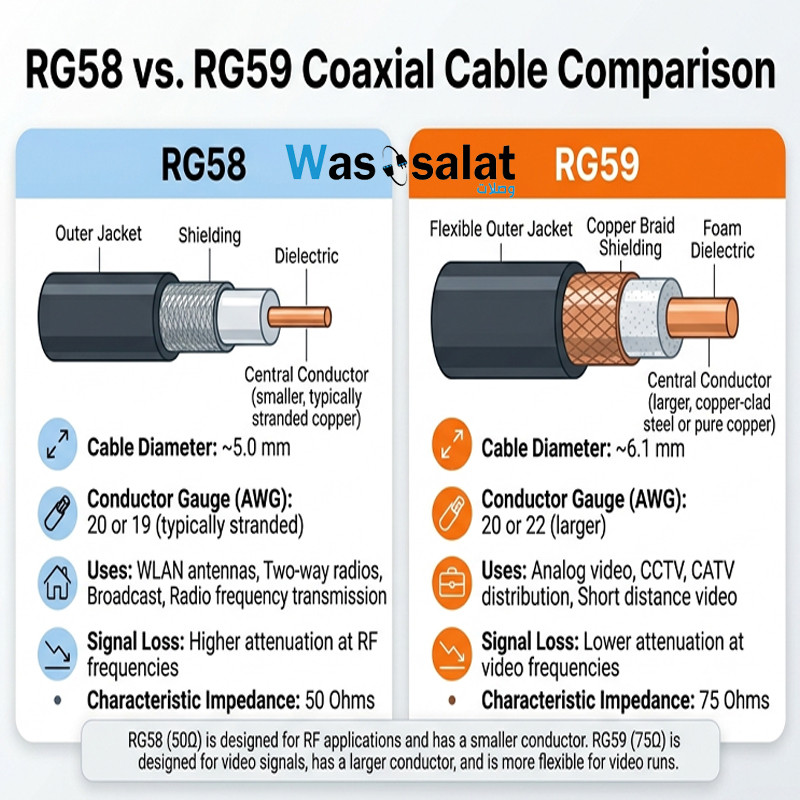 RG58 vs RG59 Coaxial Cables: What's the Difference?
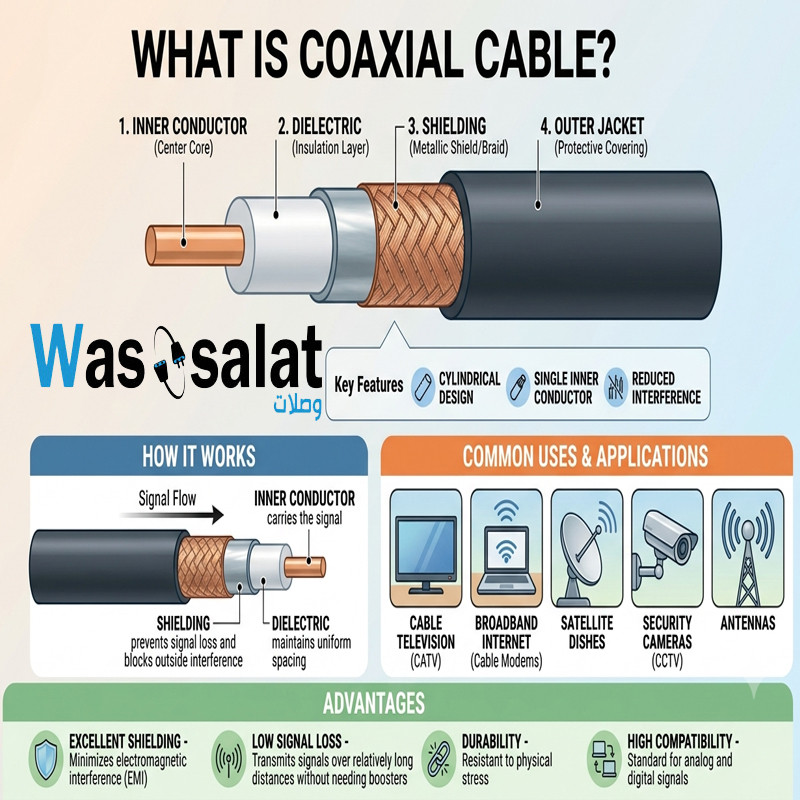 What Is a Coaxial Cable? The Complete Beginner's Guide
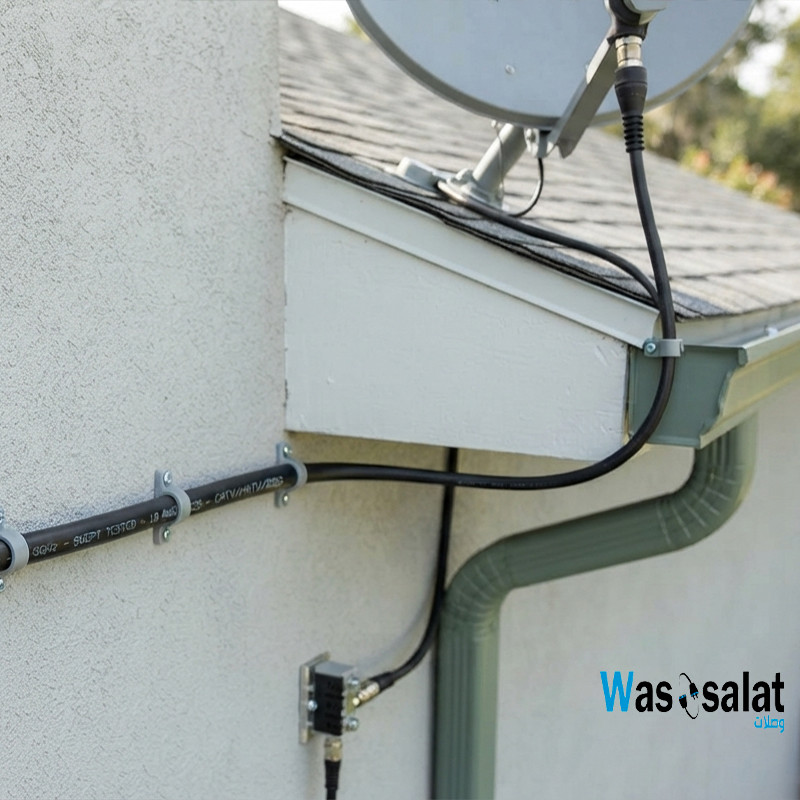
Choose the right outdoor coaxial cable for your installation. Compare TZC-500/32 vs TZC-500/97, learn about PE...
Compare LMR-400 vs RG58 coaxial cables. Learn the differences in signal loss, construction, flexibility, and...
Learn about coaxial cable connectors—F-Type, BNC, N-Type, SMA, TNC, and UHF. Compare impedances, frequencies, and...
Choose the right indoor coaxial cable for your installation. Learn about PVC, riser, plenum, and LSZH ratings with...
Choose the right coaxial cable for satellite TV. Compare RG6 and RG11, quad shield vs dual shield, and learn...
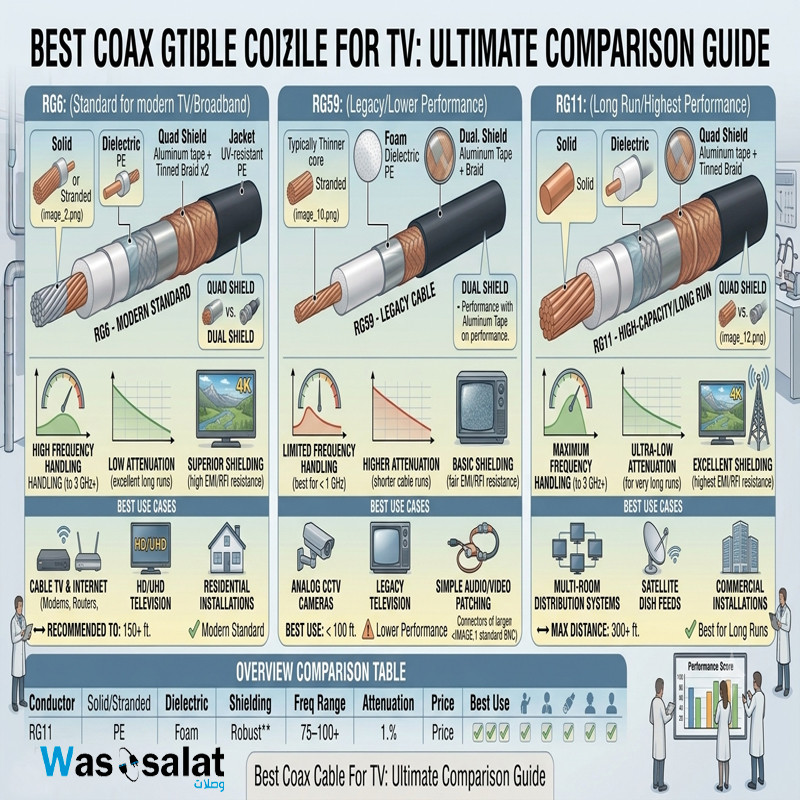
Choose the right coaxial cable for TV, satellite, and antenna. Compare RG6, RG59, and RG11 with shielding types,...
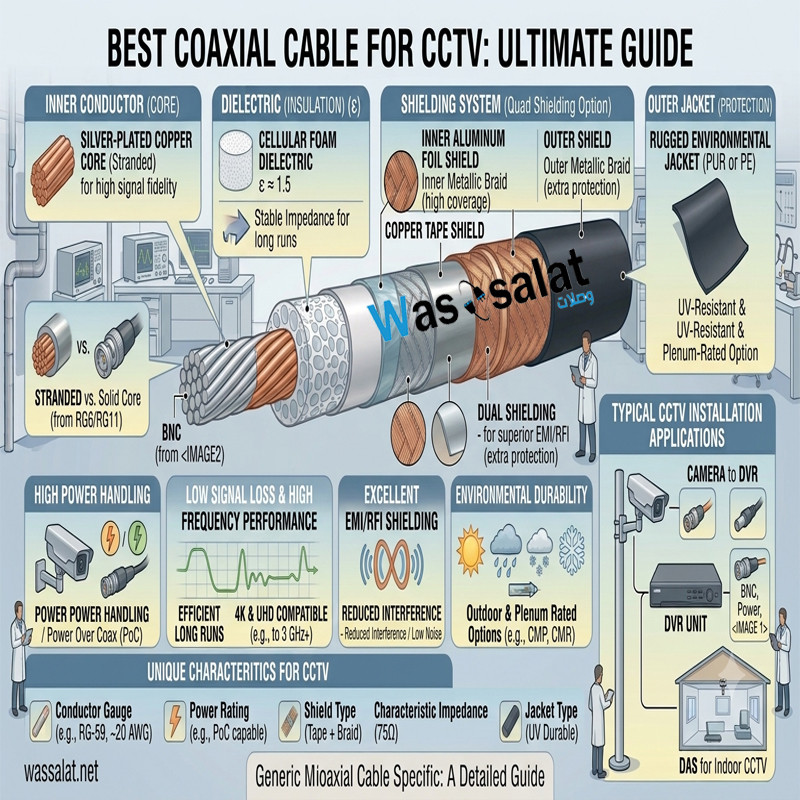
Choose the right coaxial cable for CCTV systems. Compare RG59, RG6, and RG11 for analog and HD cameras. Includes...
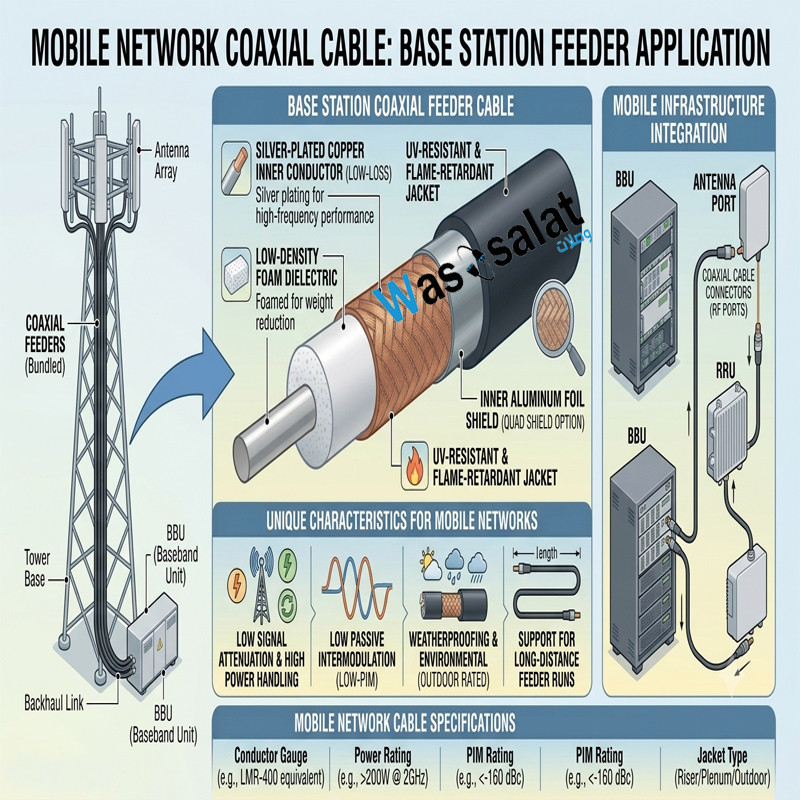
Choose the right coaxial cable for 4G LTE and 5G networks. Compare LMR-400, LMR-600, Wilson400, and HELIAX for home,...
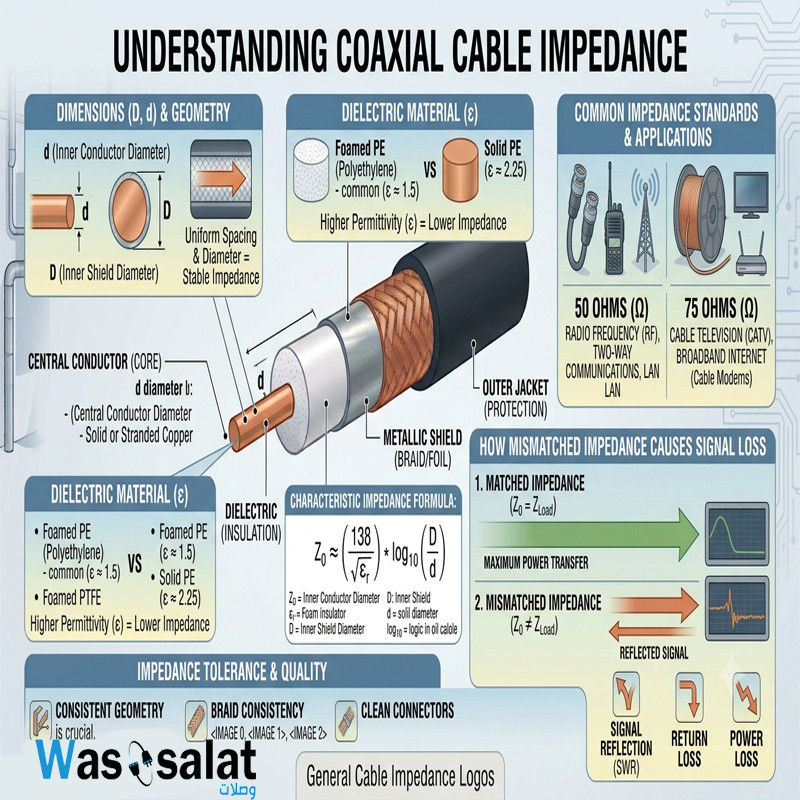
Learn what coaxial cable impedance is, why it matters, and the difference between 50Ω and 75Ω. Includes formulas,...
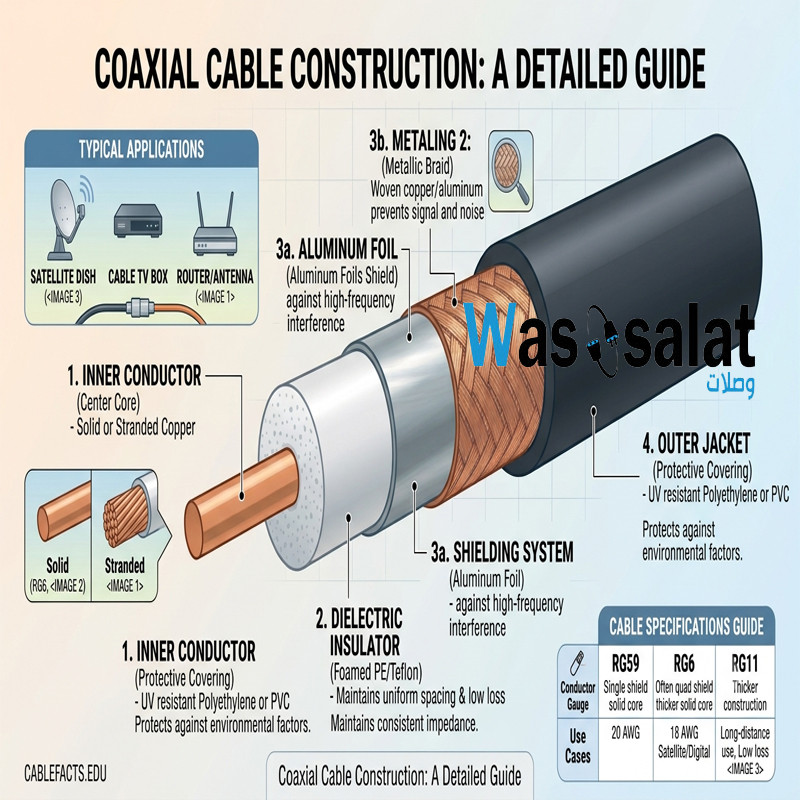
Learn how coaxial cables are constructed. Understand each layer—conductor, dielectric, shield, and jacket—and how...
check_circle
check_circle
Leave a comment